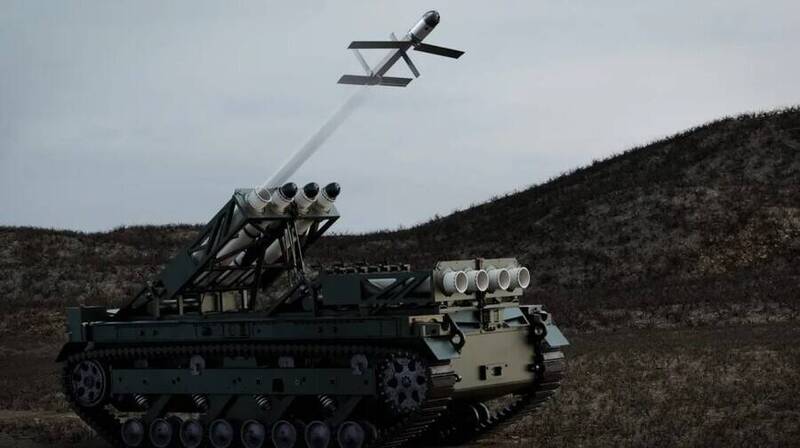
AI-Guided Drones Cause Mass Destruction in Ukraine-Russia Conflict

Thumbnail Image

The information displayed in the AIM should not be reported as representing the official views of the OECD or of its member countries.

Ukraine's deployment of AI-assisted intercept drones has resulted in the destruction of over 33,000 Russian drones in March 2026, significantly altering the dynamics of the Russia-Ukraine war. These AI-enabled drones, capable of autonomous targeting and interception, have directly caused casualties and large-scale equipment losses.[AI generated]

Why's our monitor labelling this an incident or hazard?

The event involves AI systems in the form of attack drones, which are typically AI-enabled for autonomous functions. The article focuses on the exhibition and interest in these systems, not on any realized harm or malfunction. Therefore, it represents a plausible future risk of harm due to the proliferation and potential use of AI-enabled attack drones, qualifying it as an AI Hazard rather than an AI Incident. There is no indication of complementary information or unrelated content.[AI generated]
AI principles
Respect of human rightsDemocracy & human autonomy

Industries
Government, security, and defence

Affected stakeholders
Government

Harm types
Physical (death)Economic/Property

Severity
AI hazard

AI system task:
Recognition/object detectionGoal-driven organisation


Articles about this incident or hazard

Thumbnail Image

國際小學堂/烏克蘭無人載具 開啟戰爭新時代 | 聯合新聞網

2026-05-18
UDN
Why's our monitor labelling this an incident or hazard?
The article explicitly mentions the deployment and use of unmanned ground vehicles equipped with weapons and explosives by Ukrainian forces, which are AI systems or at least AI-enabled robotic systems. These systems have been used in thousands of frontline missions, including attacks that have caused harm to enemy soldiers and altered battlefield dynamics. The harm here is direct physical harm to persons (enemy combatants) and the disruption of military operations, fitting the definition of an AI Incident. The AI systems' use in attack roles and their operational deployment in combat clearly link their use to realized harm, not just potential harm. Hence, the classification as AI Incident is appropriate.
Thumbnail Image

烏克蘭陸軍獲得「常春藤」電波無人車 擔任戰場上的「移動基地台」 - 陸軍

2026-05-18
中時新聞網
Why's our monitor labelling this an incident or hazard?
The article explicitly describes an autonomous unmanned ground vehicle with capabilities such as autonomous operation for days, electronic warfare, and communication relay, which reasonably infers the involvement of AI systems. However, there is no mention of any harm, malfunction, or misuse resulting from this system. The article focuses on the system's deployment and official approval, which is an update on the AI ecosystem and military use of AI technology. Therefore, it does not meet the criteria for an AI Incident or AI Hazard but fits the definition of Complementary Information as it provides supporting data and context about AI system deployment in a conflict zone.
Thumbnail Image

勁蜂三型 - 標籤頁 - 自由時報電子報

2026-05-17
Liberty Times Net
Why's our monitor labelling this an incident or hazard?
The event involves AI systems in the form of attack drones, which are typically AI-enabled for autonomous functions. The article focuses on the exhibition and interest in these systems, not on any realized harm or malfunction. Therefore, it represents a plausible future risk of harm due to the proliferation and potential use of AI-enabled attack drones, qualifying it as an AI Hazard rather than an AI Incident. There is no indication of complementary information or unrelated content.
Thumbnail Image

傳日執政黨擬提案 促部署攔截無人機和高能武 | 日本 | 高能武器 | 大紀元

2026-05-18
The Epoch Times
Why's our monitor labelling this an incident or hazard?
The article centers on a political proposal advocating for the deployment and development of AI-enabled defense systems such as autonomous drones and AI technology investments. While these systems involve AI and have clear potential for harm in military conflict, the article does not report any realized harm or incident resulting from AI system use or malfunction. Therefore, it does not meet the criteria for an AI Incident. Instead, it describes a credible potential for future harm through the deployment of AI-enabled military technologies, qualifying it as an AI Hazard. It is not merely general AI news or a complementary update, but a credible warning about plausible future risks associated with AI in defense.
Thumbnail Image

從零到年產500萬架無人機 烏克蘭改寫戰爭規則 | 國際焦點 | 國際 | 經濟日報

2026-05-18
Udnemoney聯合理財網
Why's our monitor labelling this an incident or hazard?
The article explicitly mentions AI-assisted guidance in intercept drones used by Ukraine, which have been deployed in active combat causing significant casualties and destruction of enemy assets. The drones' use has directly led to injury and death (harm to persons) and disruption of military operations, fulfilling the criteria for an AI Incident. The AI systems are integral to the drones' targeting and interception capabilities, and their deployment has materially changed the conflict dynamics, causing realized harm. Hence, this is not merely a potential hazard or complementary information but a clear AI Incident.
Thumbnail Image

中國官媒:日本發展無人化軍事力量進攻意味濃  21:18

2026-05-17
hkcna.hk
Why's our monitor labelling this an incident or hazard?
The event involves AI systems in the form of unmanned military equipment and satellite networks providing real-time data for targeting, which are AI-enabled systems. The article describes the development and deployment of these systems with offensive military intent, implying a credible risk of future harm (e.g., regional conflict, harm to communities, or disruption of security). Since no actual harm has occurred yet but the potential for harm is clearly articulated, this qualifies as an AI Hazard rather than an AI Incident. The article does not focus on responses, mitigation, or updates to past incidents, so it is not Complementary Information. It is directly related to AI systems and their plausible future harm, so it is not Unrelated.
Thumbnail Image

美廠商公開新型蜂群無人機 「彈簧刀」家族轉向電子干擾與群攻作戰 - 自由軍武頻道

2026-05-19
def.ltn.com.tw
Why's our monitor labelling this an incident or hazard?
The Mayhem 10 drone system clearly involves AI systems for swarm coordination, electronic interference, and autonomous mission execution. While the article does not describe any realized harm or incidents caused by these drones, the system's design and intended use for coordinated swarm attacks and electronic warfare plausibly could lead to injury, disruption of critical infrastructure, or other harms in future military conflicts. The mere development and potential deployment of such AI-enabled autonomous weapon systems with swarm capabilities constitute a credible risk of harm. Hence, this event fits the definition of an AI Hazard rather than an AI Incident or Complementary Information.