AI Accelerates Cybersecurity Threats and Vulnerability Exploits

Thumbnail Image

The information displayed in the AIM should not be reported as representing the official views of the OECD or of its member countries.

Hackers are increasingly using AI, including Anthropic's Mythos Preview, to rapidly detect and exploit software vulnerabilities, leading to a surge in data breaches. AI enables automation and chaining of exploits, shrinking defense windows and fundamentally reshaping cybersecurity risks. Cloudflare warns of the model's powerful capabilities and potential for harm.[AI generated]

Why's our monitor labelling this an incident or hazard?

The article explicitly states that AI is being used by malicious actors to accelerate exploitation of vulnerabilities, leading to data breaches, which are a form of harm to property and potentially communities. The involvement of AI in these cyberattacks is direct and has already resulted in realized harm. The use of AI for defense does not negate the fact that AI-enabled attacks have caused harm. Hence, this event meets the criteria for an AI Incident.[AI generated]
AI principles
Robustness & digital securityPrivacy & data governance

Industries
Digital securityIT infrastructure and hosting

Affected stakeholders
ConsumersBusiness

Harm types
Economic/PropertyReputationalHuman or fundamental rights

Severity
AI incident

AI system task:
Reasoning with knowledge structures/planning


Articles about this incident or hazard

Thumbnail Image

Cornell professor talks AI chaos, and dismissing AI writers

2026-05-20
Hindustan Times
Why's our monitor labelling this an incident or hazard?
The content centers on expert opinion and general expectations about AI's impact, without detailing any realized harm or direct risk event. There is no indication of an AI system causing injury, rights violations, or other harms, nor is there a clear plausible immediate risk event described. The discussion is more about potential and ongoing developments, making it complementary information that adds context to understanding AI's societal implications rather than reporting an incident or hazard.
Thumbnail Image

AI-related data breaches surpass stolen credentials in cyber incidents, Verizon report says

2026-05-19
Yahoo News
Why's our monitor labelling this an incident or hazard?
The article explicitly states that AI is being used by malicious actors to accelerate exploitation of vulnerabilities, leading to data breaches, which are a form of harm to property and potentially communities. The involvement of AI in these cyberattacks is direct and has already resulted in realized harm. The use of AI for defense does not negate the fact that AI-enabled attacks have caused harm. Hence, this event meets the criteria for an AI Incident.
Thumbnail Image

Warning: Anthropic's Mythos Can Break Software It's Trying To Fix

2026-05-19
Forbes
Why's our monitor labelling this an incident or hazard?
The AI systems (Mythos and GPT 5.5) are explicitly mentioned as being used to find software vulnerabilities and suggest patches. The article highlights that some AI-suggested patches, if applied without proper human review, could break software or introduce new security weaknesses, which constitutes harm to property (software systems) and potentially to users relying on that software. The false positives also impose operational burdens and risks. This harm arises from the AI's use and its malfunction or limitations in accurately assessing vulnerabilities. Therefore, this event qualifies as an AI Incident because the AI's use has directly and indirectly led to potential harm through faulty patch suggestions and false vulnerability flags.
Thumbnail Image

AI-related data breaches surging

2026-05-20
ETCISO.in
Why's our monitor labelling this an incident or hazard?
The article explicitly states that AI systems are being used by malicious actors to detect software vulnerabilities and develop malware, which has directly led to a surge in data breaches and data loss incidents. This constitutes harm to communities and individuals through violations of data privacy and security. The AI's role is pivotal in accelerating and scaling these attacks, fulfilling the criteria for an AI Incident. The mention of "Shadow AI" contributing to insider data loss further supports the classification. Therefore, this event is best classified as an AI Incident.
Thumbnail Image

AI-related data breaches surging, Verizon report says

2026-05-20
The Straits Times
Why's our monitor labelling this an incident or hazard?
The report explicitly states that AI is being used by threat actors to accelerate exploitation of vulnerabilities, leading to actual data breaches and data loss incidents. The harms described include unauthorized access to data and potential violations of privacy and security, which fall under harm categories (c) violations of rights and (d) harm to communities. The AI systems' use in these attacks is a direct contributing factor to realized harm, not merely a potential risk. Hence, the event meets the criteria for an AI Incident rather than a hazard or complementary information.
Thumbnail Image

AI-related data breaches surging, Verizon report says

2026-05-20
Firstpost
Why's our monitor labelling this an incident or hazard?
The report explicitly states that AI is being used by threat actors to detect vulnerabilities and develop malware, which has directly contributed to a significant number of data breaches. This constitutes harm to property and potentially to communities through data loss and cyberattacks. The involvement of AI in these breaches is direct and material, fulfilling the criteria for an AI Incident. The report also discusses the operational impact and evolving threat landscape due to AI, reinforcing the classification as an AI Incident rather than a mere hazard or complementary information.
Thumbnail Image

Major banks use OpenAI's Daybreak for cybersecurity defence

2026-05-19
Australian Financial Review
Why's our monitor labelling this an incident or hazard?
The event involves AI systems (OpenAI's GPT-5.5-Cyber and Anthropic's Mythos) used in cybersecurity defense by banks and financial institutions. However, the article does not report any realized harm, malfunction, or misuse of these AI systems leading to injury, disruption, rights violations, or other harms. Nor does it suggest a credible risk of future harm from these AI deployments. Therefore, it does not meet the criteria for an AI Incident or AI Hazard. The article provides contextual information about AI adoption in cybersecurity, which fits the definition of Complementary Information.
Thumbnail Image

Powerful new AI model 'Mythos' sparks global cybersecurity fears

2026-05-19
EWN Traffic
Why's our monitor labelling this an incident or hazard?
The AI system 'Mythos' is explicitly mentioned and is described as having capabilities to find and exploit software vulnerabilities, which could plausibly lead to cybersecurity harms such as breaches or disruptions. Although no actual harm is reported yet, the potential for significant cybersecurity incidents is credible and recognized by stakeholders preparing defenses. Therefore, this event qualifies as an AI Hazard due to the plausible future harm from the AI system's capabilities and intended use.
Thumbnail Image

Google launches Pics, an AI design app to rival Canva

2026-05-19
The Next Web
Why's our monitor labelling this an incident or hazard?
The Mythos AI model is explicitly described as an AI system capable of identifying thousands of zero-day vulnerabilities across major operating systems and browsers. Its use by banks and regulators to detect these vulnerabilities indicates AI system involvement in the development and use phases. Although no actual cyberattacks or harms have been reported yet, the article emphasizes the credible risk that such AI capabilities could be misused to power sophisticated cyberattacks, posing a plausible future harm to critical infrastructure and financial systems. The pause in regulatory examinations and the mobilization of internal teams to patch vulnerabilities underscore the serious potential threat. Since harm is not yet realized but plausible, this event fits the definition of an AI Hazard rather than an AI Incident or Complementary Information.
Thumbnail Image

Anthropic to Let Partners Share Mythos Cybersecurity Findings With Others

2026-05-19
Insurance Journal
Why's our monitor labelling this an incident or hazard?
The article explicitly mentions the use of an AI system (Mythos) for cybersecurity vulnerability detection and sharing of findings among partners and beyond to improve defense. There is no report of any realized harm or incident caused by the AI system. The focus is on the evolution of sharing policies to maximize defensive impact, which is a governance and societal response to AI use. Hence, it fits the definition of Complementary Information rather than an Incident or Hazard.
Thumbnail Image

The Glasswing Warning: What Companies Outside the Inner Circle Must Do Now

2026-05-19
Security Magazine
Why's our monitor labelling this an incident or hazard?
The AI system (Claude Mythos Preview) is explicitly mentioned and is described as autonomously discovering thousands of critical vulnerabilities, which have already led to patches but also leave many vulnerabilities unpatched and exploitable. The AI's role in accelerating vulnerability discovery and exploitation compresses traditional security timelines, increasing the risk of harm to organizations and infrastructure. Unauthorized access to the AI model further compounds the risk. These factors demonstrate direct involvement of the AI system in causing or enabling harm, meeting the criteria for an AI Incident rather than a mere hazard or complementary information. The article's focus on the realized and ongoing risks from this AI system's outputs and the security implications for organizations outside the inner circle confirms this classification.
Thumbnail Image

How Frontier AI Like Anthropic's Mythos Is Rewriting the Rules of Cyber Defense

2026-05-19
WebProNews
Why's our monitor labelling this an incident or hazard?
The AI system (Mythos Preview) is explicitly mentioned and is used for automated vulnerability discovery and exploit generation, which directly impacts cybersecurity. The article documents that these AI capabilities have already shortened the time to find and exploit vulnerabilities from months to hours, enabling attackers to cause harm more efficiently. This constitutes an AI Incident because the AI system's use has directly led to harms related to cybersecurity threats. Additionally, the article discusses plausible future harms and the dual-use nature of the technology, but the presence of realized harm takes precedence in classification.
Thumbnail Image

Anthropic Said to Widen Mythos Threat Sharing Rules

2026-05-19
WinBuzzer
Why's our monitor labelling this an incident or hazard?
The article explicitly involves an AI system (Mythos) used for vulnerability research and threat intelligence sharing. However, it does not report any realized harm or incident caused by the AI system, nor does it describe a specific event where the AI system's malfunction or use directly or indirectly led to harm. Instead, it discusses a policy change aimed at improving defensive coordination and the potential implications of AI-accelerated vulnerability research. This fits the definition of Complementary Information, as it updates on governance and ecosystem responses to AI-related cybersecurity challenges without reporting a new incident or hazard.
Thumbnail Image

Anthropic Shifts Stance on Mythos to Enable Shared Threat Intelligence

2026-05-19
PaymentsJournal
Why's our monitor labelling this an incident or hazard?
The article explicitly involves an AI system (Mythos) used for cybersecurity vulnerability detection, which is an AI system by definition. The discussion centers on the potential for AI-powered fraud attacks exploiting vulnerabilities, which could disrupt critical infrastructure and financial institutions, and harm consumers. Although no direct harm from Mythos is reported, the article emphasizes a credible and imminent risk of AI-enabled fraud attacks causing significant harm. This fits the definition of an AI Hazard, as the AI system's use could plausibly lead to an AI Incident involving harm to infrastructure and communities. The article also discusses the need for shared intelligence to mitigate this risk, but the primary focus is on the plausible future harm rather than a realized incident or a governance response alone.
Thumbnail Image

Mythos Preview Builds PoC Exploits in Automated Vulnerability Research

2026-05-19
Cyber Security News
Why's our monitor labelling this an incident or hazard?
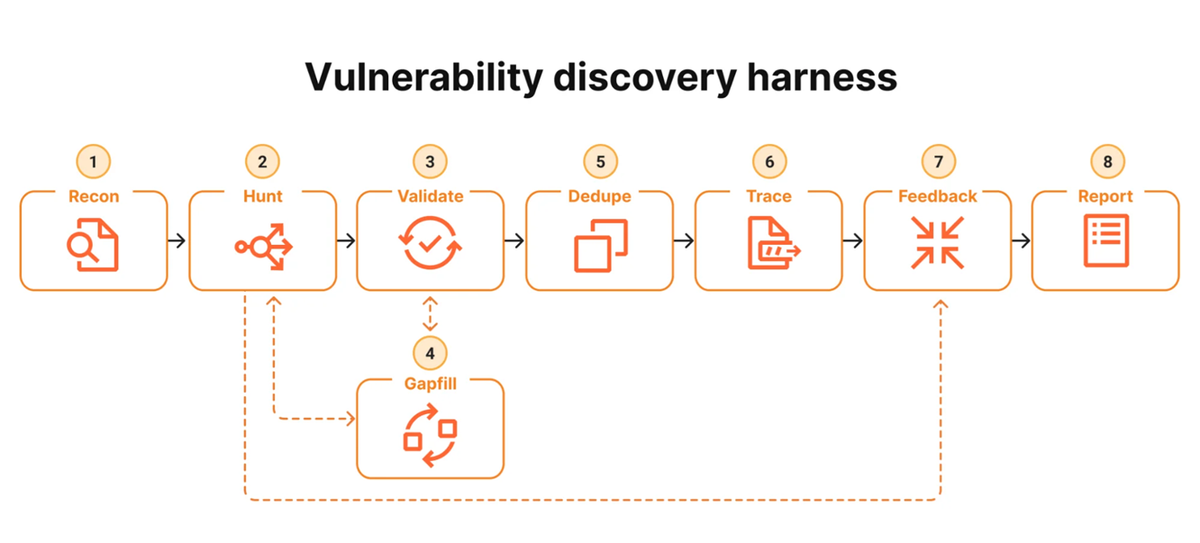
The AI system (Mythos Preview) is explicitly mentioned and is used to generate proof-of-concept exploits by chaining vulnerabilities, which directly leads to a significant security risk. The article discusses realized capabilities of the AI in producing exploit code, which can be used maliciously, thus directly or indirectly causing harm to property and communities by enabling cyberattacks. This fits the definition of an AI Incident because the AI system's use has directly led to a harm-relevant outcome (working exploits). Although the article also discusses potential future risks and the need for safeguards, the primary focus is on the realized capability and its implications, qualifying it as an AI Incident rather than a hazard or complementary information.
Thumbnail Image

Cloudflare says Anthropic's Mythos Preview finds exploit chains that earlier frontier models missed

2026-05-19
The Decoder
Why's our monitor labelling this an incident or hazard?
The AI system is explicitly mentioned and is used to find security vulnerabilities and chain them into exploits, which directly relates to potential harm in cybersecurity. While the current use by Cloudflare is defensive and aimed at improving security, the warning that attackers will have access to similar capabilities indicates a plausible future risk of harm (e.g., cyberattacks exploiting AI-generated exploits). Since no actual harm is reported as having occurred yet, but a credible risk is highlighted, this event fits the definition of an AI Hazard rather than an AI Incident.
Thumbnail Image

Cloudflare lets Mythos loose on live code, says AI is too powerful for public release

2026-05-19
Cybernews
Why's our monitor labelling this an incident or hazard?
The article explicitly involves an AI system (Mythos Preview) designed for cybersecurity vulnerability detection. The AI's advanced capabilities to combine minor bugs into serious exploits and the noted inconsistencies in its safety guardrails present a credible risk of future harm, such as cyberattacks or infrastructure disruption. No actual harm or incident has occurred yet, but the potential for such harm is clearly articulated and plausible. The event focuses on the evaluation and risk assessment of the AI system rather than reporting an actual incident or harm, and it does not primarily discuss responses or governance measures, so it is best classified as an AI Hazard.
Thumbnail Image

Anthropic eases threat-sharing rules as Cloudflare details frontier AI cyber gains

2026-05-19
Metacurity
Why's our monitor labelling this an incident or hazard?
The article explicitly mentions AI systems (Anthropic's Mythos and Cloudflare's use of frontier AI models) used to identify cybersecurity vulnerabilities and improve defenses. There is no indication that these AI systems caused harm or malfunctioned leading to harm. Instead, the article focuses on policy changes to allow broader sharing of threat information discovered by AI, which is a governance and operational response. The other cybersecurity incidents described do not involve AI systems as causal factors. Hence, the event is best classified as Complementary Information, as it provides updates on AI applications in cybersecurity and related policy shifts without describing a new AI Incident or Hazard.