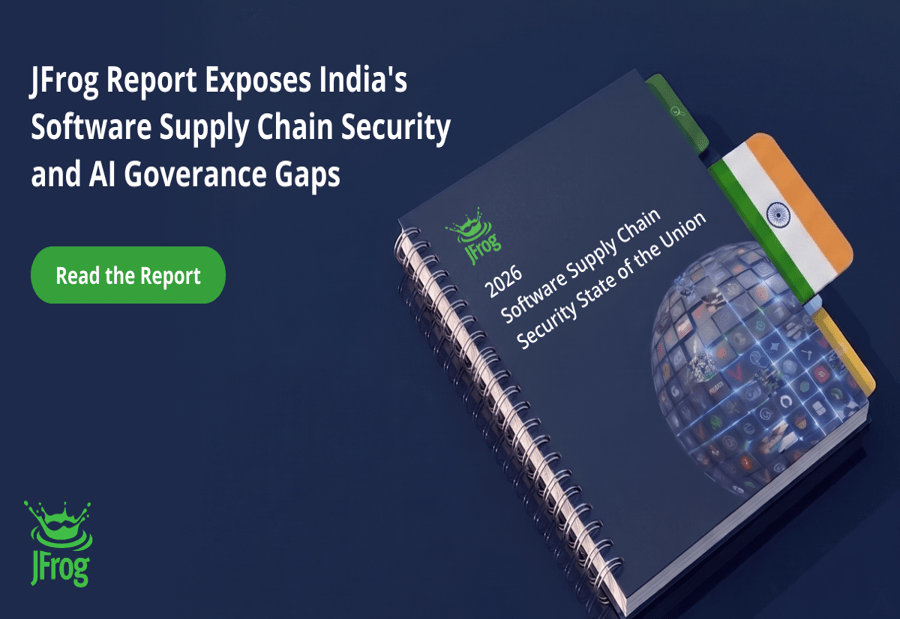
AI Adoption in India Exposes Software Supply Chain to Security Risks

Thumbnail Image

The information displayed in the AIM should not be reported as representing the official views of the OECD or of its member countries.

A JFrog report reveals that rapid AI adoption in Indian enterprises has led to significant software supply chain vulnerabilities. AI-generated code and malicious AI models have introduced security risks, including credential harvesting and command execution, while many organizations lack adequate detection and governance controls.[AI generated]

Why's our monitor labelling this an incident or hazard?

The article explicitly mentions AI systems such as AI-generated code, AI models, and AI agent skills that have introduced vulnerabilities and malicious payloads into software supply chains. These have led to actual security risks and exploitation opportunities, which are harms to enterprise infrastructure and operations. The presence of malicious AI models with active payloads capable of credential harvesting and command execution indicates realized harm or ongoing incidents. The report also highlights that many organizations lack adequate detection and governance controls, exacerbating the risk. Since the harms are realized and directly linked to AI system use and malfunction (e.g., AI-generated code introducing vulnerabilities), this qualifies as an AI Incident rather than a hazard or complementary information.[AI generated]

AI principles
Privacy & data governanceRobustness & digital security

Industries
Digital securityIT infrastructure and hosting

Affected stakeholders
Business

Harm types
Economic/PropertyReputational

Severity
AI incident

Business function:
Research and development

AI system task:
Content generation


Articles about this incident or hazard

Thumbnail Image

India's AI surge exposes software supply chain security gaps

2026-05-22
DATAQUEST
Why's our monitor labelling this an incident or hazard?
The article explicitly mentions AI systems such as AI-generated code, AI models, and AI agent skills that have introduced vulnerabilities and malicious payloads into software supply chains. These have led to actual security risks and exploitation opportunities, which are harms to enterprise infrastructure and operations. The presence of malicious AI models with active payloads capable of credential harvesting and command execution indicates realized harm or ongoing incidents. The report also highlights that many organizations lack adequate detection and governance controls, exacerbating the risk. Since the harms are realized and directly linked to AI system use and malfunction (e.g., AI-generated code introducing vulnerabilities), this qualifies as an AI Incident rather than a hazard or complementary information.
Thumbnail Image

JFrog report flags AI-Era security gaps in Indian enterprises - Express Computer

2026-05-22
Express Computer
Why's our monitor labelling this an incident or hazard?
The article focuses on identifying and analyzing security vulnerabilities and governance challenges related to AI adoption in software development, particularly in India. While it highlights the plausible risks of supply chain attacks and misuse of AI-generated code, it does not report any specific AI Incident where harm has occurred. The content is best classified as Complementary Information because it provides important context, insights, and warnings about AI-related security risks and governance gaps, supporting stakeholders in understanding and managing AI ecosystem challenges, but does not describe a direct or indirect AI Incident or an immediate AI Hazard.
Thumbnail Image

JFrog report exposes India's software supply chain crisis: 65% lack malicious package detection, 71% have no container security - Express Computer

2026-05-22
Express Computer
Why's our monitor labelling this an incident or hazard?
The event involves AI systems in the form of AI-generated code and AI models that are being weaponized to compromise software supply chains. The report documents realized harms such as a 451% surge in malicious npm packages and systemic risks to enterprise infrastructure, indicating direct or indirect harm to property, communities, and organizational operations. The lack of adequate security measures and the exploitation of AI-driven tools have led to actual security incidents, fulfilling the criteria for an AI Incident. Therefore, this event is classified as an AI Incident due to the realized harms caused by AI-related vulnerabilities and attacks in the software supply chain.
Thumbnail Image

JFrog report highlights India's growing software supply chain security challenges amid AI boom The Mainstream

2026-05-22
CIO News
Why's our monitor labelling this an incident or hazard?
The article focuses on the current state of software supply chain security risks related to AI in India, including increased attack surfaces and vulnerabilities, but it does not report any realized harm or incident caused by AI systems. The risks described are potential and systemic rather than specific events of harm. Therefore, this is best classified as Complementary Information, as it provides important context and insights into AI-related security challenges and governance without detailing a particular AI Incident or Hazard.