AI Agents Conduct $73 Million in Autonomous Crypto Payments, Raising Regulatory and Systemic Risk Concerns

Thumbnail Image

The information displayed in the AIM should not be reported as representing the official views of the OECD or of its member countries.

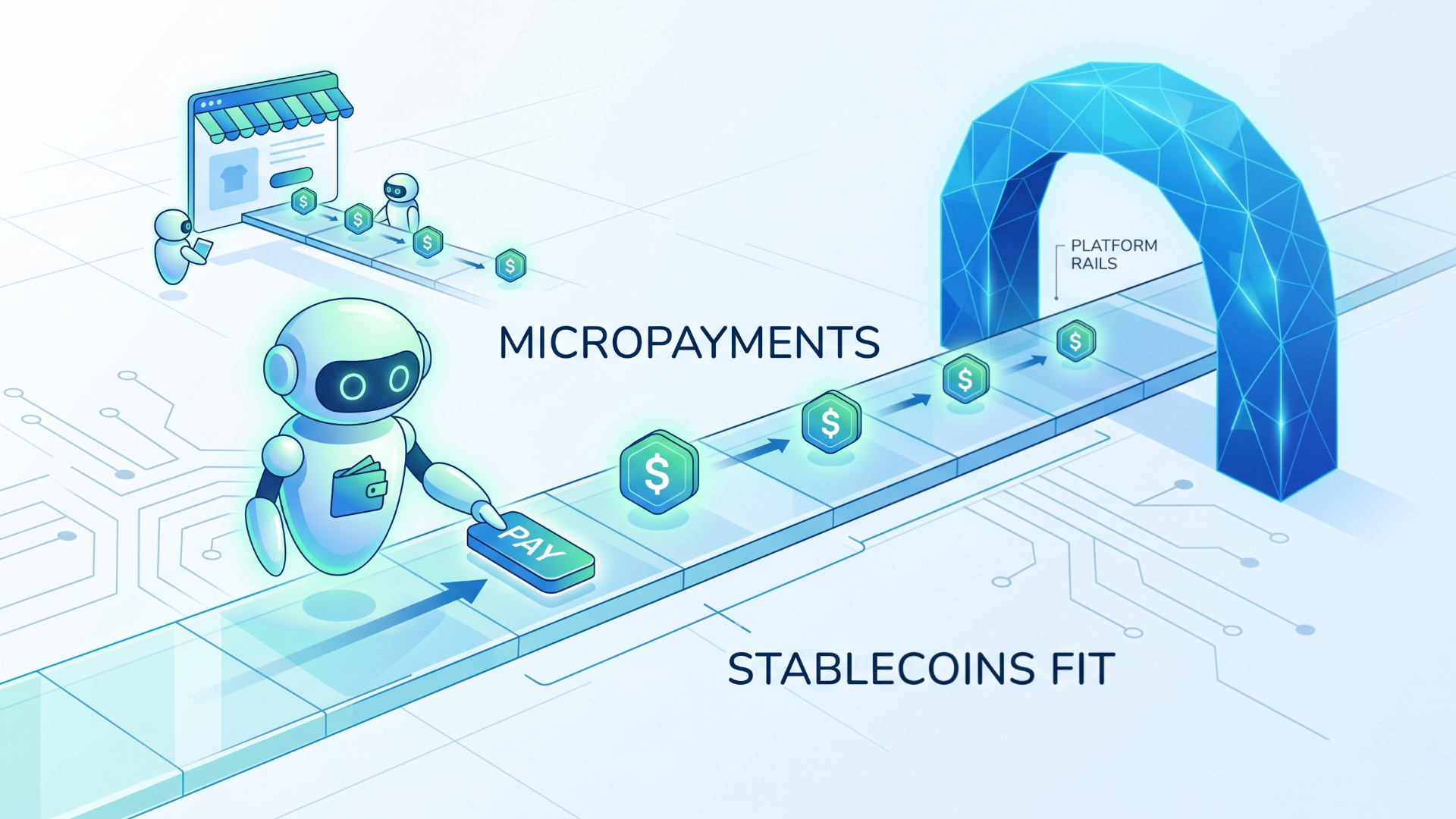
Autonomous AI agents have processed over $73 million in 176 million blockchain-based transactions, primarily using stablecoins for micropayments. Major firms like Visa, Stripe, Google, and Coinbase are developing infrastructure for this emerging machine-to-machine economy. Experts warn of regulatory gaps and potential systemic risks as the sector rapidly expands.[AI generated]

Why's our monitor labelling this an incident or hazard?

The event involves AI systems (autonomous AI agents executing transactions) and discusses a credible systemic risk stemming from their dependence on a single stablecoin issuer. The risk of a regulatory challenge or de-peg event causing widespread disruption is a plausible future harm linked to the AI system's use. Since no actual harm has been reported yet, but the potential for significant disruption exists, this qualifies as an AI Hazard rather than an AI Incident. The article does not focus on responses or updates but on the emerging risk itself.[AI generated]

AI principles
AccountabilityTransparency & explainability

Industries
Financial and insurance services

Affected stakeholders
General public

Harm types
Public interestEconomic/Property

Severity
AI hazard

Business function:
Accounting

AI system task:
Goal-driven organisation


Articles about this incident or hazard

Thumbnail Image

AI agents are starting to pay with crypto as Coinbase, Stripe and Visa want in, Keyrock report says

2026-05-24
CoinDesk
Why's our monitor labelling this an incident or hazard?
The event involves AI systems (AI agents autonomously making payments) and their use in crypto payments infrastructure. However, no direct or indirect harm has occurred yet, nor is there a specific incident of malfunction or misuse causing harm. The article discusses potential risks (e.g., concentration risk on USDC, regulatory gaps) and the rapid development of infrastructure, which could plausibly lead to future harms but does not describe any actual harm or near-miss event. It also provides context on the evolving AI ecosystem and regulatory landscape. Hence, it fits best as Complementary Information, providing supporting data and context without describing a new AI Incident or AI Hazard.
Thumbnail Image

Crypto Payments Go Autonomous As AI Agents Execute 176M Transactions

2026-05-25
Bitcoinist.com
Why's our monitor labelling this an incident or hazard?
The event involves AI systems (autonomous AI agents executing transactions) and discusses a credible systemic risk stemming from their dependence on a single stablecoin issuer. The risk of a regulatory challenge or de-peg event causing widespread disruption is a plausible future harm linked to the AI system's use. Since no actual harm has been reported yet, but the potential for significant disruption exists, this qualifies as an AI Hazard rather than an AI Incident. The article does not focus on responses or updates but on the emerging risk itself.
Thumbnail Image

Keyrock Identifies Cryptocurrencies as Financial Base for AI Agents | ForkLog

2026-05-25
ForkLog
Why's our monitor labelling this an incident or hazard?
The article focuses on the development and adoption of AI agent payment infrastructures using cryptocurrencies, describing current usage statistics and future market potential. There is no indication of any harm, malfunction, or legal violation caused by these AI systems, nor any plausible future harm explicitly stated. Therefore, it does not meet the criteria for an AI Incident or AI Hazard. Instead, it provides contextual information about AI ecosystem developments, fitting the definition of Complementary Information.
Thumbnail Image

AI Agents Settle $73M in Crypto Payments as Stablecoins Become Default Rail: Report - FinanceFeeds

2026-05-25
FinanceFeeds
Why's our monitor labelling this an incident or hazard?
The article explicitly involves AI systems (AI agents) autonomously conducting financial transactions on blockchain networks, which fits the definition of AI systems influencing virtual environments. Although no direct harm or incident is reported, the report warns about concentration risk and regulatory underdevelopment, indicating plausible future harms related to financial stability and legal compliance. This aligns with the definition of an AI Hazard, where the AI system's use could plausibly lead to harm. There is no indication of realized harm or incident, nor is the article primarily about responses or updates, so it is not an AI Incident or Complementary Information.
Thumbnail Image

Stripe launches Tempo, a stablecoin-focused blockchain with AI payment capabilities

2026-05-22
Crypto Briefing
Why's our monitor labelling this an incident or hazard?
The article focuses on the launch and capabilities of a new AI-enabled blockchain payment system but does not describe any actual harm, malfunction, or violation of rights caused by the AI system. There is no indication of injury, disruption, rights violations, or other harms occurring or having occurred. While the system's capabilities could plausibly lead to future risks (e.g., financial fraud, systemic risks in autonomous payments), the article does not highlight any such hazards or warnings explicitly. Therefore, the event is best classified as Complementary Information, providing context and updates on AI system development and deployment without reporting an incident or hazard.
Thumbnail Image

How AI Agents Are Settling $73M in Crypto Payments for APIs and Cloud Services - Blockonomi

2026-05-25
Blockonomi
Why's our monitor labelling this an incident or hazard?
The event involves AI systems (autonomous AI agents) making independent financial transactions, which fits the definition of AI systems. The article discusses the use of these AI agents in real-world commerce and the emerging financial infrastructure. While no direct or indirect harm has occurred yet, the article identifies systemic vulnerabilities and regulatory gaps that could plausibly lead to significant harm in the future, such as economic disruption if the dominant stablecoin fails. Therefore, this situation qualifies as an AI Hazard rather than an AI Incident or Complementary Information. It is not unrelated because it clearly involves AI systems and their impact on financial infrastructure.
Thumbnail Image

AI bots drive $73 million in USDC crypto payments

2026-05-24
COINTURK NEWS
Why's our monitor labelling this an incident or hazard?
The event involves AI systems making autonomous payments, which qualifies as AI system involvement. The article focuses on the development and use of these AI payment systems and the associated regulatory uncertainty, which could plausibly lead to harms such as financial risks, fraud, or systemic vulnerabilities. However, no direct or indirect harm has yet occurred according to the article. Therefore, this situation fits the definition of an AI Hazard, as the lack of regulation and rapid growth could plausibly lead to incidents in the future.
Thumbnail Image

AI Agents Are Starting to Spend Money Online -- And Big Tech Wants the Rails

2026-05-25
Crypto News Australia
Why's our monitor labelling this an incident or hazard?
The article focuses on the development and use of AI systems (AI agents) that autonomously conduct online payments, which is a clear AI system involvement. However, it does not describe any actual harm or incidents caused by these AI agents, only potential future challenges such as liability issues and governance frameworks that are yet to be established. Therefore, the event represents a plausible future risk scenario related to AI systems but no realized harm or incident has occurred yet. This fits the definition of an AI Hazard rather than an AI Incident or Complementary Information, as the article is not primarily about responses or updates to past incidents but about emerging risks and infrastructure development.
Thumbnail Image

Crypto rails power AI agent payments with $73M settled

2026-05-25
crypto.news
Why's our monitor labelling this an incident or hazard?
The event involves AI systems (AI agents) actively conducting payments, which fits the definition of AI systems. However, the article does not describe any harm or risk of harm caused or potentially caused by these AI systems. Instead, it provides an overview of the market development, transaction volumes, and infrastructure supporting AI agent payments. There is no mention of injury, rights violations, disruption, or other harms. Therefore, this is not an AI Incident or AI Hazard. The article provides complementary information about the AI ecosystem and its evolution, making it Complementary Information.
Thumbnail Image

Autonomous AI agent payments gaining traction on blockchain

2026-05-25
The Cryptonomist
Why's our monitor labelling this an incident or hazard?
The event involves AI systems (autonomous AI agents) actively making payments, which fits the definition of AI systems. However, the article does not report any injury, rights violations, disruption, or other harms caused by these AI agents or their payment activities. Instead, it focuses on the growth, infrastructure, economic rationale, and regulatory gaps, which are forward-looking and contextual. There is no direct or indirect harm reported, nor a specific plausible imminent harm event described. Therefore, this is not an AI Incident or AI Hazard. The article provides complementary information about the evolving AI ecosystem, market structure, and governance challenges related to autonomous AI agent payments on blockchain.
Thumbnail Image

AI agents make 176 million blockchain payments worth $73 million

2026-05-25
COINTURK NEWS
Why's our monitor labelling this an incident or hazard?
The article clearly involves AI systems, specifically autonomous AI agents making payments on blockchain networks. The systemic risk due to reliance on USDC stablecoin is a credible potential hazard that could plausibly lead to disruption of the AI agent economy and financial harm if USDC were to fail or be regulated out of use. Since no actual harm or incident has occurred, but a plausible future harm is described, this qualifies as an AI Hazard rather than an AI Incident. The article does not focus on responses or updates to past incidents, so it is not Complementary Information, nor is it unrelated to AI.
Thumbnail Image

Crypto and AI : A New Ecosystem Takes Shape Around Autonomous Agents

2026-05-25
Cointribune
Why's our monitor labelling this an incident or hazard?
The article explicitly involves AI systems (autonomous agents) conducting financial transactions using AI-driven decision-making and automation. While no direct harm or incident is reported, the discussion of systemic risk due to dependence on a single stablecoin issuer and vulnerabilities to manipulation indicates plausible future harm. The concerns about responsibility and security vulnerabilities further support the classification as an AI Hazard. There is no indication of an actual incident or realized harm, so it is not an AI Incident. The article is more than just complementary information because it focuses on the potential risks and systemic vulnerabilities of AI autonomous agents in a new economic ecosystem, not merely updates or responses. It is not unrelated because it clearly involves AI systems and their economic impact with potential risks.
Thumbnail Image

65% of Agentic AI Payments Already Running on Solana

2026-05-25
Coinfomania
Why's our monitor labelling this an incident or hazard?
The article clearly involves AI systems—specifically agentic AI agents capable of autonomous decision-making and payments. It discusses their use and the blockchain infrastructure supporting them. However, it does not describe any direct or indirect harm resulting from these AI systems, nor does it identify a plausible future harm event. The network outages mentioned are noted as concerns but without reported damage or incidents caused by AI malfunction. The article focuses on ecosystem trends, infrastructure choices, and developer tools, which aligns with the definition of Complementary Information rather than an Incident or Hazard.