
AI Delivery Robots Cause Injuries and Disruption in Los Angeles

Thumbnail Image

The information displayed in the AIM should not be reported as representing the official views of the OECD or of its member countries.

AI-powered delivery robots from Serve Robotics and Coco Robotics have rapidly expanded across Los Angeles, leading to physical injuries (including a cyclist's head injury and broken collarbone), property damage, and pedestrian disruption. Residents report blocked sidewalks and increased obstacles, highlighting direct harms caused by these autonomous systems.[AI generated]

Why's our monitor labelling this an incident or hazard?

The article explicitly mentions AI-powered delivery robots operating autonomously in public spaces, causing physical injuries (cyclist with head injury and broken collarbone), property damage (broken bus shelter glass), and social disruption (blocking sidewalks, interfering with pedestrian traffic). These are direct harms linked to the use of AI systems. The presence of injuries and property damage confirms realized harm rather than just potential harm. Hence, this qualifies as an AI Incident under the OECD framework, as the AI system's use has directly or indirectly led to harm to persons and communities.[AI generated]
AI principles
SafetyAccountability

Industries
Logistics, wholesale, and retail

Affected stakeholders
General public

Harm types
Physical (injury)Economic/Property

Severity
AI incident

Business function:
Logistics

AI system task:
Recognition/object detectionGoal-driven organisation


Articles about this incident or hazard

Thumbnail Image

Delivery robots are spreading across LA. Residents 'both pity and hate them'

2026-05-25
The Guardian
Why's our monitor labelling this an incident or hazard?
The article explicitly mentions AI-powered delivery robots operating autonomously in public spaces, causing physical injuries (cyclist with head injury and broken collarbone), property damage (broken bus shelter glass), and social disruption (blocking sidewalks, interfering with pedestrian traffic). These are direct harms linked to the use of AI systems. The presence of injuries and property damage confirms realized harm rather than just potential harm. Hence, this qualifies as an AI Incident under the OECD framework, as the AI system's use has directly or indirectly led to harm to persons and communities.
Thumbnail Image

Delivery robots are spreading across LA. Residents 'both pity and hate them'

2026-05-25
Yahoo
Why's our monitor labelling this an incident or hazard?
The article explicitly mentions AI-powered delivery robots operating autonomously in public spaces, causing physical harm (injury to a cyclist), property damage (broken bus shelter glass), and social harm (obstruction, job losses). These harms have already occurred and are directly linked to the AI systems' use and behavior. The presence of AI systems is clear, and the harms fall under injury to persons and harm to property and communities. Hence, this event meets the criteria for an AI Incident rather than a hazard or complementary information.
Thumbnail Image

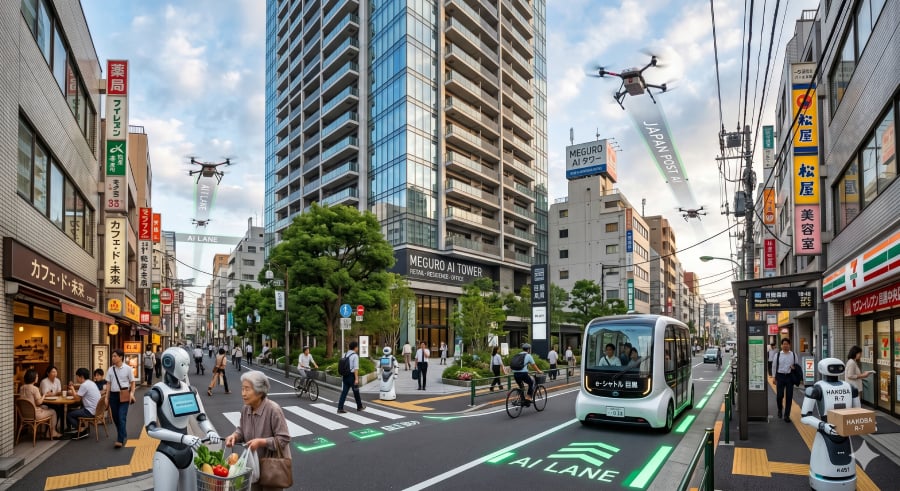
Tokyo Plans Robot City Testbed in Meguro Ward

2026-05-25
eWEEK
Why's our monitor labelling this an incident or hazard?
The event involves AI systems explicitly (humanoid robots, autonomous transport, AI-powered services) and their use in a real-world environment is planned. However, no harm or negative outcomes have occurred yet, nor is there a direct indication that harm is imminent. The article discusses a future project intended to test AI systems in a controlled urban setting, which could plausibly lead to AI-related incidents or hazards once operational, but currently remains a planned initiative without realized harm. Therefore, it fits best as Complementary Information, providing context and updates on AI ecosystem developments rather than reporting an AI Incident or AI Hazard.