US Law Enforcement Warns of Potential Anti-Tech Extremism Linked to AI

Thumbnail Image

The information displayed in the AIM should not be reported as representing the official views of the OECD or of its member countries.

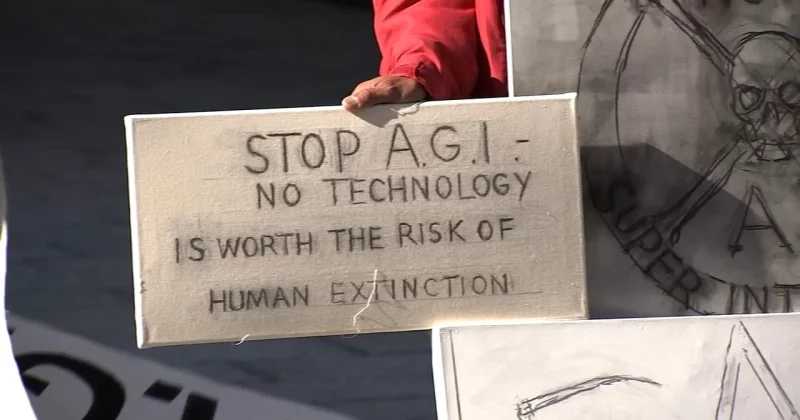
US law enforcement agencies, including the Department of Homeland Security and FBI, have issued warnings about the risk of large-scale protests and violent extremism targeting AI technology and data centers. These warnings highlight concerns that rapid AI adoption could fuel civil unrest, especially in urban areas like New York City.[AI generated]

Why's our monitor labelling this an incident or hazard?

The article explicitly involves AI systems as the subject of societal backlash and law enforcement concern, indicating AI's role in the context. However, no direct or indirect harm caused by AI systems is reported; instead, the concern is about potential future violent extremism linked to anti-AI movements. This fits the definition of an AI Hazard, as the development and use of AI could plausibly lead to incidents of civil unrest or violence. The article does not describe an actual AI Incident, nor is it primarily about governance responses or updates, so it is not Complementary Information. It is not unrelated because AI is central to the discussion.[AI generated]
AI principles
Human wellbeingDemocracy & human autonomy

Industries
IT infrastructure and hostingDigital security

Affected stakeholders
BusinessGeneral public

Harm types
Physical (injury)Economic/PropertyPublic interest

Severity
AI hazard


Articles about this incident or hazard

Thumbnail Image

The Feds and Law Enforcement Are Worried AI Backlash Could Turn Into â€~Anti-Tech Violent Extremism’

2026-05-26
Gizmodo
Why's our monitor labelling this an incident or hazard?
The article explicitly involves AI systems as the subject of societal backlash and law enforcement concern, indicating AI's role in the context. However, no direct or indirect harm caused by AI systems is reported; instead, the concern is about potential future violent extremism linked to anti-AI movements. This fits the definition of an AI Hazard, as the development and use of AI could plausibly lead to incidents of civil unrest or violence. The article does not describe an actual AI Incident, nor is it primarily about governance responses or updates, so it is not Complementary Information. It is not unrelated because AI is central to the discussion.
Thumbnail Image

US Law Enforcement Warns of 'Anti-Tech Extremism' as AI Hatred Grows

2026-05-26
Wired
Why's our monitor labelling this an incident or hazard?
The article does not report any direct or indirect harm caused by AI systems, nor does it describe an AI system malfunction or misuse leading to harm. Instead, it details law enforcement's surveillance and categorization of anti-technology extremism as a potential threat, reflecting societal and governance responses to AI's societal impact. This fits the definition of Complementary Information, as it provides supporting context and updates on societal and governance responses to AI-related concerns without describing a new AI Incident or AI Hazard.
Thumbnail Image

Anti-AI activism might land you on a law enforcement watchlist

2026-05-26
Android Authority
Why's our monitor labelling this an incident or hazard?
The article discusses law enforcement's categorization and monitoring of anti-AI activism as a new form of extremism, which is a governance and societal response to AI developments. There is no indication that the AI systems themselves caused harm or that harm is plausibly imminent due to AI system malfunction or misuse. The focus is on the response to activism, not on AI system failures or misuse causing harm. Hence, it fits the definition of Complementary Information rather than an Incident or Hazard.
Thumbnail Image

US Law Enforcement Warns of 'Anti-Tech Extremism' as AI Hatred Grows

2026-05-26
Democratic Underground
Why's our monitor labelling this an incident or hazard?
The event involves AI systems only indirectly as the source of societal concern and potential unrest. The law enforcement reports highlight a plausible future risk of harm (civil unrest, violent extremism) related to AI adoption, which fits the definition of an AI Hazard. There is no evidence of actual harm caused by AI systems or their malfunction, so it is not an AI Incident. The article is not merely complementary information about AI developments or governance responses but focuses on a credible potential threat. Therefore, the classification as an AI Hazard is appropriate.
Thumbnail Image

Why the FBI Now Sees "AI Criticism" as Domestic Terrorism

2026-05-26
Gadget Review
Why's our monitor labelling this an incident or hazard?
The event involves AI systems indirectly as the focus of criticism and surveillance but does not describe harm caused by the development, use, or malfunction of AI systems. Instead, it details government actions surveilling and potentially infringing on rights of individuals expressing concerns about AI, which constitutes a violation of rights or breach of legal protections if realized. However, the article does not report direct harm caused by AI systems but rather the securitization of AI criticism. This fits the definition of Complementary Information, as it provides context on societal and governance responses related to AI, highlighting surveillance practices and their implications for civil liberties, without describing a new AI Incident or AI Hazard.
Thumbnail Image

Intelligence Bureau warns of anti-tech violent extremism amid AI fears

2026-05-26
Crypto Briefing
Why's our monitor labelling this an incident or hazard?
The article involves AI systems indirectly through the infrastructure supporting AI (data centers) and societal reactions to AI technology. The new threat category and protests indicate a credible risk of future harm (civil unrest, violence) linked to AI deployment. Since no actual harm or incident caused by AI systems is reported, but a plausible future harm is identified, the classification as an AI Hazard is appropriate.
Thumbnail Image

Wired on US Law Enforcement Warns

2026-05-26
onfocus
Why's our monitor labelling this an incident or hazard?
The article discusses a credible warning from US law enforcement about potential future harms stemming from AI technology, including societal disruption and violent extremism. This fits the definition of an AI Hazard, as it involves plausible future harm linked to AI's societal impact. There is no indication of realized harm or an ongoing incident, so it is not an AI Incident. The report's novel categorization and warning represent a credible risk rather than a response or update, so it is not Complementary Information. Therefore, the classification is AI Hazard.
Thumbnail Image

US Law Enforcement Warns of 'Anti-Tech Extremism' as AI Hatred Grows

2026-05-26
DNYUZ
Why's our monitor labelling this an incident or hazard?
The article involves AI systems in the background (AI adoption, AI existential risk fears) but does not report any harm caused by AI systems or plausible future harm directly linked to AI system development, use, or malfunction. Instead, it details law enforcement surveillance and intelligence activities targeting anti-technology groups and protests, which is a governance and societal response to AI-related developments. There is no indication that AI systems themselves caused or could plausibly cause harm here. The main focus is on the surveillance and categorization of dissent, making this a case of Complementary Information rather than an Incident or Hazard.
Thumbnail Image

Anti-AI extremism is taking a darker turn

2026-05-27
The Deep View
Why's our monitor labelling this an incident or hazard?
The article explicitly mentions government agencies warning about the potential for large-scale protests and extremist violence linked to AI and its infrastructure, which could disrupt communities and critical infrastructure. No actual harm or incident has occurred yet, but the credible warnings about possible future harm meet the criteria for an AI Hazard. The AI system's role is indirect, as the extremism is a reaction to AI technology and its societal impact, but the risk is plausible and significant. Hence, the classification is AI Hazard.