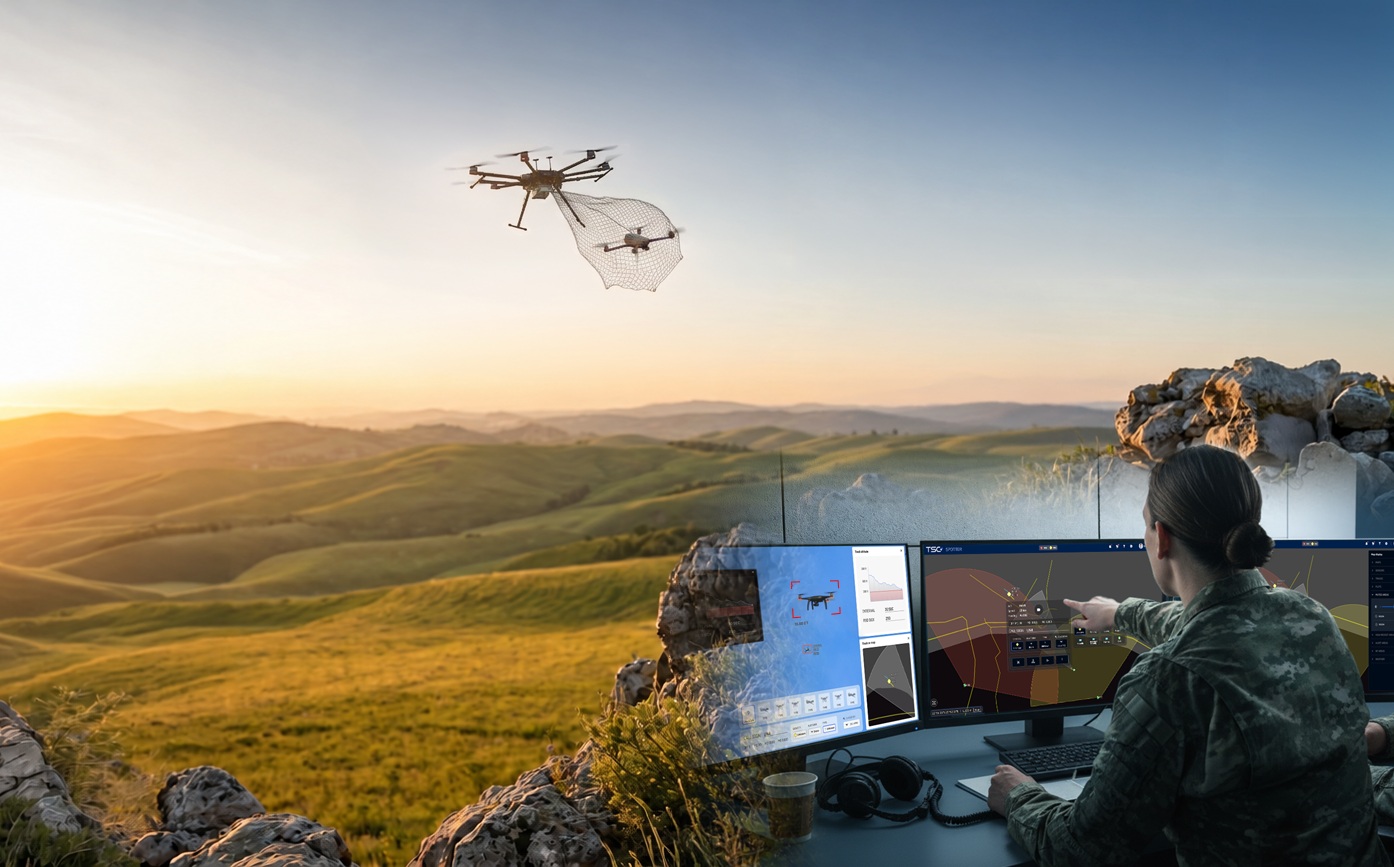
TSG Unveils Autonomous AI Defense System Against Drones at Berlin Air Show

Thumbnail Image

The information displayed in the AIM should not be reported as representing the official views of the OECD or of its member countries.

Israeli company TSG launched DroneWeaver, an AI-powered autonomous defense system for countering drones and UAVs, at the ILA Berlin Air Show. The system automates 90% of threat detection and response, aiming to reduce operator workload and provide real-time recommendations. No incidents of harm have been reported.[AI generated]

Why's our monitor labelling this an incident or hazard?

The article explicitly describes an AI system (DroneWeaver) that autonomously manages and responds to drone threats, involving real-time AI decision-making and automated countermeasures. Although no incident of harm is reported, the system's deployment in security and military contexts inherently carries risks of physical harm, property damage, or disruption if the AI malfunctions or is misused. Since the article focuses on the system's capabilities and potential applications without describing any realized harm, it fits the definition of an AI Hazard rather than an AI Incident. It is not Complementary Information because it is not an update or response to a prior incident, nor is it unrelated as it clearly involves an AI system with potential for harm.[AI generated]
AI principles
AccountabilityTransparency & explainability

Industries
Government, security, and defence

Affected stakeholders
General public

Harm types
Physical (injury)Economic/PropertyHuman or fundamental rights

Severity
AI hazard

Business function:
Monitoring and quality control

AI system task:
Event/anomaly detectionGoal-driven organisation


Articles about this incident or hazard

Thumbnail Image

TSG מציגה בברלין מערכת נגד רחפנים: אוטומציה של כ-90% ותגובה בתוך שניות

2026-06-10
Bizportal
Why's our monitor labelling this an incident or hazard?
The article explicitly describes an AI system (DroneWeaver) that autonomously manages and responds to drone threats, involving real-time AI decision-making and automated countermeasures. Although no incident of harm is reported, the system's deployment in security and military contexts inherently carries risks of physical harm, property damage, or disruption if the AI malfunctions or is misused. Since the article focuses on the system's capabilities and potential applications without describing any realized harm, it fits the definition of an AI Hazard rather than an AI Incident. It is not Complementary Information because it is not an update or response to a prior incident, nor is it unrelated as it clearly involves an AI system with potential for harm.
Thumbnail Image

טיאסג'י משיקה מערכת AI אוטונומית להגנה מפני רחפנים וכטב"מים

2026-06-10
sponser
Why's our monitor labelling this an incident or hazard?
The article explicitly describes an AI system with autonomous decision-making capabilities in a military defense context, which can plausibly lead to harm if it malfunctions or is misused (e.g., unintended targeting, collateral damage). No actual harm or incident is reported, only the system's launch and capabilities. This fits the definition of an AI Hazard, as the system's use could plausibly lead to injury, disruption, or other harms in the future. It is not Complementary Information because it is not an update or response to a prior incident, nor is it unrelated since the AI system and its potential risks are central to the report.
Thumbnail Image

החברה הביטחונית הישראלית פורצת דרך: פיתחה מערכת הגנה מרחפנים

2026-06-10
Ice
Why's our monitor labelling this an incident or hazard?
The described system is an AI-enabled defense technology designed to counter drones, which can be inferred to involve AI systems for detection and response. While the system's deployment and capabilities suggest a potential for harm if misused or malfunctioning (e.g., wrongful targeting or escalation), the article does not report any such harm occurring. Therefore, it does not meet the criteria for an AI Incident. Since the system is operational and has undergone pilot tests, and given the nature of the technology, there is a plausible risk of future harm if misapplied or malfunctioning, qualifying it as an AI Hazard. However, the article primarily presents the system's development and deployment without emphasizing risk or warnings about potential harm, so it is best classified as Complementary Information providing context on AI defense capabilities rather than a direct hazard or incident.
Thumbnail Image

ILA Berlin Air Show: חברת TSG חושפת מערכת אוטונומית לניהול ההגנה מפני רחפנים וכטב"מים

2026-06-10
Israel Defense
Why's our monitor labelling this an incident or hazard?
The event involves an AI system explicitly described as autonomous and used for defense against drone threats, which can plausibly lead to harms such as injury, disruption, or other significant impacts if misused or malfunctioning. However, the article only announces the system's launch and operational readiness without any indication of actual harm or incidents. Thus, it fits the definition of an AI Hazard rather than an AI Incident or Complementary Information. It is not unrelated because the AI system and its potential impacts are central to the report.