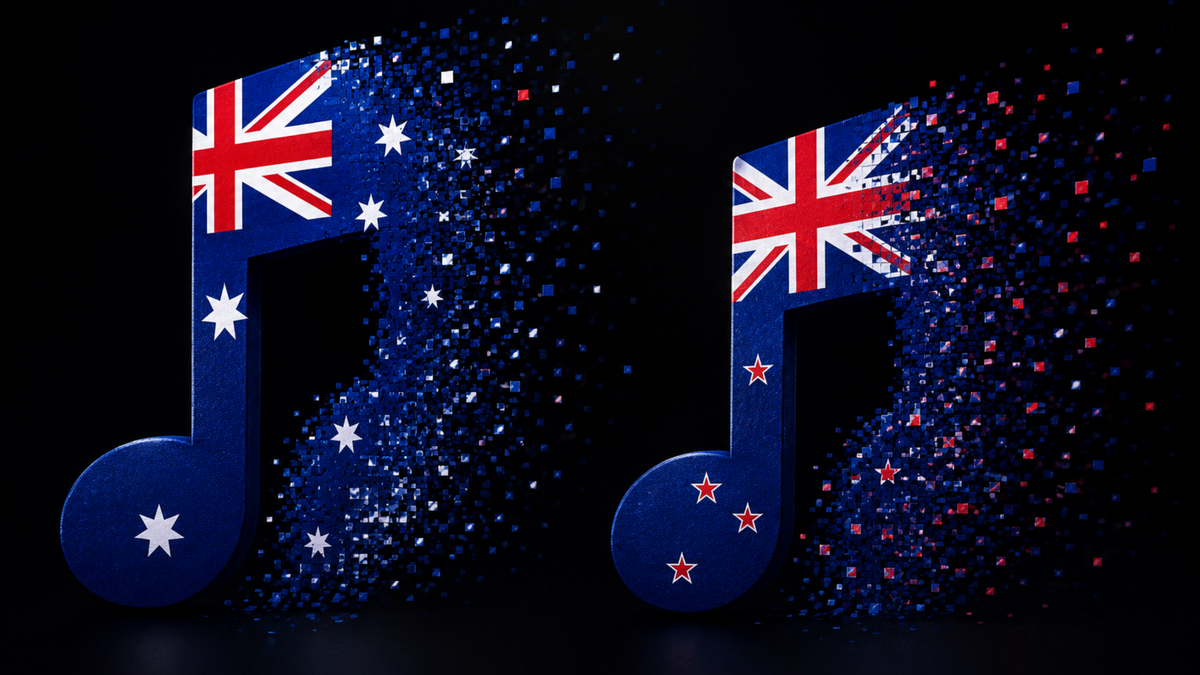
AI Companies Accused of Stealing Australian and New Zealand Music for Training Datasets

Thumbnail Image

The information displayed in the AIM should not be reported as representing the official views of the OECD or of its member countries.

Multiple investigations reveal AI companies have used millions of copyrighted songs by Australian and New Zealand artists, including Kylie Minogue and Lorde, to train generative AI models without permission or payment. This unauthorized use has led to significant financial and cultural harm to creators, sparking industry backlash.[AI generated]

Why's our monitor labelling this an incident or hazard?

The event explicitly involves AI systems being developed using large datasets containing copyrighted music without authorization, leading to a violation of intellectual property rights and financial harm to artists. This fits the definition of an AI Incident because the AI system's development and use have directly led to a breach of intellectual property rights and economic harm to individuals (artists). The article details the harm occurring and the lack of licensing or payment, confirming realized harm rather than potential harm.[AI generated]
AI principles
AccountabilityTransparency & explainability

Industries
Arts, entertainment, and recreation

Affected stakeholders
Workers

Harm types
Economic/PropertyPublic interest

Severity
AI incident

Business function:
Research and development

AI system task:
Content generation


Articles about this incident or hazard

Thumbnail Image

AI firms stealing music from Aussie icons

2026-06-19
The Courier Mail
Why's our monitor labelling this an incident or hazard?
The event explicitly involves AI systems being developed using large datasets containing copyrighted music without authorization, leading to a violation of intellectual property rights and financial harm to artists. This fits the definition of an AI Incident because the AI system's development and use have directly led to a breach of intellectual property rights and economic harm to individuals (artists). The article details the harm occurring and the lack of licensing or payment, confirming realized harm rather than potential harm.
Thumbnail Image

Proof Of Theft: Investigation Uncovers The Australian And New Zealand Songs AI Companies Have Stolen For Datasets

2026-06-19
Scoop
Why's our monitor labelling this an incident or hazard?
The event involves AI systems trained on large datasets containing copyrighted music from Australian and New Zealand artists without authorization. This unauthorized use infringes on intellectual property rights, a recognized harm under the AI Incident definition (violation of human rights or breach of obligations under applicable law protecting intellectual property rights). The harm is realized, as creators face significant revenue losses and cultural harm, especially to Indigenous artists. Therefore, this qualifies as an AI Incident due to direct and ongoing violations caused by AI system development and use.
Thumbnail Image

AI Firms Accused Of Stealing Kylie Minogue Music

2026-06-20
Star Observer
Why's our monitor labelling this an incident or hazard?
The article explicitly states that AI developers have used hundreds of Kylie Minogue's songs and other artists' works in AI training datasets without permission or payment, which is a violation of intellectual property rights. The involvement of AI systems is clear as the datasets are used to train AI models. The harm is realized and ongoing, as creators are losing royalties and control over their work. Therefore, this event meets the criteria for an AI Incident due to violation of intellectual property rights caused by the use of AI systems.
Thumbnail Image

Business.Scoop " Proof Of Theft: Investigation Uncovers The Australian And New Zealand Songs AI Companies Have Stolen For Datasets

2026-06-19
Scoop
Why's our monitor labelling this an incident or hazard?
The article explicitly states that AI companies have taken millions of songs, including those of prominent Australian and New Zealand artists, without permission or payment to train AI systems. This unauthorized use breaches copyright law and harms the creators financially and culturally, especially Indigenous artists whose cultural heritage is affected. The involvement of AI in the development and use of these datasets is clear, and the harm is direct and ongoing. Therefore, this qualifies as an AI Incident under the definition of violations of intellectual property rights and harm to communities.
Thumbnail Image

APRA AMCOS says Atlantic investigation proves AI companies have plundered the "life's work of Australian and New Zealand songwriters

2026-06-19
CMU
Why's our monitor labelling this an incident or hazard?
The article explicitly states that AI companies have used copyrighted music from Australian and New Zealand artists without licenses to train generative AI models. This unauthorized use constitutes a violation of intellectual property rights, which is one of the defined harms under AI Incidents. The AI systems' development and use (training generative models) directly led to this harm. The event is not merely a potential risk but an ongoing issue with concrete examples and evidence from The Atlantic's investigation. Hence, it meets the criteria for an AI Incident rather than a hazard or complementary information.