Japan Considers Palantir AI for Military Command and Control

Thumbnail Image

The information displayed in the AIM should not be reported as representing the official views of the OECD or of its member countries.

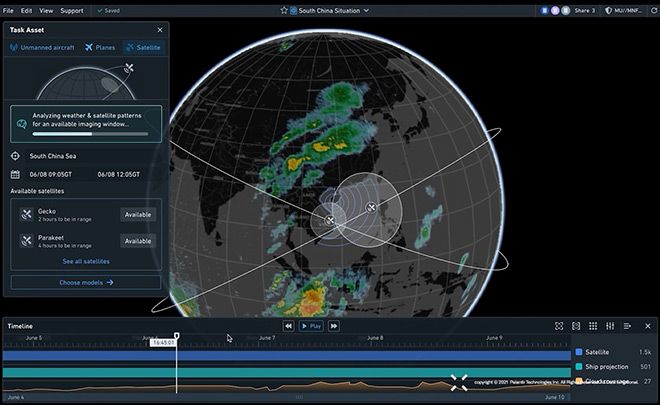
Japan's Defense Ministry is evaluating Palantir's Maven Smart System, an AI-driven command-and-control platform, for the Self-Defense Forces. The move raises concerns about foreign dependence, data security, and the risks of AI errors in military decision-making, prompting calls for a domestic AI alternative.[AI generated]

Why's our monitor labelling this an incident or hazard?

The article involves an AI system explicitly (Palantir's Maven Smart System) and its potential use in military decision-making, which could plausibly lead to significant harms if misused or malfunctioning, such as harm to national security or human rights. However, since the AI system is only being considered and tested in exercises without any reported harm or malfunction, this constitutes a potential risk rather than an actual incident. The concerns about dependence on foreign AI and information leaks further support the classification as a hazard. Thus, the event fits the definition of an AI Hazard rather than an AI Incident or Complementary Information.[AI generated]

AI principles
Robustness & digital securitySafety

Industries
Government, security, and defence

Affected stakeholders
GovernmentGeneral public

Harm types
Public interest

Severity
AI hazard

AI system task:
Goal-driven organisationReasoning with knowledge structures/planning


Articles about this incident or hazard

Thumbnail Image

Japan looking at U.S. AI military system for SDF decision-making | The Asahi Shimbun Asia & Japan Watch

2026-06-26
朝日新聞デジタル
Why's our monitor labelling this an incident or hazard?
The article involves an AI system explicitly (Palantir's Maven Smart System) and its potential use in military decision-making, which could plausibly lead to significant harms if misused or malfunctioning, such as harm to national security or human rights. However, since the AI system is only being considered and tested in exercises without any reported harm or malfunction, this constitutes a potential risk rather than an actual incident. The concerns about dependence on foreign AI and information leaks further support the classification as a hazard. Thus, the event fits the definition of an AI Hazard rather than an AI Incident or Complementary Information.
Thumbnail Image

Japan's Self-Defense Forces Integrate Palantir AI

2026-06-26
Chosun.com
Why's our monitor labelling this an incident or hazard?
The event involves the use of an AI system (Palantir's Maven Smart System) in military command and control, which is explicitly described. The AI system's role is to analyze and prioritize targets and suggest strategies, which directly influences military actions with potential lethal consequences. Although no harm has yet occurred or been reported, the nature of the AI system's deployment in military decision-making plausibly could lead to injury, death, or other significant harms. Hence, it fits the definition of an AI Hazard rather than an AI Incident. The article does not focus on responses, updates, or general AI news unrelated to harm potential, so it is not Complementary Information or Unrelated.
Thumbnail Image

Japan considering US firm Palantir for army command-and-control: Report

2026-06-26
Anadolu Ajansı
Why's our monitor labelling this an incident or hazard?
The event involves the use and potential development of AI systems for military command-and-control, which is an AI-related development with possible future implications. However, there is no indication that any harm, malfunction, or violation has occurred yet. The article focuses on planning, evaluation, and strategic considerations rather than an actual incident or hazard. Therefore, this is best classified as Complementary Information, providing context and updates on AI adoption and governance considerations in the military sector.
Thumbnail Image

Japan weighs Palantir AI for SDF command operations

2026-06-26
UPI
Why's our monitor labelling this an incident or hazard?
The article explicitly involves AI systems (command-and-control AI) in military decision-making processes. Although no incident of harm has occurred yet, the article discusses credible risks and concerns about AI errors, data control, and operational responsibility that could plausibly lead to harm in the future. The presence of AI in such a critical and sensitive domain as military command and control, combined with the potential for errors or misuse, fits the definition of an AI Hazard. There is no indication that harm has already occurred, so it is not an AI Incident. The article is not merely complementary information because it focuses on the potential risks and implications of adopting AI in military command, not just updates or responses to past events.
Thumbnail Image

Japan considering US firm Palantir for army command-and-control

2026-06-26
anews
Why's our monitor labelling this an incident or hazard?
The event involves an AI system (Palantir's AI-enabled command-and-control platform) and its potential use in military operations, which could plausibly lead to significant harms given the military context and AI's role in targeting and decision-making. However, since no actual harm, malfunction, or misuse has occurred or been reported, and the article centers on consideration and planning rather than an incident or imminent hazard, the event is best classified as Complementary Information. It provides important context about AI's evolving role in military command systems and strategic governance discussions without describing a realized AI Incident or an immediate AI Hazard.