Hwaseong City Launches AI-Based Disaster Safety Mapping Platform

Thumbnail Image

The information displayed in the AIM should not be reported as representing the official views of the OECD or of its member countries.

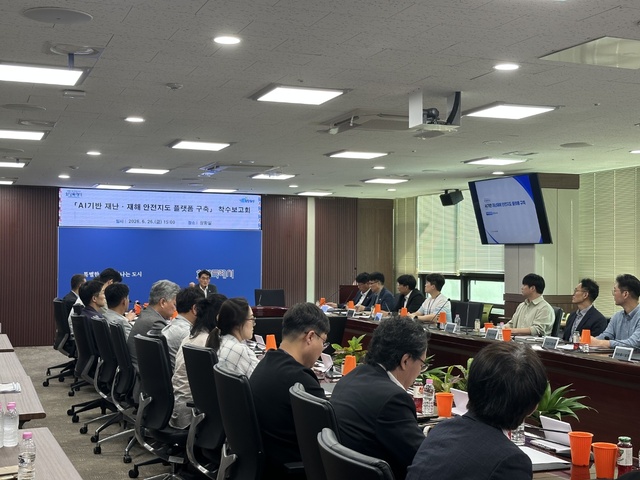
Hwaseong City, South Korea, has initiated the development of an AI-powered disaster safety mapping platform that integrates spatial and disaster data to monitor and manage risks such as fires, floods, and landslides. The system aims to enhance real-time risk analysis and emergency response, though no harm or incidents have occurred yet.[AI generated]

Why's our monitor labelling this an incident or hazard?

The event involves the development and intended use of an AI system for disaster risk management and decision support. However, there is no indication that any harm has occurred or that the AI system has malfunctioned or been misused. The article focuses on the planned construction and expected benefits of the AI platform, which could plausibly lead to improved safety outcomes. Therefore, this event represents a potential future application of AI with plausible benefits and risks but no realized harm or incident at this stage. Hence, it qualifies as an AI Hazard rather than an AI Incident or Complementary Information.[AI generated]
Industries
Government, security, and defenceEnvironmental services

Severity
AI hazard

Business function:
Monitoring and quality control

AI system task:
Event/anomaly detectionForecasting/prediction


Articles about this incident or hazard

Thumbnail Image

화성특례시, AI 기반 재난안전지도 플랫폼 구축 착수

2026-06-28
브릿지경제
Why's our monitor labelling this an incident or hazard?
The event involves the development and intended use of an AI system for disaster risk management and decision support. However, there is no indication that any harm has occurred or that the AI system has malfunctioned or been misused. The article focuses on the planned construction and expected benefits of the AI platform, which could plausibly lead to improved safety outcomes. Therefore, this event represents a potential future application of AI with plausible benefits and risks but no realized harm or incident at this stage. Hence, it qualifies as an AI Hazard rather than an AI Incident or Complementary Information.
Thumbnail Image

화성시, 전국 최초 'AI 재난 지도' 구축..."위험지역 24시간 상시 진단

2026-06-28
아시아경제
Why's our monitor labelling this an incident or hazard?
An AI system is explicitly involved as the platform uses AI to analyze spatial and disaster data in real-time. The use of AI here is for monitoring and managing disaster risks, which directly relates to preventing or mitigating harm to people and property. However, the article does not report any actual harm or incidents caused by the AI system; rather, it describes a proactive safety measure. Therefore, this event represents a plausible future risk reduction and management system rather than an incident or hazard causing harm. It is best classified as Complementary Information because it provides context on AI deployment for public safety without reporting realized or potential harm.
Thumbnail Image

화성특례시, 전국 최초 AI·공간정보 융합 '미래형 재난·재해 안전지도' 구축 착수

2026-06-28
데일리안
Why's our monitor labelling this an incident or hazard?
While the AI system is being developed and intended for use in disaster risk analysis and management, there is no indication that any harm has occurred or that the system has malfunctioned. The article focuses on the project launch and future plans, highlighting potential benefits and safety improvements. Therefore, this event represents a plausible future use of AI that could lead to harm mitigation but does not describe any realized harm or incident. Hence, it qualifies as an AI Hazard, as the AI system's use could plausibly lead to preventing or managing incidents, but no incident has yet occurred.
Thumbnail Image

화성특례시, 전국 최초 AI·공간정보 융합 '미래형 재난·재해 안전지도' 구축

2026-06-28
팝콘뉴스
Why's our monitor labelling this an incident or hazard?
The event involves the development and planned use of an AI system integrated with spatial data for disaster risk management. There is no indication that any harm has occurred due to the AI system's malfunction or misuse. Instead, the AI system is intended to enhance safety and disaster response. Since no actual harm or incident is reported, but the AI system's use could plausibly lead to harm if it fails or is misused, this qualifies as an AI Hazard. It is not Complementary Information because the article is not about a response to a past incident or an update but about the initial establishment of the system. It is not unrelated because AI involvement is explicit and central to the event.
Thumbnail Image

화성시, AI 재난안전지도 구축 착수

2026-06-29
매일일보
Why's our monitor labelling this an incident or hazard?
An AI system is explicitly involved, as the platform uses AI combined with spatial data to analyze and predict disaster risks. The AI's use is intended to support disaster management and response, which directly relates to harm prevention and safety. However, the article describes the project initiation and plans, with no actual harm or incident reported yet. The AI system's involvement could plausibly lead to preventing or mitigating harm in the future, but no realized harm or malfunction is described. Therefore, this event qualifies as an AI Hazard, reflecting a credible potential for AI to impact disaster safety positively or negatively in the future.
Thumbnail Image

화성시, 전국 최초 AI·공간정보 융합 재난안전지도 구축

2026-06-29
경인일보
Why's our monitor labelling this an incident or hazard?
The event involves the development and intended use of an AI system for disaster risk prediction and management, which could plausibly lead to improved safety outcomes. However, there is no indication that the AI system has malfunctioned or caused any harm, nor that any harm has occurred due to its use. The article primarily discusses the project launch, goals, and expected impacts, which fits the definition of Complementary Information as it provides context and updates on AI applications in disaster management without reporting an incident or hazard.