


























The event involves AI systems or AI-enabled tools used maliciously in cyberattacks that have directly led to harms: physical risk from overheating refrigerators (harm to property and potential injury), disruption of emergency alert systems (disruption of critical infrastructure and harm to communities), and large-scale theft in cryptocurrency exchanges. The article explicitly mentions AI's role in intensifying these threats and enabling attackers to exploit vulnerabilities more efficiently. The harms are realized and ongoing, not merely potential. Hence, the event meets the criteria for an AI Incident rather than a hazard or complementary information.[AI generated]

AIM: AI Incidents and Hazards Monitor
Automated media discourse monitor of AI incidents and hazards (Beta)
AI-related legislation is gaining traction, and effective policymaking needs evidence, foresight and international cooperation. The OECD AI Incidents and Hazards Monitor (AIM) documents AI incidents and hazards to help policymakers, AI practitioners, and all stakeholders worldwide gain valuable insights into the risks and harms of AI systems. Over time, AIM will help to show risk patterns and establish a collective understanding of AI incidents and hazards and their multifaceted nature, serving as an important tool for trustworthy AI. AI incidents seem to be getting more media attention lately, but they've actually gone down as a share of all AI news (see chart below!).
The information displayed in the AIM should not be reported as representing the official views of the OECD or of its member countries.
Advanced Search Options
As percentage of total AI events
Show summary statistics of AI incidents & hazards

AI-Enabled Cyberattacks Disrupt Critical Infrastructure Across Europe
A wave of AI-facilitated cyberattacks has targeted European businesses, disrupting refrigeration systems, blood banks, and emergency alert networks. Hackers exploited AI to identify vulnerabilities, causing physical and financial harm, including overheating fridges and false nuclear alerts. Authorities warn of escalating risks as AI intensifies the sophistication and impact of such attacks.[AI generated]
AI principles:
Industries:
Affected stakeholders:
Harm types:
AI system task:
Why's our monitor labelling this an incident or hazard?

Turkey Plans AI-Controlled Drone Highways for Autonomous UAV Flights
Turkey's Ministry of Transport announced plans to establish AI-supported digital corridors, or "drone highways," for autonomous and long-range UAV flights. These corridors, managed by AI systems for route planning and traffic control, aim to enable safe, controlled drone operations for cargo and medical logistics, excluding hobby flights. No incidents reported yet.[AI generated]
Industries:
Autonomy level:
AI system task:
Why's our monitor labelling this an incident or hazard?
The article explicitly mentions AI-supported autonomous drone flights and the legal framework enabling their operation, indicating the presence of AI systems. No actual harm or incident is reported, so it is not an AI Incident. The event is not merely general AI news or a beneficial use countering external harm, but rather the creation of a system that could plausibly lead to harm if malfunctions or failures occur. Hence, it fits the definition of an AI Hazard.[AI generated]

AI-Driven Phishing Attacks Dominate Global Social Engineering Threats
According to the ESET SMB Cyber Readiness Index 2026, over 80% of global social engineering attacks now use AI, enabling cybercriminals to rapidly generate convincing phishing emails, malware, and ransomware. This widespread malicious use of AI has led to significant security breaches and privacy violations worldwide.[AI generated]
AI principles:
Industries:
Affected stakeholders:
Harm types:
Autonomy level:
AI system task:
Why's our monitor labelling this an incident or hazard?
The article explicitly describes AI systems being used to create and accelerate cyberattacks, including phishing, ransomware, and malware, which have directly led to harm such as data breaches and security incidents affecting organizations worldwide. The harms include violations of privacy and security, which fall under harm to communities and potentially violations of rights. The AI systems are central to these harms, as they enable more effective and widespread attacks. This meets the criteria for an AI Incident because the AI's use has directly led to realized harm. The article does not merely warn of potential harm (which would be a hazard) nor does it focus on responses or updates (which would be complementary information).[AI generated]

Suno AI Sued for Unauthorized Use of Elvis Presley and Eminem's Music and Likeness
Rights holders for Elvis Presley and Eminem have filed lawsuits against AI music generator Suno, alleging it trained its models on hundreds of copyrighted songs and enabled users to generate music imitating the artists' voices and styles without permission, violating copyright and publicity rights. The cases cite U.S. and Tennessee law.[AI generated]
AI principles:
Industries:
Affected stakeholders:
Harm types:
Autonomy level:
AI system task:
Why's our monitor labelling this an incident or hazard?
The AI music generator app is explicitly described as using AI to generate music imitating specific artists without permission, which constitutes unauthorized use of copyrighted material and likeness. This directly implicates violations of intellectual property rights and possibly other legal rights, which are harms under the AI Incident definition. The involvement of AI in generating the infringing content is clear, and the lawsuits represent direct consequences of the AI system's use. Although the case is ongoing and allegations are not yet proven, the event describes an AI Incident because the harm (copyright infringement and rights violations) is alleged to have already occurred due to the AI system's outputs.[AI generated]

Florida Governor Warns of AI-Driven Job Losses
Florida Governor Ron DeSantis warned that the rapid expansion of artificial intelligence could lead to half the workforce losing their jobs, citing concerns from tech executives. He criticized the optimistic economic narrative around AI, highlighting potential economic and social risks, especially in Florida.[AI generated]
AI principles:
Industries:
Affected stakeholders:
Harm types:
Why's our monitor labelling this an incident or hazard?
The article does not describe a realized harm caused directly or indirectly by AI systems but highlights credible concerns and early indicators of potential future harm related to AI-driven job displacement and environmental burdens from data centers. It also mentions legislative actions aimed at regulating AI infrastructure. Since the harms are plausible and potential rather than actualized, and the article centers on warnings and policy responses, this fits the definition of an AI Hazard rather than an AI Incident or Complementary Information.[AI generated]
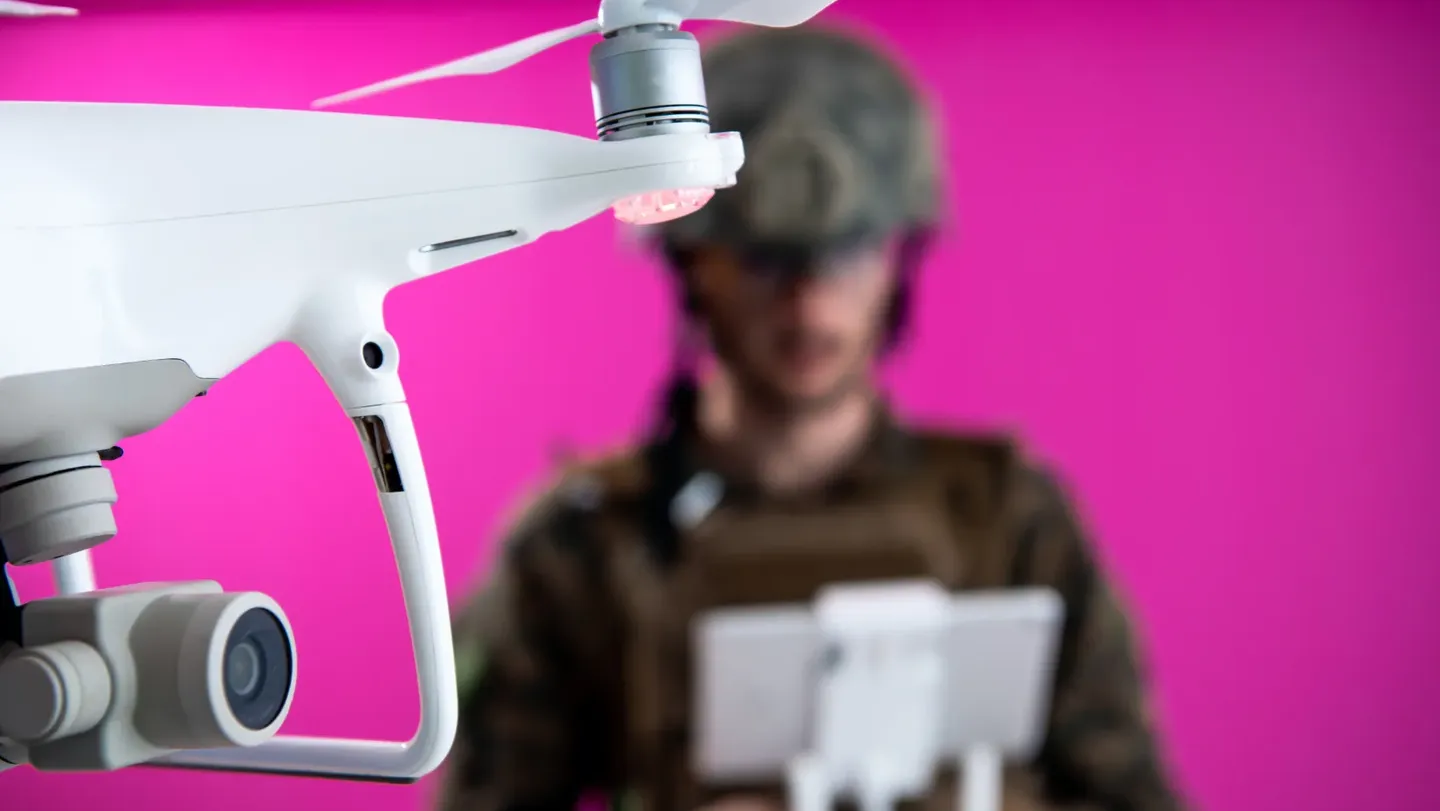
Greece Plans Major Military AI Integration with Drones and Fighter Jets by 2030
Greece's Ministry of National Defence, led by Nikos Dendias, announced a comprehensive modernization plan for the Hellenic Air Force by 2030, including 200 advanced fighter jets and hundreds of AI-enabled unmanned aerial vehicles (drones). This large-scale military AI deployment poses credible future risks associated with autonomous weapons systems.[AI generated]
AI principles:
Industries:
Affected stakeholders:
Harm types:
Autonomy level:
AI system task:
Why's our monitor labelling this an incident or hazard?
The article explicitly mentions the integration of hundreds of unmanned aerial vehicles and the use of artificial intelligence in future operational concepts, such as collaborative combat aircraft and decision-making systems. While no harm has occurred yet, the development and deployment of AI-enabled military drones and autonomous systems inherently carry plausible risks of harm, including escalation of military conflicts or accidental engagements. The event is not an AI Incident because no harm has materialized, nor is it Complementary Information or Beneficial Use, as it is not about responding to external harm but about military capability development. Hence, it fits the definition of an AI Hazard.[AI generated]

AI-Driven Illegal Gambling Network Dismantled in Turkey
Turkish authorities conducted simultaneous operations across 39 provinces, targeting 194 suspects who used the AI-powered 'Avcı' program via Telegram to facilitate illegal betting and gambling. The investigation led to 121 arrests, highlighting the central role of AI in enabling large-scale unlawful gambling activities.[AI generated]
AI principles:
Industries:
Affected stakeholders:
Harm types:
Autonomy level:
AI system task:
Why's our monitor labelling this an incident or hazard?
The article explicitly mentions the use of an AI-supported program to conduct illegal gambling activities, which is a breach of legal obligations and harms communities. The AI system's involvement is central to the illegal operation, and the law enforcement response confirms the harm has materialized. Hence, this qualifies as an AI Incident due to the direct link between the AI system's use and the illegal, harmful activity.[AI generated]
AI-Generated Fake Explicit Images Used to Blackmail Children in Bosnia and Herzegovina
In Bosnia and Herzegovina, perpetrators are using AI to create fake explicit images of children, which are then used to blackmail and coerce victims into sending real photos. This digital abuse, highlighted by Abida Pehlić of the Novi put association, is causing psychological harm and complicating detection and prevention efforts.[AI generated]
AI principles:
Industries:
Affected stakeholders:
Harm types:
AI system task:
Why's our monitor labelling this an incident or hazard?
The event involves the use of AI to generate fake explicit photographs of children, which are then used to blackmail and coerce real children into sending actual photos. This constitutes direct harm to the mental health and rights of children, fulfilling the criteria for an AI Incident. The AI system's role is pivotal in producing the harmful content that leads to psychological and sexual exploitation harms. Therefore, this event is classified as an AI Incident.[AI generated]

AI-Generated Deepfake of Roberto Justus Used in Investment Scam
Criminals used AI to create a deepfake video impersonating Brazilian businessman Roberto Justus, promoting a fraudulent investment platform. The realistic video led to financial losses for victims. Justus publicly denounced the scam, clarified his non-involvement, and took legal action to remove the content, but the video continues to circulate online.[AI generated]
AI principles:
Industries:
Affected stakeholders:
Harm types:
AI system task:
Why's our monitor labelling this an incident or hazard?
The event involves the use of an AI system (deepfake technology) to generate synthetic video and audio impersonating a real person without consent. This AI-generated content is used to perpetrate a financial scam, causing harm to individuals who are defrauded. The harm is realized (people have lost money), and the AI system's role is pivotal in enabling the scam. Therefore, this qualifies as an AI Incident due to the direct link between AI misuse and harm to people (financial injury).[AI generated]

Turkish Health Authority Warns Against Using AI for Mushroom Identification
Uşak Provincial Health Directorate in Turkey warned citizens not to rely on AI applications for identifying wild mushrooms, as these systems assess only visual similarity and cannot detect deadly toxins. Misidentification could lead to fatal poisoning, highlighting a significant health risk associated with AI use in this context.[AI generated]
AI principles:
Industries:
Affected stakeholders:
Harm types:
Business function:
Autonomy level:
AI system task:
Why's our monitor labelling this an incident or hazard?
The article explicitly mentions AI applications used for mushroom identification, which rely on visual similarity but cannot detect toxins, thus posing a risk of fatal poisoning if trusted. This fits the definition of an AI Hazard, as the AI system's use could plausibly lead to harm (injury or death from poisoning). There is no indication that harm has already occurred due to AI use, so it is not an AI Incident. The warning is a preventive advisory from a health authority, not a report of an incident or a complementary information update. Therefore, the event is best classified as an AI Hazard.[AI generated]

Claude Code AI Feature Exposes Thousands of Secrets on Public GitHub Repositories
Anthropic's Claude Code AI assistant's "Yes, and don't ask again" feature saved credential-bearing shell commands in plaintext configuration files. These files were later committed to public GitHub repositories, exposing over 2,500 secrets—including passwords and API keys—from at least 63 organizations, causing significant security risks and data breaches.[AI generated]
AI principles:
Industries:
Affected stakeholders:
Harm types:
Business function:
Autonomy level:
AI system task:
Why's our monitor labelling this an incident or hazard?
Claude Code is an AI coding assistant, thus an AI system. The 'Don't Ask Again' feature causes credential-bearing commands to be saved in configuration files that are then exposed publicly on GitHub, leading to the direct exposure of secrets. This exposure is a direct harm related to the AI system's use and configuration, causing security breaches and violations of confidentiality. Therefore, this event qualifies as an AI Incident due to realized harm caused by the AI system's malfunction or misuse leading to exposure of sensitive data.[AI generated]
AI Accelerates Cyberattack Risks, Forcing Urgent Cybersecurity Overhaul
McKinsey warns that advanced AI is enabling cyberattackers to identify and exploit software vulnerabilities much faster, shrinking the window for companies to respond. This escalation increases the risk of harm to organizations, prompting urgent calls for overhauling cybersecurity strategies and investing in automated threat detection systems.[AI generated]
AI principles:
Industries:
Affected stakeholders:
Harm types:
AI system task:
Why's our monitor labelling this an incident or hazard?
The event involves AI systems (advanced AI models used by attackers to find vulnerabilities) whose use is making cyberattacks faster and more effective, thus increasing the risk of harm to organizations' digital assets and operations. While no specific AI-driven cyberattack incident with realized harm is described, the article highlights a credible and escalating threat that could plausibly lead to significant harm if not addressed. Therefore, this qualifies as an AI Hazard because it describes a circumstance where AI's development and use could plausibly lead to an AI Incident involving harm to property, organizations, and potentially communities through cybersecurity breaches.[AI generated]

OpenAI's Mass Account Suspension Affects ChatGPT Users, Including Paid Subscribers
OpenAI initiated a large-scale suspension of ChatGPT accounts, impacting both free and paid users, including Pro subscribers. Many accounts were deactivated without prior notice, resulting in loss of access to data and services. The automated enforcement targeted suspected policy violations, but some compliant users were also affected. OpenAI has not provided detailed explanations.[AI generated]
AI principles:
Industries:
Affected stakeholders:
Harm types:
Business function:
Autonomy level:
AI system task:
Why's our monitor labelling this an incident or hazard?
The event involves the use of OpenAI's AI systems (ChatGPT and API services) and the enforcement of policies that led to large-scale account bans. These bans have directly harmed users by removing access to their accounts and data, which is a form of harm to property and user rights. The AI system's role is pivotal as the bans are a result of AI usage policy enforcement and detection of misuse or violations related to AI system access. The harm is realized and ongoing, not merely potential, thus classifying this as an AI Incident.[AI generated]

Nvidia AI Chip Export Review Lapses Raise National Security Concerns
US government approval allowed Nvidia H200 AI chips to be exported to China, but investigations revealed several recipient companies were shell entities with links to sanctioned groups and the Chinese military. This exposes flaws in the export review process, raising credible risks of sensitive AI technology misuse and national security threats.[AI generated]
AI principles:
Industries:
Affected stakeholders:
Harm types:
Why's our monitor labelling this an incident or hazard?
The event involves the use and export of an AI system (NVIDIA's H200 AI chip) to Chinese companies that may be front companies linked to sanctioned military entities. The article does not report any direct or indirect realized harm caused by the AI system but raises credible concerns about potential misuse leading to military or security harms. This fits the definition of an AI Hazard, where the AI system's use could plausibly lead to harm. The article also includes responses from regulators and NVIDIA, indicating ongoing governance and oversight efforts, but no confirmed incident of harm. Hence, the classification as AI Hazard is appropriate.[AI generated]

UK Banks Restrict AI Agents' Access to Customer Accounts Over Security Fears
Major UK banks, including HSBC, Barclays, Lloyds, NatWest, and Nationwide, have restricted AI agents' access to customer accounts due to concerns that autonomous AI systems could perform unauthorized or uncontrolled financial transactions, risking customer funds and financial stability. No actual harm has occurred, but the risk prompted preventive action.[AI generated]
AI principles:
Industries:
Affected stakeholders:
Harm types:
Business function:
Autonomy level:
AI system task:
Why's our monitor labelling this an incident or hazard?
The article explicitly involves AI systems (AI agents) that can access and perform financial transactions on customer accounts. The banks' preventive restrictions and regulatory efforts indicate recognition of plausible future harm from unauthorized or uncontrolled AI agent access, such as large-scale unauthorized fund transfers and financial instability. Since no actual unauthorized access or harm has occurred yet, but the risk is credible and recognized, this qualifies as an AI Hazard rather than an AI Incident. The article is not primarily about a response to a past incident, so it is not Complementary Information. It is not unrelated or beneficial use, as the AI agents are the potential source of harm, not solely beneficial countermeasures.[AI generated]
Taiwanese Political Candidate Targeted by Deepfake Sex Video Scandal
Taiwanese political candidate Tseng Sheng-kai was targeted by malicious deepfake AI technology, which fabricated and spread false sexual videos and images online, causing reputational and emotional harm to him and his family. Tseng has reported the incident to police and vowed legal action against those responsible for creating and distributing the AI-generated content.[AI generated]
AI principles:
Industries:
Affected stakeholders:
Harm types:
AI system task:
Why's our monitor labelling this an incident or hazard?
The article explicitly mentions the use of deepfake technology, an AI system, to create false sexual images that have been disseminated online, causing reputational and personal harm. This meets the criteria for an AI Incident because the AI system's use has directly led to violations of rights and harm to individuals. The event is not merely a potential risk but an actual occurrence of harm. Therefore, the classification is AI Incident.[AI generated]
Grab Autonomous Vehicle Near-Miss with Schoolgirl Prompts Safety Review in Singapore
A Grab autonomous vehicle in Punggol, Singapore, nearly collided with a schoolgirl at a pedestrian crossing. The AI system failed to stop appropriately, requiring intervention by a safety operator. Singapore's Land Transport Authority ordered Grab to pause similar junction tests pending investigation and review of shuttle responses.[AI generated]
AI principles:
Industries:
Affected stakeholders:
Harm types:
Business function:
Autonomy level:
AI system task:
Why's our monitor labelling this an incident or hazard?
The autonomous vehicle is an AI system involved in real-time decision-making and navigation. The near-miss incident shows a malfunction or failure to act appropriately (not stopping at a pedestrian crossing despite green lights for the pedestrian), which could plausibly have led to injury. Since no actual harm occurred, it is not an AI Incident but an AI Hazard. The event is not merely general news or a beneficial use, and it is not a complementary information update since the main focus is the near-accident itself.[AI generated]

Deepfake Extortion Ring Targets Telangana MLC
Six individuals in Hyderabad were arrested for using AI-generated deepfake videos and morphed photographs to extort Telangana MLC Mirza Rahmath Baig. The group demanded ₹5 crore, collected ₹5 lakh, and threatened to damage Baig's reputation by circulating the manipulated content online. Police recovered cash and digital devices during the arrests.[AI generated]
AI principles:
Industries:
Affected stakeholders:
Harm types:
AI system task:
Why's our monitor labelling this an incident or hazard?
The event explicitly involves deepfake videos, which are AI-generated manipulated content, used to threaten and extort a person. The use of AI-generated deepfakes directly led to harm in the form of extortion, threats to personal safety, and potential reputational damage. The involvement of AI in the creation and circulation of these videos is clear, and the harm is realized, not just potential. Hence, this is an AI Incident as per the definitions provided.[AI generated]

Delhi High Court Orders Removal of AI-Generated Deepfake Videos Targeting Chief Minister
The Delhi High Court ordered the removal of AI-generated deepfake videos and images depicting Chief Minister Rekha Gupta in a defamatory manner, including as a liquor seller. The court ruled that such AI content, shared by AAP on social media, violated her dignity and exceeded acceptable political satire.[AI generated]
AI principles:
Industries:
Affected stakeholders:
Harm types:
Autonomy level:
AI system task:
Why's our monitor labelling this an incident or hazard?
The event involves AI-generated content that has been used to create defamatory videos harming the personal dignity and image of a public figure, the Chief Minister. This harm is recognized by the court as crossing the boundary of acceptable political criticism and constitutes a violation of rights and reputational harm. Since the AI system's use directly led to this harm, this qualifies as an AI Incident under the framework, specifically under violations of human rights or breach of obligations protecting fundamental rights (personal dignity and reputation).[AI generated]

Pakistan Issues Warning on AI-Driven Cyber Threats to Banks and Critical Infrastructure
Pakistan's National Cyber Emergency Response Team has issued an advisory warning that AI-powered tools, including automated bots and agentic systems, are increasing the risk, speed, and sophistication of cyberattacks targeting banks and critical infrastructure. No actual incidents have been reported, but the advisory urges immediate security measures to prevent potential harm.[AI generated]
AI principles:
Industries:
Affected stakeholders:
Harm types:
Autonomy level:
AI system task:
Why's our monitor labelling this an incident or hazard?
The article explicitly mentions AI and automated tools being used by threat actors to identify vulnerabilities and conduct cyberattacks, which could disrupt critical infrastructure and financial services. However, it clarifies that AI involvement in recent incidents has not been confirmed, indicating no realized harm yet. The advisory focuses on plausible future harms from AI-enabled cyber threats, fitting the definition of an AI Hazard. The presence of AI systems is reasonably inferred from the description of automated bots and agentic tools used for sophisticated attacks. The event does not describe an actual AI Incident or a beneficial use, nor is it merely complementary information or unrelated news.[AI generated]