Initiative overview
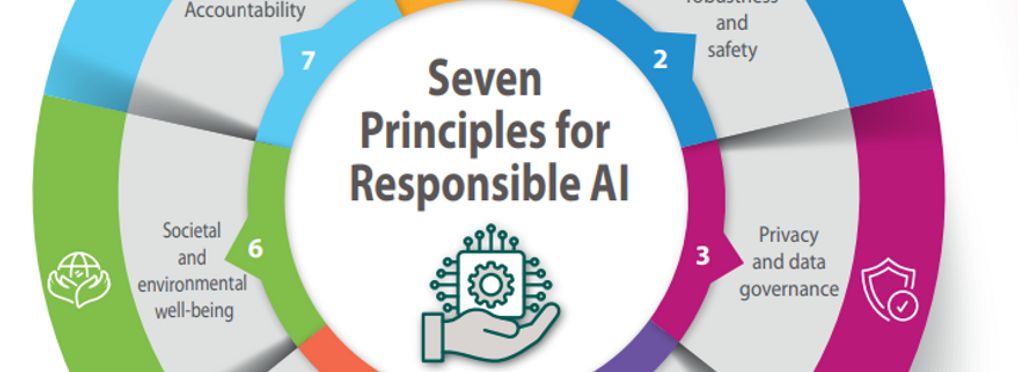
The Irish Government’s public service transformation strategy, Better Public Services, commits to delivering digitally enabled services and functions, using technology to tackle major societal issues, drive change and achieve seamless and inclusive user experiences. The Irish Government recognises the important role AI will have in achieving these aims and has developed the Guidelines for the Responsible Use of Artificial Intelligence in the Public Service to support the impactful and responsible use of AI.
The Guidelines are designed as an empowering framework that encourages innovation while ensuring that the deployment of AI in the public service is safe, transparent and aligned with public values. They are closely aligned with the European Union’s AI Act, ensuring that Ireland’s public administration operates within the same risk-based framework that underpins AI governance across the EU. This alignment provides assurance that Public Service Bodies in Ireland are developing and deploying AI systems responsibly.
At the core of the Guidelines is the Responsible AI Canvas. This practical tool helps Public Service Bodies consider, at every stage, how an AI system affects the public, fairness, accountability and data quality. It is complemented by detailed guidance on the AI lifecycle, from problem identification and data preparation through to deployment, monitoring and eventual decommissioning or refresh.
The Guidelines also introduce a decision framework to support public servants in determining whether AI is an appropriate and proportionate solution to a given challenge. This helps ensure that AI is used only where it adds demonstrable public value and that human oversight remains central. Early Irish and international public-sector AI use cases are also included and informed the approach outlined in the Guidelines.
To build capability and support consistent application of these standards, the Department worked with the Irish Institute of Public Administration (IPA) to develop training courses, including Implementing the AI Guidelines, AI Essentials, Unlocking the Power of Microsoft Copilot for the Public Service and an AI Masterclass for Senior Public Service Leaders. The courses are designed for technical and non-technical staff.
Results, outcomes and impacts
The Guidelines have received approximately 10,000 downloads since their online publication in May 2025. The Responsible AI Canvas, intended for use at the planning stage, has been downloaded 800 times. More than 1,700 people have completed the course on Navigating the Guidelines for the Responsible Use of Artificial Intelligence in the Public Service, and almost 4,000 have completed the bespoke course on AI in the Public Service.