Name in original language
JOSEIAS – Assistente de IA para Suporte a Processos Administrativos no SEI (Sistema Eletrônico de Informações)
Initiative overview
JOSEIAS was developed to address the complexity of administrative procedures faced by public servants, particularly in Brazil’s Electronic Information System (SEI). Many government employees struggle with limited training, fragmented information, and time-consuming processes, which can lead to delays and inefficiencies in public service delivery. The initiative leverages artificial intelligence to provide real-time support, making administrative tasks more accessible and reducing dependence on manual support channels. It was developed using existing infrastructure and intellectual capital, leveraging Google Gemini, with no additional implementation costs.
The main objective of JOSEIAS is to improve the efficiency and quality of administrative processes by empowering public servants with accessible, on-demand guidance. The system supports users with answers to procedural questions, step-by-step assistance, and access to personalised training materials, as well as local regulations and official documents. By doing so, it enhances staff autonomy, reduces errors, and contributes to more consistent and reliable public service delivery.
The initiative is designed to be scalable and adaptable across different government contexts. While initially implemented within the Municipality of Pedro Leopoldo, JOSEIAS can be extended to other municipalities and public institutions that face similar challenges. Future developments include expanding its knowledge base, integrating with additional government systems, and strengthening its role as a continuous learning and support tool for public servants.
Over time, JOSEIAS has evolved from a support solution into a broader model for AI adoption in local government, focusing on augmenting human capabilities rather than replacing them. It represents a practical approach to digital transformation, where AI is used to simplify processes, build institutional knowledge, and improve the overall effectiveness of public administration.
Results, outcomes and impacts
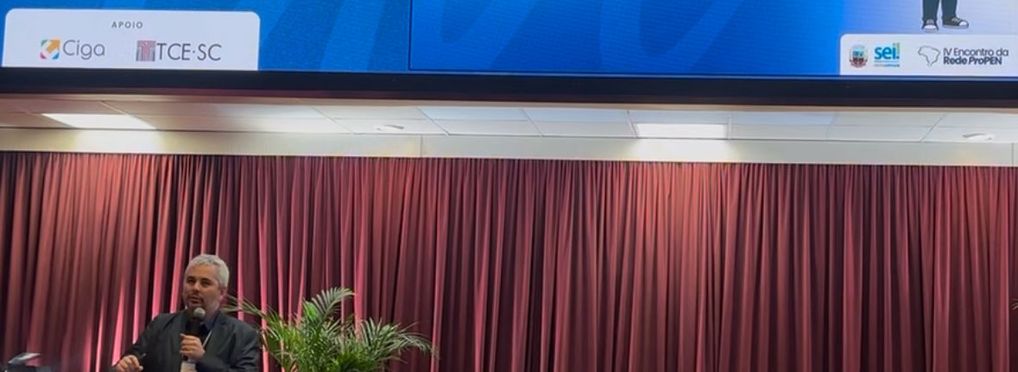
The initiative has improved the speed and consistency of administrative support by providing real-time guidance to public servants, currently reaching around 250 SEI users in the Municipality of Pedro Leopoldo. It is the first AI assistant of its kind implemented in the state of Minas Gerais, which has over 850 municipalities, and has reduced reliance on human support and increased staff autonomy. The initiative was highlighted at the SEI Municipalities Meeting in Minas Gerais, recognised at the Digital Cities Forum and presented at the IV ProPEN Network Meeting (2026). Results have been observed through user feedback and reduced support demand, with expected future gains in efficiency and scalability.