






















Name in original language
ServetIA: Plataforma de Investigación con IA para el Gabinete de Presidencia del Gobierno de España
Initiative overview
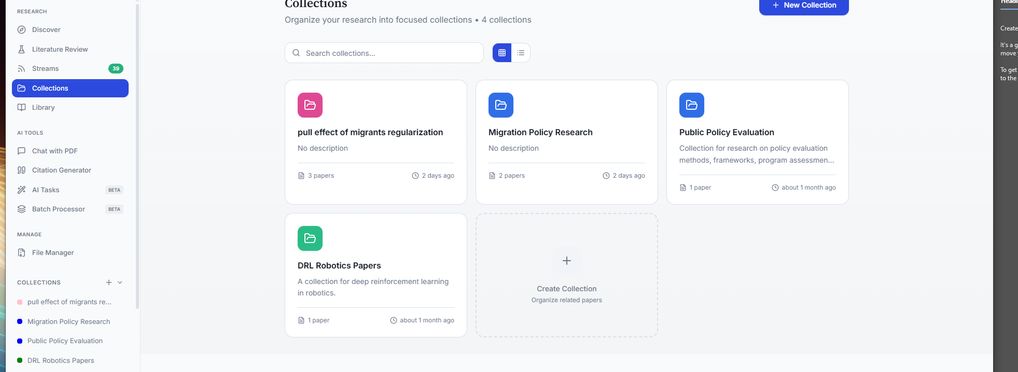
ServetIA is a custom-built AI research platform developed within the PresidencIA programme to support analysis and information retrieval in the Spanish Prime Minister’s Office. Named after Miguel Servet, the Spanish polymath and pioneer of scientific inquiry, ServetIA embodies the same spirit of rigorous, evidence-based investigation applied to modern governance. Government advisors in the Prime Minister’s Office routinely research complex policy topics, prepare briefing documents, and synthesise information from multiple sources under tight deadlines. Traditional methods are slow and resource intensive. Off-the-shelf AI tools raise concerns about data privacy, accuracy, and suitability for sensitive government contexts. ServetIA bridges this gap. Built on large language model technology, it provides a complete suite of tools for research powered with AI, where staff can pose policy questions and receive structured, source-referenced responses, conduct literature review, reach consensus and generate drafts with verified citation. The platform prioritises “grounding”, ensuring outputs are anchored in verifiable sources rather than generating unsupported claims. This responds directly to the government’s need for reliable, citable information. A deep research module handles comprehensive, multi-source investigations that go beyond simple question-answering. The platform is in Beta, deployed and accessible at servetia.eu, with iterative refinements based on government user feedback. Development follows human-centred design: features are prioritised through user interviews and observation during structured Discovery phases within the Prime Minister’s Office. Technical implementation leverages both cloud-based and on-premises models. For sensitive use cases, the platform enables the use of local LLMs instead of Cloud, using open-weight models that can run on local infrastructure, supporting AI sovereignty objectives. This hybrid approach balances performance with data security requirements of a head-of-government institution. ServetIA complements a broader ecosystem within the PresidencIA programme, demonstrating how purpose-built AI tools, developed with government-specific requirements for security, accuracy, and usability, can enhance core government functions. Its architecture is modular and transferable, can be adapted to other departments and ministries, and its methodology, combining user research, iterative prototyping, and security-first design, provides a replicable model for AI tool development in government settings across countries. The tool augments rather than replaces human judgment, positioning AI as a support layer for public servants.