






















Name in original language
人間中心のAI社会原則会議
Initiative overview
Background and Issue Addressed
The Council on Human-Centric AI Social Principles (人間中心のAI社会原則会議) was established in May 2018 by Japan's Cabinet Office under the Artificial Intelligence Technology Strategy Council. It was created to address the growing need for ethical guidelines as AI technology rapidly advanced and became integrated into Japanese society. The Committee brings together multi-stakeholder expertise from industry, academia, and civil society to develop principles that balance innovation with societal protection.
Objectives
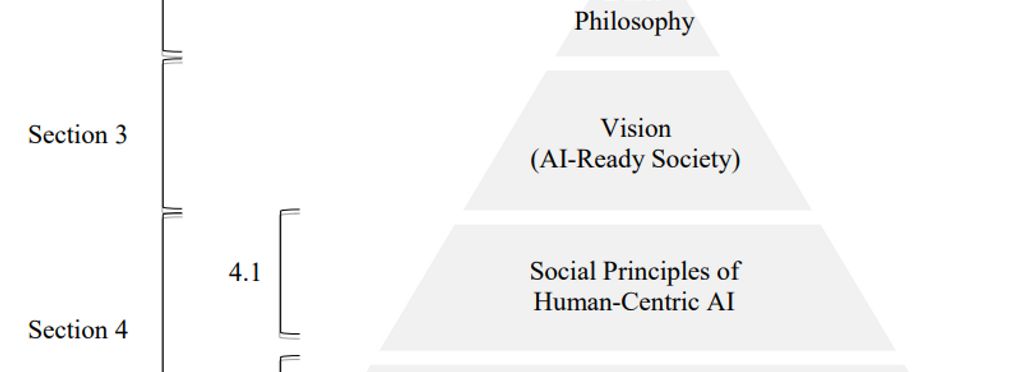
The Council’s primary objective is to develop and maintain 'Social Principles of Human-centric AI' and propose them to the Integrated Innovation Strategy Promotion Council. Its work is grounded in three core philosophies:
- Dignity - ensuring human dignity is respected
- Diversity & Inclusion - enabling people with diverse backgrounds to pursue their well-being
- Sustainability - building a sustainable society
These philosophies translate into seven operational principles: (1) human-centric approach, (2) education and literacy, (3) privacy protection, (4) security, (5) fair competition, (6) fairness/accountability/transparency, and (7) innovation.
Evolution and Scale
The Council has met regularly since 2018, with meetings documented from FY2018 through FY2024. Its landmark output - the Social Principles of Human-Centric AI - was adopted by the Integrated Innovation Strategy Promotion Council in March 2019 and has become foundational to Japan's AI governance architecture. The principles were designed as 'soft law' to foster multi-stakeholder, iterative governance rather than prescriptive regulation. They inform subsequent policy instruments including the AI Strategy 2019, METI's Governance Guidelines (2022), and the integrated AI Guidelines for Business (2024). The Conference continues to review and update guidance, including addressing generative AI developments in 2023-2024. Japan has positioned these principles internationally, helping shape the OECD AI Principles (2019) and G20 AI Principles, and serving as a foundation for the Hiroshima AI Process during Japan's G7 presidency in 2023.