
















Initiative overview
The H2O Assistant is a purpose-built AI ecosystem designed to revolutionise knowledge management and operational efficiency within the Saudi Water Authority (SWA). By centralising access to the organisation's vast data landscape ranging from unstructured legacy documents to live Google Cloud Platform (GCP) BigQuery datasets, the assistant provides executive leadership and managers with a single, conversational interface that also supports Arabic. This initiative addresses the critical challenge of "dark data" in the water sector, where vital technical specifications, historical Request for Proposals (RFPs), and regulatory frameworks were previously fragmented across siloed systems.
The core objectives of the initiative extend beyond simple information or knowledge base retrievals is to build Agentic AI ecosystem based on H2O AI Assistant. The first sub-use case or agent developed recently is the RFP Creation Agent to optimise the procurement lifecycle. The assistant enables users to instantly locate historical RFPs to inform the drafting of high-quality, data-driven proposals for new projects. By integrating AI-powered Web Retrieval with direct traceability to original source links, the tool ensures that all generated insights are verifiable and grounded in fact.
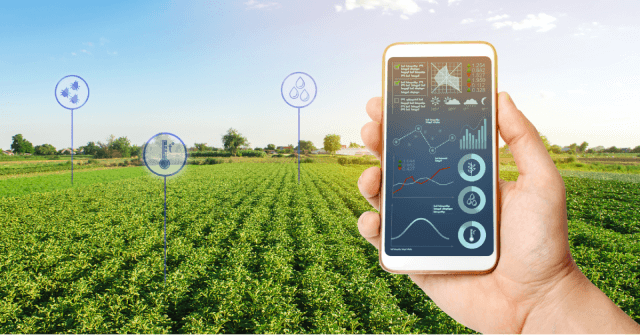
Furthermore, the assistant enhances accessibility through Voice-to-Text and Text-to-Speech capabilities and a mobile-responsive design, ensuring that leadership can access critical intelligence whether in the boardroom or inspecting field operations. To ensure long-term success, the H2O Assistant is being deeply institutionalised across the SWA and across the Water Sector organisations at KSA. It is currently fully implemented for business users and is actively replacing legacy search systems that lacked the semantic understanding of modern AI.
To drive adoption, mandatory training programmes have been established for all new managers, ensuring that data-driven decision-making becomes a core competency. By embedding the assistant directly into the H2O Water Sector Platform Portal and allowing departments to curate their own "Data Collections" tailored to specific tasks, the tool has become an indispensable part of the daily executive workflow.
Looking ahead, the roadmap for H2O Assistant focuses on sector-wide scaling and predictive intelligence. The next phase involves expanding the Agentic ecosystem and build sub-agents for advanced tasks to serve the Water Sector. Future iterations will likely include Predictive Analytics integration, allowing leaders to not only query "what happened" but also simulate "what if" scenarios regarding water consumption and resource allocation. By evolving from a retrieval tool into a proactive advisory agent, the H2O Assistant will continue to secure the SWA’s position as a global leader in intelligent utility management.