


The event explicitly involves the use of AI to create deepfake images, which are hyperrealistic fake images generated by AI algorithms. The suspect operated a platform distributing these images, leading to harm to at least 14,000 identified victims worldwide. The harm includes violations of personal rights and dignity, fitting the definition of harm to human rights under the framework. The AI system's use directly led to this harm, making it an AI Incident rather than a hazard or complementary information.[AI generated]

AIM: AI Incidents and Hazards Monitor
Automated monitor of incidents and hazards from public sources (Beta).
AI-related legislation is gaining traction, and effective policymaking needs evidence, foresight and international cooperation. The OECD AI Incidents and Hazards Monitor (AIM) documents AI incidents and hazards to help policymakers, AI practitioners, and all stakeholders worldwide gain valuable insights into the risks and harms of AI systems. Over time, AIM will help to show risk patterns and establish a collective understanding of AI incidents and hazards and their multifaceted nature, serving as an important tool for trustworthy AI. AI incidents seem to be getting more media attention lately, but they've actually gone down as a share of all AI news (see chart below!).
The information displayed in the AIM should not be reported as representing the official views of the OECD or of its member countries.
Advanced Search Options
As percentage of total AI events
Show summary statistics of AI incidents & hazards

Administrator of Global Deepfake Porn Site Faces Trial in Paris
A 47-year-old IT specialist from Nice is set to stand trial in Paris for running CFake, a site distributing over 300,000 AI-generated sexual deepfakes. The platform, with servers in the US, affected 14,000 victims worldwide, including public figures, and operated with international cooperation between France and the US.[AI generated]
AI principles:
Industries:
Affected stakeholders:
Harm types:
Severity:
Autonomy level:
AI system task:
Why's our monitor labelling this an incident or hazard?

UK Foreign Secretary Warns of Catastrophic AI Risks, Urges Global Regulation
UK Foreign Secretary Yvette Cooper warned that artificial intelligence poses catastrophic risks comparable to nuclear weapons, urging urgent international regulation to prevent an "AI Hiroshima." She called for global cooperation to establish safety guardrails, highlighting the potential for AI-driven cyberattacks and existential threats if left unchecked.[AI generated]
AI principles:
Industries:
Affected stakeholders:
Harm types:
Severity:
Why's our monitor labelling this an incident or hazard?
The article centers on warnings about potential future harms from AI and the urgent need for regulation to mitigate these risks. It does not report any actual harm or incident caused by AI systems, nor does it describe a specific event where AI has directly or indirectly led to harm. Therefore, it fits the definition of an AI Hazard, as it discusses plausible future risks from AI development and use without evidence of realized harm.[AI generated]
AI Prescription Refill Program Sparks Safety Concerns in Utah
Utah launched an AI chatbot, Doctronic, to automate prescription refills, bypassing doctor visits. The program has raised significant concerns among medical professionals about patient safety, potential drug interactions, and regulatory oversight, as the AI system assumes tasks traditionally reserved for licensed physicians.[AI generated]
AI principles:
Industries:
Affected stakeholders:
Harm types:
Severity:
Business function:
Autonomy level:
AI system task:
Why's our monitor labelling this an incident or hazard?
The AI system Doctronic is explicitly described as autonomously renewing prescriptions, a medical decision traditionally reserved for licensed human physicians. The article details concerns about patient safety risks, including the possibility of harmful side effects or drug interactions from automatic refills without proper medical oversight. The involvement of the AI system in medical decision-making and the documented concerns from medical boards and experts about risks to patient health demonstrate that the AI's use has already led to or is causing harm or significant risk of harm. This meets the definition of an AI Incident, as the AI system's use has directly or indirectly led to harm to people's health. The event is not merely a potential hazard or complementary information but an ongoing incident with real-world implications.[AI generated]

Coinbase AI System Sends False World Cup Result Notification
Coinbase's AI-generated push notification falsely reported Norway beating Brazil 3-2 in a World Cup match before the game started. The error misled users of its prediction market, raising concerns about AI reliability and potential financial harm. Coinbase is investigating the incident and has promised system improvements.[AI generated]
AI principles:
Industries:
Affected stakeholders:
Harm types:
Severity:
Business function:
Autonomy level:
AI system task:
Why's our monitor labelling this an incident or hazard?
An AI system is explicitly involved as Coinbase's AI-generated news system produced a false alert. The harm is realized as users received incorrect information that could influence their decisions, especially in a trading context, which constitutes harm to communities and potentially financial harm to users. The AI system's malfunction (hallucination) directly caused this harm. Therefore, this qualifies as an AI Incident rather than a hazard or complementary information, since the harm has already occurred due to the AI's erroneous output.[AI generated]

AI-Generated Deepfake Videos Spread False News of Wasim Akram's Death
AI-generated deepfake videos falsely claimed Pakistani cricket legend Wasim Akram had died of a heart attack, causing widespread public concern and emotional distress. Akram and his wife Shaniera refuted the misinformation by sharing a video of him exercising, highlighting the harm caused by malicious AI-generated content.[AI generated]
AI principles:
Industries:
Affected stakeholders:
Harm types:
Severity:
Autonomy level:
AI system task:
Why's our monitor labelling this an incident or hazard?
The event involves AI-generated videos used to spread false rumors about a public figure's death, which directly caused harm by misleading the public and causing unnecessary distress. The AI system's misuse in generating and spreading fake content is central to the incident. Since the harm (misinformation and public concern) has already occurred and is directly linked to AI-generated content, this fits the definition of an AI Incident rather than a hazard or complementary information.[AI generated]

Delhi High Court Restrains AI and Deepfake Misuse of Ravi Kishan's Identity
The Delhi High Court granted interim relief to actor and politician Ravi Kishan, ordering the removal of unauthorized AI-generated, deepfake, and obscene content misusing his identity. The court restrained individuals and platforms from exploiting his name, image, and likeness, addressing harm caused by AI technologies. Major tech platforms were directed to comply.[AI generated]
AI principles:
Industries:
Affected stakeholders:
Harm types:
Severity:
AI system task:
Why's our monitor labelling this an incident or hazard?
The event clearly involves AI-generated content that has been used without authorization to harm the actor's reputation and personality rights. The misuse of AI to create defamatory and pornographic content directly leads to harm to the individual's rights and reputation, fitting the definition of an AI Incident under violations of human rights or breach of obligations intended to protect fundamental rights. The court's intervention confirms the harm has materialized and is ongoing, not merely a potential risk. Therefore, this is classified as an AI Incident.[AI generated]

AI-Assisted Cyberattack Disrupts Bandai Channel, 46,000 Accounts Affected
A 15-year-old student in Saitama, Japan, used ChatGPT to help create a malicious program that launched a cyberattack on anime streaming service Bandai Channel. The attack led to the unauthorized cancellation of about 46,000 user accounts and temporary service suspension, disrupting operations and causing significant harm.[AI generated]
AI principles:
Industries:
Affected stakeholders:
Harm types:
Severity:
Autonomy level:
AI system task:
Why's our monitor labelling this an incident or hazard?
The event involves the use of an AI system (ChatGPT) to develop a malicious program that caused unauthorized access and disruption to a critical service, leading to harm (disruption of service and harm to the company's operations). The AI system's use directly contributed to the harm, fulfilling the criteria for an AI Incident under the definitions provided.[AI generated]

Minors Investigated for AI-Generated Sexualized Images of Schoolmates in Murcia
Three male minors in Molina de Segura, Murcia, were investigated by the National Police for using AI applications to manipulate and distribute sexualized images of female classmates without consent. The incident led to charges of child pornography and violations of privacy and moral integrity.[AI generated]
AI principles:
Industries:
Affected stakeholders:
Harm types:
Severity:
Autonomy level:
AI system task:
Why's our monitor labelling this an incident or hazard?
The event explicitly mentions the use of AI applications to manipulate images, which qualifies as an AI system involvement. The harm caused includes violations of privacy, moral integrity, and the creation and distribution of child pornography, which are serious legal and human rights violations. The AI system's use directly led to these harms, fulfilling the criteria for an AI Incident. The event is not merely a potential risk or a societal response but a realized harm caused by AI-enabled manipulation and dissemination of images.[AI generated]

Community and Environmental Concerns Over Scottish AI Data Centre Development
Residents in Lanarkshire, Scotland, have raised concerns about a planned AI data centre by DataVita and CoreWeave, citing potential land loss, environmental impact, and misleading renewable energy claims. The project faces scrutiny over its feasibility and transparency, with fears of community disruption and reliance on non-renewable energy.[AI generated]
AI principles:
Industries:
Affected stakeholders:
Harm types:
Severity:
Why's our monitor labelling this an incident or hazard?
The article explicitly involves AI systems in the form of AI datacentres, which require large infrastructure and energy resources. The harms feared by the community—loss of land, property value decline, environmental impact, and misleading information—are potential harms that could plausibly arise from the development and operation of these AI datacentres. No direct harm has yet been reported, so it is not an AI Incident. The event is not merely complementary information because the main focus is on the potential negative consequences of the AI datacentre development. It is not unrelated or beneficial use, as the AI system is central and the concerns are about harm. Hence, the classification as AI Hazard is appropriate.[AI generated]

AI-Generated Deepfake Video Defrauds Woman of Over One Million Euros in Germany
A woman from Lichtenberg, Saxony, Germany, lost over one million euros after being deceived by an AI-generated deepfake video mimicking the ZDF talk show "Markus Lanz." The video promoted a fraudulent investment platform, leading the victim to transfer her savings to scammers. Police are investigating the incident.[AI generated]
AI principles:
Industries:
Affected stakeholders:
Harm types:
Severity:
Autonomy level:
AI system task:
Why's our monitor labelling this an incident or hazard?
The event explicitly describes the use of a deepfake video created by AI technology to impersonate a public figure, which directly caused the victim to be defrauded of a large sum of money. The AI system's role in generating the fake video was pivotal in enabling the scam, leading to realized harm. Therefore, this qualifies as an AI Incident under the definition of harm to persons and property caused directly by the use of an AI system.[AI generated]

UN Secretary-General Warns of Uncontrolled AI and Calls for Ban on Autonomous Weapons
UN Secretary-General António Guterres warned of the risks posed by uncontrolled AI development, including autonomous weapons, and urged for global governance and regulation. He highlighted the danger of AI systems making decisions without human oversight and called for a ban on lethal autonomous robots at a Geneva forum.[AI generated]
AI principles:
Industries:
Affected stakeholders:
Harm types:
Severity:
Autonomy level:
AI system task:
Why's our monitor labelling this an incident or hazard?
The article discusses the potential dangers of AI, particularly autonomous weapons, which could plausibly lead to significant harm if uncontrolled. However, it does not report any specific event where AI has directly or indirectly caused harm. The warnings and calls for regulation constitute an AI Hazard, as they identify credible future risks from AI systems. The article also includes governance proposals and societal responses, but the primary focus is on the hazard posed by AI development and deployment, especially lethal autonomous weapons.[AI generated]

Waymo Robotaxis Malfunction During San Francisco July 4th, Causing Traffic Disruption and Safety Incidents
During San Francisco's July 4th celebrations, Waymo's autonomous vehicles malfunctioned amid extreme traffic, with several stalling, running out of power, and blocking roads. One vehicle drove through exploding fireworks, and another caught fire after hitting a firework. These incidents caused significant traffic disruption and raised safety concerns, though no injuries were reported.[AI generated]
AI principles:
Industries:
Affected stakeholders:
Harm types:
Severity:
Business function:
Autonomy level:
AI system task:
Why's our monitor labelling this an incident or hazard?
The event involves an AI system (Waymo's autonomous vehicle) whose use directly led to a hazardous situation where passengers were exposed to exploding fireworks without the vehicle stopping or avoiding the hazard. Although no injuries occurred, the AI system's failure to respond appropriately to the dangerous environment constitutes a malfunction leading to potential harm to persons, meeting the criteria for an AI Incident. The presence of the AI system is explicit, the harm is direct and related to passenger safety, and the event is not merely a potential hazard or complementary information but an actual incident involving AI malfunction.[AI generated]

AI-Driven Social Media Platforms Systematically Bias Public Opinion
Researchers from Oxford and Potsdam found that AI language models used to generate and edit social media posts systematically introduce subtle biases, especially on controversial topics. These biases accumulate through millions of interactions, shaping public opinion and raising concerns about transparency and digital regulation.[AI generated]
AI principles:
Industries:
Affected stakeholders:
Harm types:
Severity:
Business function:
Autonomy level:
AI system task:
Why's our monitor labelling this an incident or hazard?
The article explicitly involves AI systems (large language models) used to generate and edit social media content. The AI's use has directly led to subtle but systematic bias in content that influences public opinion, which constitutes harm to communities by manipulating discourse and potentially undermining democratic processes. The harm is realized and demonstrated through research and simulations, not merely potential. Therefore, this event meets the criteria for an AI Incident rather than a hazard or complementary information. It is not unrelated or beneficial use, as the AI is the source of the harm, not a countermeasure.[AI generated]

Family Injured After Google Maps Navigation Error Leads Car Into Canal in Uttar Pradesh
A family from Bhopal, relying on Google Maps for navigation to a wedding in Uttar Pradesh, was misdirected onto a dangerous route during heavy rain and darkness. Their car veered off the road into a canal near Etawah, resulting in injuries to five people. The incident highlights risks from AI-based navigation errors.[AI generated]
AI principles:
Industries:
Affected stakeholders:
Harm types:
Severity:
Autonomy level:
AI system task:
Why's our monitor labelling this an incident or hazard?
Google Maps is an AI system providing navigation and route recommendations. The family used Google Maps for navigation but ended up on a wrong path due to the system's guidance, leading to a car accident with minor injuries and property damage. This constitutes an AI Incident because the AI system's use directly led to harm (injury and property damage).[AI generated]
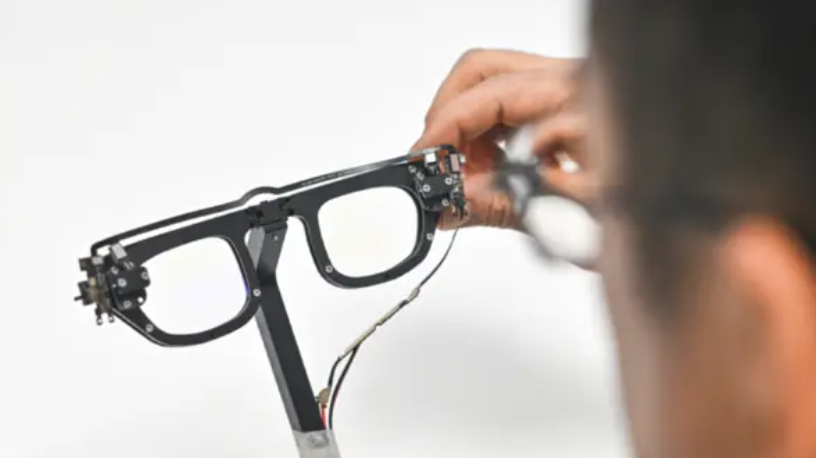
AI Smart Glasses Used for Cheating in Exams at South China Agricultural University
Multiple students at South China Agricultural University in Guangzhou used AI-powered smart glasses to cheat during final exams. The glasses could photograph questions and display AI-generated answers. The university invalidated the results, imposed disciplinary actions, and enhanced exam security with AI proctoring and stricter checks.[AI generated]
AI principles:
Industries:
Affected stakeholders:
Harm types:
Severity:
Autonomy level:
AI system task:
Why's our monitor labelling this an incident or hazard?
The AI system (smart glasses with AI analysis and answer display) was used by students to cheat, directly causing harm to the integrity of the examination process and violating institutional rules. The AI system's involvement is explicit and central to the incident. The harm is realized and materialized, not just potential. Hence, this is an AI Incident rather than a hazard or complementary information.[AI generated]

UK, Japan, and Italy Invest $6.1 Billion in AI-Enabled Fighter Jet Development
The UK, Japan, and Italy awarded a $6.1 billion contract to Edgewing for the development of the sixth-generation GCAP fighter jet, featuring AI-assisted mission management and autonomous systems. The aircraft, expected by 2035, raises concerns about future risks associated with military AI technologies.[AI generated]
AI principles:
Industries:
Severity:
Business function:
Autonomy level:
AI system task:
Why's our monitor labelling this an incident or hazard?
The article explicitly mentions AI-assisted mission management and autonomous drones as features of the fighter aircraft, indicating the involvement of AI systems. The event concerns the awarding of a large contract to develop these AI-enabled military systems, which are not yet deployed or causing harm. Given the nature of autonomous weapons and AI in combat aviation, there is a credible risk that these systems could lead to injury, disruption, or other harms in the future. Since no actual harm or incident is reported, but plausible future harm exists, the event fits the definition of an AI Hazard rather than an AI Incident or other categories.[AI generated]
Anthropic Sued for $75 Million Over Use of Pirated Books to Train Claude AI
Over 100 authors have filed a $75 million lawsuit against Anthropic, alleging the company used pirated copyrighted books from shadow libraries to train its Claude AI system without permission or compensation. The case, filed in California, highlights ongoing legal challenges over AI training data sourcing.[AI generated]
AI principles:
Industries:
Affected stakeholders:
Harm types:
Severity:
Business function:
Autonomy level:
AI system task:
Why's our monitor labelling this an incident or hazard?
The article explicitly states that Anthropic allegedly used pirated copyrighted books to train its AI system Claude, which is an AI system by definition. The unauthorized use of copyrighted material for training constitutes a violation of intellectual property rights, which is a recognized harm under the AI Incident framework. Since the infringement has already occurred and the lawsuit is a direct consequence of this harm, this qualifies as an AI Incident rather than a hazard or complementary information. The event involves realized harm (copyright infringement) caused by the AI system's development and use, meeting the criteria for an AI Incident.[AI generated]

AI-Generated Fraud Targets Indonesian Pensioners via Fake TASPEN Content
Scammers in Indonesia are using AI to create realistic fake content, including images, audio, and video, impersonating PT TASPEN to deceive pensioners. These AI-driven schemes involve fake social media accounts, phishing, and fraudulent offers of pension aid, posing financial risks to retirees. TASPEN has issued public warnings.[AI generated]
AI principles:
Industries:
Affected stakeholders:
Harm types:
Severity:
AI system task:
Why's our monitor labelling this an incident or hazard?
The article explicitly states that AI technology is being used by scammers to generate fake content impersonating TASPEN, targeting pensioners with fraudulent schemes. This use of AI directly contributes to harm by enabling deception and potential financial loss, fulfilling the criteria for an AI Incident. The event involves the malicious use of AI systems to cause harm to people, specifically pensioners, which is a direct violation of rights and causes harm to individuals and communities. The article is not merely a warning or potential risk but describes ongoing fraudulent activities using AI, thus it is an AI Incident rather than a hazard or complementary information.[AI generated]
Goldman Sachs Economist Warns AI May Displace 15 Million US Jobs
Goldman Sachs economist Joseph Briggs warns that AI adoption could displace about 15 million US workers, or 9% of the workforce. While job losses are expected, Briggs argues that new technology historically creates new roles, suggesting the disruption may be temporary rather than permanent.[AI generated]
AI principles:
Industries:
Affected stakeholders:
Harm types:
Severity:
Why's our monitor labelling this an incident or hazard?
The article explicitly involves AI systems being adopted across the economy, leading to displacement of workers, which is a recognized harm (job loss). The economist's forecast and current observations indicate a credible risk of significant labor market disruption due to AI. However, the article does not describe a specific event or incident where AI has directly or indirectly caused a discrete harm event; rather, it discusses ongoing trends and potential future impacts. Therefore, it fits the definition of an AI Hazard, as the harm could plausibly lead to significant negative outcomes but is not yet a fully realized incident.[AI generated]

AI-Generated Memes Involving Footballers Spark Outcry in Brazil
AI-generated memes depicting footballers Vinicius Jr. and Erling Haaland in sexualized and offensive scenarios, based on the film 'White Chicks,' went viral in Brazil, prompting public criticism from singer Vanessa da Mata. The incident highlights social harm and ethical concerns over AI's role in spreading harmful content online.[AI generated]
AI principles:
Industries:
Affected stakeholders:
Harm types:
Severity:
Autonomy level:
AI system task:
Why's our monitor labelling this an incident or hazard?
The AI system's use in generating manipulated memes with offensive and sexualized content involving real individuals has directly led to social harm, including violation of rights and harm to communities. The article describes the presence and viral spread of these AI-generated memes and the resulting public backlash, which indicates realized harm. The involvement of AI in creating these memes is explicit, and the harm is social and reputational, fitting the definition of an AI Incident. Although the article focuses on criticism rather than the incident itself, the underlying event is the harmful AI-generated content dissemination.[AI generated]