AI for inclusive and resilient agri-food systems: Potential ways forward




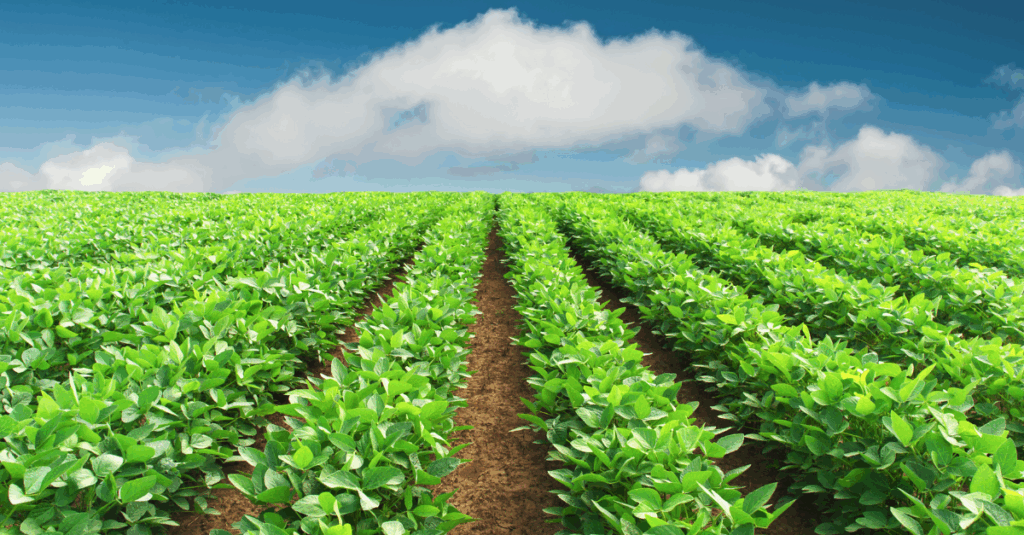
Global agri-food systems are under growing strain. Even though the world produces enough calories to feed more than the world’s entire population, one in eleven people – or nearly 700 million people – still face hunger. Climate shocks, fragile supply chains, and labour shortages increasingly threaten the resilience of agri-food systems worldwide. As pressure on farmers and supply chains intensifies, artificial intelligence (AI) is a promising tool to ensure that all stakeholders – including vulnerable populations – can benefit from the transition towards more resilient agri-food systems.
Agri-food systems face growing strain – AI tools offer solutions
The agricultural sector plays an essential role in economies and societies around the world, providing communities with reliable, quality food and tens of millions of jobs. Yet the global agri-food system is under pressure, as various issues, from climate challenges to workforce shortages, put strain on farmers and global supply chains.
AI offers opportunities to address the needs of farmers and other actors in the agri-food system across diverse local contexts. And AI is already transforming agriculture and related supply chains. It helps farmers predict droughts, reduce pesticide use and identify crop diseases before they spread. It supports buyers, traders and retailers in making decisions regarding product availability, quality and prices. AI-enabled precision spraying can reduce pesticide use by up to 30% without compromising yields. Drought-tolerant traits identified using AI in sorghum and chickpea crops boost yields by up to 25% during dry seasons. And the Global AI Hybrid Rice Platform shortens breeding cycles by predicting optimal parent combinations.
However, challenges persist in the adoption of AI and other digital technologies. Access to these promising tools is starkly uneven, and so is the distribution of information throughout supply chains. In Australia, nearly 96% of farmers use digital tools, whereas in Chile, just 12% do. In addition, issues persist in data interoperability between different stakeholders and jurisdictions, which hinder data sharing opportunities and limit the impact of digital tools. Digital tools need to be accessible, trusted and designed to respond to local user conditions.
Cybersecurity must also be treated as a foundational prerequisite for AI-enabled agri-food systems (e.g. through secure-by-design approaches). Without robust protections from cyber threats and concrete actions such as building digital literacy and aligning policy agendas, there is a risk that the potential of using digital technologies will not be realised or will have adverse consequences. At the same time, the lack of agri-food-specific AI governance could create regulatory uncertainty, making the case for targeted frameworks that promote the trustworthy deployment of AI while accounting for the sector’s unique characteristics.
These issues were at the centre of a flagship session on AI for Inclusive and Resilient Food Systems, co-hosted by the Kingdom of the Netherlands and the OECD at the India AI Impact Summit in New Delhi in February 2026. The session leveraged the work of the Summit’s Working Group on Economic Growth and Social Good, co-chaired by India, Indonesia and the Netherlands. Examples from these three countries and field‑level research highlighted where AI is already showing great promise and where critical bottlenecks remain.
These insights point to three areas where deeper international co-operation and policy analysis facilitated by organisations such as the OECD could help countries make meaningful progress. Specifically, the OECD’s Global Partnership on AI (GPAI), could take next steps and examine where AI is delivering results in agri-food systems across various regions and what it will take to ensure benefits are widely shared.
The opportunity: How AI can help build efficient and resilient supply chains for global food security
Efficient and resilient supply chains are cornerstones of the agriculture sector and global food security. Strengthening global food security is a strategic priority for countries like the Netherlands because reliable, sustainable and affordable food systems are essential for societal stability and economic development, particularly in vulnerable regions. After the United States, the Netherlands is the world’s second-largest exporter of agricultural products. The Dutch have already seen tangible results from AI applications in agriculture. According to research from Wageningen University, AI tools for advanced greenhouses have yielded water savings of up to 90% through smart irrigation, compared to traditional open-field systems.
The challenge is that successful solutions in countries like the Netherlands cannot always be exported to other countries due to the diversity of agricultural contexts worldwide. In view of this complexity, partnerships are an important tool. Examples from the Netherlands highlight the importance of co-creation as a vital strategy for tangible results. The Netherlands works with other countries to develop locally relevant AI solutions that are inclusive and accessible to farmers through knowledge sharing, capacity-building and co-creation.
The use of AI can also help reshape how companies engage with stakeholders across supply chains and help to manage risks. Tools intended to improve efficiency (e.g. automated advisory systems, remote monitoring, or worker feedback platforms) can enhance visibility and responsiveness, but they can also displace meaningful human engagement if not carefully implemented. Managing these trade-offs is therefore essential to ensure that AI contributes positively to sustainability efforts. The OECD Due Diligence Guidance for Responsible Business Conduct and AI-specific due diligence guidance provide a practical framework for managing these risks. It promotes a risk-based, continuous approach grounded in stakeholder engagement, with step-by-step operational guidance to identify, prevent, mitigate, and account for adverse impacts.
Despite promising tools and guidance, in practice, there are persistent problems with AI adoption across agri-food systems and supply chains, including among farmers. Below are three key challenges which would benefit further from OECD and GPAI analysis and co-operation.
Solving the data problem: improving interoperability and shared agricultural data
Across regions, the most consistent barrier to effectively using AI in agriculture is data: not enough of it, not widely shared, not of high enough quality and often not interoperable. Addressing these challenges is at the core of many initiatives of the Dutch Ministry of Agriculture (LVVN), as well as EU initiatives such as the Common Agriculture European Data Space and the European Digital Infrastructure Consortium for Agri-Food.
When agricultural data remains siloed between ministries, supply‑chain actors or countries, AI tools underperform in real‑world conditions. This challenge surfaces in examples such as global crop mapping efforts, which struggle when key national data is unavailable, and contrasts sharply with locally tailored tools. Data interoperability is critical not only for enhancing transparency and traceability but also for enabling benchmarking that drives competitiveness and for unlocking new market opportunities.
In the cocoa industry, for example, which is suffering heavily from climate change, researchers from Wageningen University built a chatbot in the farmers’ local languages to identify plant diseases using computer vision trained on local data in the form of images. It worked because it was built with locally sourced data using the farmers’ perspective, not the researchers’. This shows that not only are data availability, quality, and interoperability important, but trust also plays a critical role in AI uptake. The same is true for AI literacy. For example, an AI tool’s success in the field depends greatly on a farmer’s ability to generate, manage and apply high‑quality, context‑specific data. This could include skills spanning data literacy (e.g., collection, quality control, labelling), applied digital skills (e.g., the use of sensors), and general skills for successfully interpreting and assessing AI outputs.
Building shared and trustworthy data infrastructures is a challenge well suited to multilateral co-operation. The OECD and GPAI could help countries examine which types of agricultural data are most critical for AI uptake, how to enable cross-border interoperability, and how governance, incentives, and standards can encourage responsible data sharing without disadvantaging farmers or exposing sensitive information. Such analysis would complement ongoing OECD and GPAI work on AI governance and help countries design data ecosystems – for example, through bilateral agreements – that support resilience rather than reinforce fragmentation.
Small but mighty: ensuring AI works for small farmers through local relevance and co-design
AI will only advance global food security if it also works for small farmers – who grow roughly one‑third of the world’s food but are also most vulnerable to climate and market shocks. Many tools fail to provide the expected socio-economic value because they are built for ideal conditions or assume a baseline of digital maturity that simply does not exist. The most effective way to address these issues is to begin with the farmer’s perspective.
Examples from India illustrate this opportunity. A voice-first AI tool developed by the Government of India, called BharatVistaar, provides farmers with a breadth of agricultural advisory information on subjects ranging from shrimp cultivation to pest control. It comes as a simple phone call or text message from a chatbot, in their local language, with no smartphone required. This accessible, low-tech solution shows how AI can benefit farmers who lack access to complex technology or reliable internet.
This is an area where the OECD and GPAI’s evidence base and global reach could offer unique value. Through comparative analysis and its global network of experts, the OECD could help countries better understand what farmer-centred AI design looks like in practice; which models scale across different agricultural contexts; and how to build trust by aligning tools with real-world decision‑making. Sharing case studies through the OECD.AI Policy Observatory, sharing concrete field-level agri-food system AI tools through the OECD.AI Catalogue of Tools and Metrics, contributing policies to the OECD.AI Policy Navigator, leveraging the OECD.AI Policy Toolkit, and sharing local lessons at GPAI meetings could help countries learn from each other’s successes and pitfalls.
Moving from pilots to scale
Scaling AI solutions in agri-food settings is not easy. Solutions that perform well technically often falter in field conditions, and many projects remain stuck as promising pilots that never achieve systemic impact. Factors such as infrastructure gaps, cybersecurity threats, institutional capacity, financing constraints and lack of local adaptation all limit the path from prototype to widespread adoption.
Scaling and resilience in agri-food systems must extend beyond agriculture itself to the AI infrastructures that underpin it, as cyberattacks can render systems unavailable – particularly impacting smallholder farmers. An emphasis on accessibility without security could lead to unsustainable outcomes, making cybersecurity a critical precondition for success.
Countries like the Netherlands are working with partners to co-create AI solutions that are secure and deeply adapted to local ecosystems to be successful in scaling up. Indonesia also offers a compelling example. With more than 17 000 islands with varied soil conditions and uneven infrastructure, the country sees AI as essential to developing resilient agriculture and has integrated AI into its national strategy for climate-resilient agriculture to combat scaling challenges related to its diverse geography.
A structured examination of what it takes to scale AI responsibly for agriculture – across geographies, farm sizes and value chains – could provide actionable insights for governments worldwide. This could include analysing enabling policies, public‑private partnerships, field-level capacity building, and pathways for adapting successful models to regions with differing levels of infrastructure development.
With its cross-country reach and evidence-based approach, the OECD, through GPAI, is well-positioned to convene comparative analysis of scaling and cybersecurity challenges, identifying practical levers to help countries move from fragmented experimentation to system-wide adoption.
Looking ahead: tackling these challenges through the Global Partnership on AI
AI has the potential to transform global agri-food systems, but technology alone cannot deliver this outcome. The choices made around governance, access and partnerships will determine whether AI strengthens resilience broadly or deepens existing divides. Advancing AI for sustainable agri-food systems depends on addressing the three imperatives discussed above – ensuring access to high-quality data by building interoperable, trusted data ecosystems; designing farmer-led, locally relevant solutions; and creating the conditions to scale securely and sustainably through robust infrastructure, governance, and strong cybersecurity to safeguard system resilience. These topics are at the core of the Dutch Ministry of Agriculture’s (LVVN) priorities and must be complemented by fit-for-purpose policy frameworks alongside viable financial models, knowledge exchanges, and innovation partnerships to enable effective and inclusive adoption.
The OECD works with countries – including the Netherlands – at various levels of economic development to establish AI governance based on the OECD AI Principles. The OECD.AI Policy Navigator gives access to AI policy initiatives in the agriculture sector, covering more than 2,000 AI policies and initiatives across 80 jurisdictions. Any country can use it to benchmark and strengthen its approach. Further analysis of the challenges and opportunities for AI in agri-food systems could be undertaken as part of initiatives such as GPAI and groups like the OECD-FAO Advisory Group on Responsible Agricultural Supply Chains.
Interested countries and partners are invited to contact ai@oecd.org to explore this topic further.