


The event involves an AI system generating a book falsely attributed to a real author, which is a clear violation of intellectual property rights and identity theft. The harm has already occurred as the author suffered reputational damage and unauthorized use of his name and work. The AI system's use in creating and distributing this book directly caused these harms, qualifying this as an AI Incident under the definitions provided.[AI generated]

AIM: AI Incidents and Hazards Monitor
Automated monitor of incidents and hazards from public sources (Beta).
AI-related legislation is gaining traction, and effective policymaking needs evidence, foresight and international cooperation. The OECD AI Incidents and Hazards Monitor (AIM) documents AI incidents and hazards to help policymakers, AI practitioners, and all stakeholders worldwide gain valuable insights into the risks and harms of AI systems. Over time, AIM will help to show risk patterns and establish a collective understanding of AI incidents and hazards and their multifaceted nature, serving as an important tool for trustworthy AI. AI incidents seem to be getting more media attention lately, but they've actually gone down as a share of all AI news (see chart below!).
The information displayed in the AIM should not be reported as representing the official views of the OECD or of its member countries.
Advanced Search Options
As percentage of total AI events
Show summary statistics of AI incidents & hazards

AI-Generated Book Falsely Attributed to French Author Sold Online
French author Julien Blanc-Gras discovered a book generated by artificial intelligence and falsely attributed to him being sold on Amazon and other platforms. The unauthorized use of his name and work constitutes identity theft and copyright infringement, raising concerns about AI's role in intellectual property violations and digital identity misuse.[AI generated]
AI principles:
Industries:
Affected stakeholders:
Harm types:
Severity:
Business function:
AI system task:
Why's our monitor labelling this an incident or hazard?
BIS Warns of Global Economic Risks from AI Investment Bubble
The Bank for International Settlements (BIS) warns that the current surge in AI-related investments, led by major tech companies, could create an economic bubble similar to past tech booms. If commercial returns disappoint, a sudden market correction could trigger a prolonged downturn, threatening global financial stability and household wealth.[AI generated]
Industries:
Affected stakeholders:
Harm types:
Severity:
Why's our monitor labelling this an incident or hazard?
The article discusses economic and financial risks linked to AI investment growth and debt but does not mention any AI system malfunction, misuse, or harm occurring or directly caused by AI. The focus is on potential economic instability and financial system vulnerabilities that could arise from AI-related investment trends, which constitutes a plausible future risk rather than a realized harm. Therefore, this fits the definition of an AI Hazard, as it concerns plausible future harm related to AI development and investment, without a specific incident of harm having occurred.[AI generated]
AI-Driven Social Media Algorithms Linked to Teen Deaths Spur Reform Push in US
AI-powered social media algorithms have been linked to teen deaths from cyberbullying and drug poisoning in the US. Advocacy by affected parents, landmark jury verdicts, and legislative efforts are pushing for stronger safeguards and accountability for tech companies, highlighting the harms caused by AI-driven platform design.[AI generated]
AI principles:
Industries:
Affected stakeholders:
Harm types:
Severity:
Business function:
Autonomy level:
AI system task:
Why's our monitor labelling this an incident or hazard?
The article details actual harms (deaths, cyberbullying, drug sales) linked to social media platforms that use AI algorithms for content recommendation and engagement maximization. It also discusses legal cases holding these companies accountable for deliberate design choices involving AI systems. The harms are realized and significant, including injury and death, and violations of rights. The AI systems' role is pivotal in these harms, meeting the criteria for an AI Incident. The article also includes complementary information about legislative and societal responses, but the primary focus is on the harms caused by AI-driven social media platforms.[AI generated]

Brazilian Actress Paolla Oliveira Targeted by AI-Generated Deepfake Images
Brazilian actress Paolla Oliveira revealed she is frequently targeted by AI-generated fake images and videos, including deepfakes depicting her in compromising situations she never consented to. She highlighted the emotional and reputational harm caused, the legal challenges faced, and warned that such AI abuse affects many women and girls in Brazil.[AI generated]
AI principles:
Industries:
Affected stakeholders:
Harm types:
Severity:
Autonomy level:
AI system task:
Why's our monitor labelling this an incident or hazard?
The article explicitly mentions the use of AI tools to generate fake images and videos of a person without consent, which constitutes a violation of rights and harms the individual. This fits the definition of an AI Incident because the AI system's use has directly led to harm (violation of rights and reputational harm). The harm is realized and ongoing, as the actress reports frequent legal action and personal distress. Therefore, this event qualifies as an AI Incident.[AI generated]

Platform Algorithm Manipulation Distorts Consumer Choices in South Korea
A South Korean Fair Trade Commission study found that AI-driven platform algorithms manipulating product rankings significantly distort consumer choices. Over 94% of users purchased from the first page, and placing more expensive, platform-favored products at the top increased their purchase rate by 34%, harming fair competition and consumer interests.[AI generated]
AI principles:
Industries:
Affected stakeholders:
Harm types:
Severity:
Business function:
Autonomy level:
AI system task:
Why's our monitor labelling this an incident or hazard?
The event involves the use of an AI system (algorithmic ranking on online shopping platforms) whose manipulation directly led to consumer harm by distorting purchasing decisions and misleading consumers. The AI system's use in promoting certain products unfairly impacts consumer choice and market fairness, which can be considered a violation of rights and a significant harm to communities (consumers). Therefore, this qualifies as an AI Incident rather than a hazard or complementary information.[AI generated]

AR Game Data Collection Raises Military and Privacy Risks
A well-known AR game’s AI company covertly collected nearly 30 billion user environment scans to train spatial recognition AI models, with potential military applications due to ties with a foreign defense industry. This large-scale, hidden data gathering poses significant privacy, ethical, and national security risks, prompting official warnings in China.[AI generated]
AI principles:
Industries:
Affected stakeholders:
Harm types:
Severity:
AI system task:
Why's our monitor labelling this an incident or hazard?
The event involves an AI system (AR-based AI models trained on user-collected spatial data) whose development and use could plausibly lead to harm, specifically national security risks and privacy violations. The article does not report actual realized harm but warns of potential misuse of the data for military purposes, which fits the definition of an AI Hazard. The involvement of AI in processing and interpreting the spatial data is explicit, and the potential for harm is credible and significant. Hence, the classification as AI Hazard is appropriate.[AI generated]
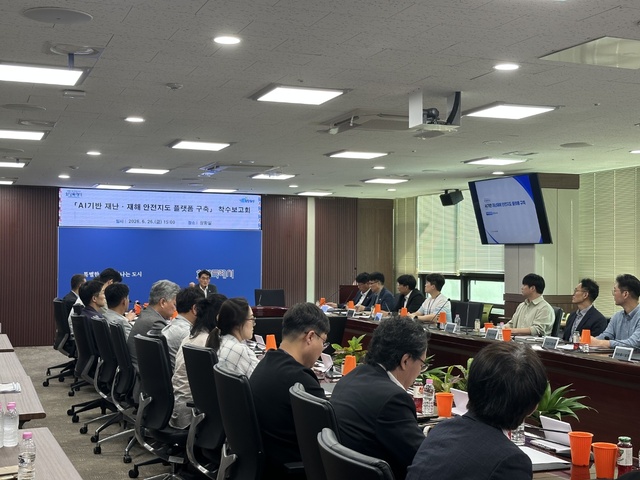
Hwaseong City Launches AI-Based Disaster Safety Mapping Platform
Hwaseong City, South Korea, has initiated the development of an AI-powered disaster safety mapping platform that integrates spatial and disaster data to monitor and manage risks such as fires, floods, and landslides. The system aims to enhance real-time risk analysis and emergency response, though no harm or incidents have occurred yet.[AI generated]
Industries:
Severity:
Business function:
Autonomy level:
AI system task:
Why's our monitor labelling this an incident or hazard?
The event involves the development and intended use of an AI system for disaster risk management and decision support. However, there is no indication that any harm has occurred or that the AI system has malfunctioned or been misused. The article focuses on the planned construction and expected benefits of the AI platform, which could plausibly lead to improved safety outcomes. Therefore, this event represents a potential future application of AI with plausible benefits and risks but no realized harm or incident at this stage. Hence, it qualifies as an AI Hazard rather than an AI Incident or Complementary Information.[AI generated]

Mexican Students Develop AI App to Predict and Prevent Forest Fires
Students at Mexico's Instituto Politécnico Nacional (IPN) developed an AI-based web application to identify and classify areas at risk of forest fires, focusing on Parque Nacional El Tepozteco. The tool analyzes images and real-time environmental data to enable authorities to take preventive actions before emergencies occur.[AI generated]
Industries:
Severity:
Business function:
Autonomy level:
AI system task:
Why's our monitor labelling this an incident or hazard?
The article details an AI system developed to prevent forest fires by identifying risk zones early, which could plausibly lead to avoiding harm to the environment and communities. There is no indication that harm has already occurred due to the AI system or that the system malfunctioned. Instead, the AI system is used proactively to mitigate potential harm. Hence, this qualifies as an AI Hazard because the AI system's use could plausibly lead to preventing an AI Incident (harm). It is not Complementary Information since the main focus is on the AI system's development and intended use, not on updates or responses to prior incidents. It is not an AI Incident because no harm has yet occurred.[AI generated]

AI-Powered Sports Betting Scams Lead to Financial and Privacy Harms in China
Criminals in China used AI-based sports prediction models, marketed as highly accurate, to lure users via social media into illegal online gambling platforms. Victims suffered financial losses, personal data breaches, and legal risks. Experts warn that AI cannot guarantee betting outcomes and caution against such deceptive schemes.[AI generated]
AI principles:
Industries:
Affected stakeholders:
Harm types:
Severity:
Autonomy level:
AI system task:
Why's our monitor labelling this an incident or hazard?
The event involves AI systems explicitly described as providing 'AI predictions' and 'high-accuracy algorithms' for sports betting. These AI systems are used by malicious actors to lure users into illegal online gambling, resulting in direct financial harm, personal data breaches, and legal consequences. The harms are realized and directly linked to the AI system's use, fulfilling the criteria for an AI Incident. The article does not merely warn of potential harm but documents ongoing harm caused by the AI-enabled deceptive practices.[AI generated]

AI-Driven Travel Scams Surge in Italy, Causing Widespread Financial Harm
In Italy, AI-powered travel scams have surged by 3,000% since 2022, with over 4 million people targeted. Cybercriminals use AI to create fake rental listings, deepfake videos, and cloned booking sites, leading to significant financial losses for victims. The scams are particularly prevalent during the summer holiday season.[AI generated]
AI principles:
Industries:
Affected stakeholders:
Harm types:
Severity:
Autonomy level:
AI system task:
Why's our monitor labelling this an incident or hazard?
The article explicitly states that AI is used to generate realistic images and deepfake videos to perpetrate travel scams, causing direct financial harm to victims who pay for fake rentals. The AI system's use in creating deceptive content is central to the harm described. Therefore, this qualifies as an AI Incident because the AI system's use has directly led to harm to people (financial loss) and harm to communities (through misinformation).[AI generated]

Samsung Data Leak Caused by Employee Use of Generative AI Tools
In 2023, Samsung engineers uploaded confidential company documents and source code to ChatGPT, resulting in a data leak. The data was stored on external servers beyond the company's control, raising significant security and GDPR compliance issues. This incident highlights the risks of unregulated employee use of generative AI in corporate environments.[AI generated]
AI principles:
Industries:
Affected stakeholders:
Harm types:
Severity:
Business function:
Autonomy level:
AI system task:
Why's our monitor labelling this an incident or hazard?
The event involves the use and misuse of AI systems (generative AI tools like ChatGPT) within corporate environments, leading directly to harms such as data leakage, loss of control over sensitive information, and regulatory compliance violations. These harms fall under violations of legal obligations and harm to property/business interests. The article reports actual incidents (e.g., Samsung's data leak) and ongoing risks, not just potential hazards. Therefore, this qualifies as an AI Incident because the AI system's use has directly led to harm.[AI generated]

Japan Plans AI-Enabled Unmanned Submarines Amid Rising Tensions with China
The Japanese government is evaluating the development and deployment of AI-powered unmanned submarines with autonomous and offensive capabilities to strengthen Pacific defense, particularly near the Ogasawara Islands. This move, aimed at countering China's maritime expansion, raises concerns about potential military escalation and risks associated with autonomous AI military systems.[AI generated]
AI principles:
Industries:
Affected stakeholders:
Harm types:
Severity:
Business function:
Autonomy level:
AI system task:
Why's our monitor labelling this an incident or hazard?
The event involves the development and potential use of AI-enabled unmanned submarines with offensive capabilities, which could plausibly lead to significant harm such as military conflict escalation or accidents. Since no actual harm or incident has occurred yet, but the AI system's involvement could plausibly lead to an AI Incident, this qualifies as an AI Hazard. The article does not describe a realized harm or malfunction, nor does it focus on responses or updates to prior incidents, so it is not an AI Incident or Complementary Information.[AI generated]

AI-Powered Smart Glasses Facilitate Exam Cheating in East Asia
AI-enabled smart glasses have been used by students in East Asian countries, including South Korea, Taiwan, and China, to cheat in high-stakes exams. Detected cases have alarmed educational authorities, prompting stricter monitoring and policy responses to address the threat to academic integrity posed by these advanced AI devices.[AI generated]
AI principles:
Industries:
Affected stakeholders:
Harm types:
Severity:
AI system task:
Why's our monitor labelling this an incident or hazard?
The event involves the use of AI systems (smart glasses integrated with large language models) to cheat in exams, which directly harms the integrity of educational assessments and the fairness of academic evaluation, impacting communities and institutions. The article provides concrete examples of detected misuse and institutional countermeasures, indicating realized harm rather than potential harm. Hence, it meets the criteria for an AI Incident rather than a hazard or complementary information.[AI generated]

Instagram AI Fails to Block Explicit Content, Exposing Minors and Enabling Data Risks
Instagram's AI-driven recommendation and moderation systems failed to block explicit sexual content and pornography, which was promoted to users—including minors—via the Reels feature. The malfunction allowed millions of views and exposed users to malicious links, violating child protection laws and raising data security concerns in Brazil.[AI generated]
AI principles:
Industries:
Affected stakeholders:
Harm types:
Severity:
Business function:
AI system task:
Why's our monitor labelling this an incident or hazard?
The event explicitly involves AI systems used for content moderation and recommendation on Instagram. The AI's malfunction or circumvention by malicious actors has directly led to harm by exposing minors to explicit content and malware risks. This meets the criteria for an AI Incident because the AI system's failure to effectively moderate content has caused realized harm to vulnerable users and breaches legal protections. Therefore, the event is classified as an AI Incident.[AI generated]

AI Moderation Shields Women Cricketers from Online Abuse During ICC T20 World Cup
Over 100 women cricketers signed up for the ICC Player Protection Programme, which uses AI (Freedom2hear) to filter and remove abusive social media comments during the Women's T20 World Cup 2026. The system removed nearly 60,000 harmful comments, restricted repeat offenders, and was praised for safeguarding athletes' mental wellbeing.[AI generated]
Industries:
Severity:
Business function:
Autonomy level:
AI system task:
Why's our monitor labelling this an incident or hazard?
The event involves an AI system (Freedom2hear) actively used to moderate social media content and protect women cricketers from online abuse, which is a form of harm to health and wellbeing. The AI system's deployment has directly led to the removal of harmful content and restrictions on offenders, thus preventing or mitigating harm. Since the harm is realized and the AI system's role is pivotal in addressing it, this qualifies as an AI Incident.[AI generated]

Pilot Deployment of AI Cameras to Detect Distracted Driving in Cyprus
Cyprus's Minister of Transport announced a pilot phase for AI-powered cameras to detect drivers using mobile phones, aiming to reduce fatal road accidents. The system's deployment requires legislative changes before enforcement, and no harm or incidents have occurred yet. The initiative targets distracted driving as a major safety concern.[AI generated]
AI principles:
Industries:
Severity:
Business function:
Autonomy level:
AI system task:
Why's our monitor labelling this an incident or hazard?
The event involves AI systems (AI cameras detecting mobile phone use while driving) and their intended use, but no actual harm or enforcement has occurred. The article focuses on preparatory steps, legal changes, and pilot testing, indicating potential future use but no current incident or harm. Therefore, it represents a plausible future risk scenario but not an incident or complementary information about harm or responses to harm.[AI generated]

Airbus and Kawasaki Partner to Develop AI-Enabled Military Drones for Japan
Airbus and Japan's Kawasaki Heavy Industries have signed an agreement to jointly develop a Japanese version of the Eurodrone, an AI-enabled military drone with autonomous surveillance and anti-submarine capabilities. The project, involving integration of local sensors and weapons, raises future risks of harm due to its autonomous military applications.[AI generated]
AI principles:
Industries:
Affected stakeholders:
Harm types:
Severity:
Business function:
Autonomy level:
AI system task:
Why's our monitor labelling this an incident or hazard?
The event involves the development of an AI-enabled military drone system, which qualifies as an AI system due to its autonomous capabilities and integration of sensors and weapons. The article focuses on the collaboration and development phase without any realized harm or malfunction. Given the military nature and potential for harm, this constitutes an AI Hazard, as the development and future deployment of such systems could plausibly lead to incidents involving injury, violations of rights, or harm to communities. There is no indication of actual harm yet, so it is not an AI Incident. It is not merely complementary information because the main focus is on the development of a potentially hazardous AI system, not on responses or updates to past incidents.[AI generated]

Austrian Interior Ministry Expands Use of AI Surveillance Software
Austria's Interior Ministry renewed its contract for the AI-powered surveillance software 'Tangles' and added the 'Webloc' module, enabling analysis of online activities and access to individuals' location data. Critics, including the Green Party, highlight privacy and human rights concerns due to mass data collection and lack of transparency.[AI generated]
AI principles:
Industries:
Affected stakeholders:
Harm types:
Severity:
Business function:
AI system task:
Why's our monitor labelling this an incident or hazard?
The software "Tangles" and its module "Webloc" involve AI systems for analyzing online activities and extracting location data. The event involves the use of these AI systems by a government agency, which leads to indirect harm in the form of potential violations of privacy and fundamental rights due to mass data collection and surveillance without effective control. Although no specific incident of harm is described, the event highlights ongoing use and concerns about rights violations and structural surveillance expansion, which constitute realized harm under violations of human rights and fundamental rights. Therefore, this qualifies as an AI Incident.[AI generated]

AI Deepfake Crypto Scam Defrauds Ontario Senior of $900,000
An 86-year-old Ontario woman lost $900,000 after falling victim to a cryptocurrency scam that used an AI-generated deepfake video of Prime Minister Mark Carney. The convincing video, found on Facebook, led her to invest her life savings in a fraudulent platform, causing severe financial and emotional harm.[AI generated]
AI principles:
Industries:
Affected stakeholders:
Harm types:
Severity:
Autonomy level:
AI system task:
Why's our monitor labelling this an incident or hazard?
The scam used AI-generated deepfake technology to create a convincing fraudulent video, which directly caused the victim to invest large sums of money into a fake platform, resulting in substantial financial and emotional harm. The AI system's role was pivotal in enabling the deception and consequent harm. The event clearly meets the criteria for an AI Incident as the AI system's use directly led to realized harm (financial loss and psychological distress).[AI generated]
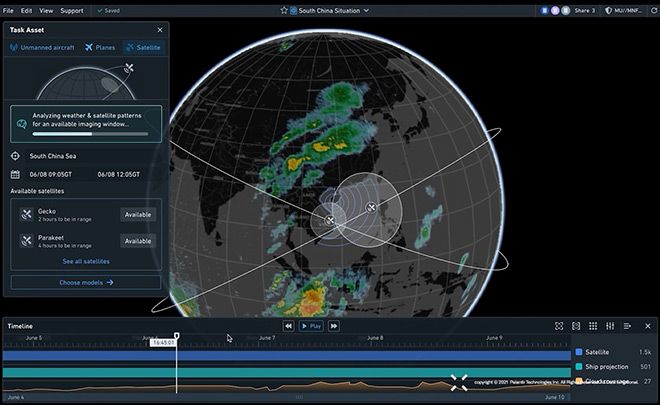
Japan Considers Palantir AI for Military Command and Control
Japan's Defense Ministry is evaluating Palantir's Maven Smart System, an AI-driven command-and-control platform, for the Self-Defense Forces. The move raises concerns about foreign dependence, data security, and the risks of AI errors in military decision-making, prompting calls for a domestic AI alternative.[AI generated]
AI principles:
Industries:
Affected stakeholders:
Harm types:
Severity:
AI system task:
Why's our monitor labelling this an incident or hazard?
The article involves an AI system explicitly (Palantir's Maven Smart System) and its potential use in military decision-making, which could plausibly lead to significant harms if misused or malfunctioning, such as harm to national security or human rights. However, since the AI system is only being considered and tested in exercises without any reported harm or malfunction, this constitutes a potential risk rather than an actual incident. The concerns about dependence on foreign AI and information leaks further support the classification as a hazard. Thus, the event fits the definition of an AI Hazard rather than an AI Incident or Complementary Information.[AI generated]