















The event involves AI systems as it explicitly mentions AI companies and data related to military attacks and harm to children, indicating potential misuse of AI. The threat is about preventing support to such AI systems, implying a credible risk of harm if such AI systems are funded or supported. However, since no actual harm or incident has occurred yet, and the event is a political warning or threat to prevent future harm, it fits the definition of an AI Hazard rather than an AI Incident. It is not Complementary Information because it is not a response or update to a past incident, nor is it Beneficial Use or Unrelated.[AI generated]

AIM: AI Incidents and Hazards Monitor
Automated media discourse monitor of AI incidents and hazards (Beta)
AI-related legislation is gaining traction, and effective policymaking needs evidence, foresight and international cooperation. The OECD AI Incidents and Hazards Monitor (AIM) documents AI incidents and hazards to help policymakers, AI practitioners, and all stakeholders worldwide gain valuable insights into the risks and harms of AI systems. Over time, AIM will help to show risk patterns and establish a collective understanding of AI incidents and hazards and their multifaceted nature, serving as an important tool for trustworthy AI. AI incidents seem to be getting more media attention lately, but they've actually gone down as a share of all AI news (see chart below!).
The information displayed in the AIM should not be reported as representing the official views of the OECD or of its member countries.
Advanced Search Options
As percentage of total AI events
Show summary statistics of AI incidents & hazards

Iranian Official Warns Gulf States Over Support for AI Firms Linked to Military Harm
Iranian parliament speaker Mohammad Bagher Ghalibaf warned Gulf states and regional investors against supporting AI and data companies allegedly involved in military aggression and the killing of children. He threatened punitive action if resources are provided to such firms, highlighting concerns over AI's role in causing harm.[AI generated]
AI principles:
Industries:
Affected stakeholders:
Harm types:
Why's our monitor labelling this an incident or hazard?

Brazilian Man Deceived by AI-Generated Virtual Influencer, Suffers Financial and Emotional Harm
A 49-year-old Brazilian man, grieving his mother's death, was deceived by an AI-generated virtual influencer named "Jessica" with over 300,000 followers. Believing her invitations, he sold possessions and traveled 2,100 km to meet her, only to discover she was not real, resulting in financial loss and emotional distress.[AI generated]
AI principles:
Industries:
Affected stakeholders:
Harm types:
Business function:
Autonomy level:
AI system task:
Why's our monitor labelling this an incident or hazard?
The event clearly involves an AI system generating a virtual character that was used to deceive a vulnerable individual, leading to realized harm (financial loss, emotional distress). The AI-generated persona was central to the incident, and the harm is direct and significant. Therefore, this qualifies as an AI Incident under the framework, as the AI system's use directly led to harm to a person and community (harm to property or community through deception).[AI generated]

Army Officer's Wife Booked for Espionage Using AI Tools in Jammu
An Army officer's wife in Jammu, India, was booked for alleged espionage after using AI tools ChatGPT and Claude to prepare analytical papers on sensitive national security topics. Authorities allege she shared this information with suspected Chinese intelligence operatives, raising concerns over AI's role in facilitating breaches of national security.[AI generated]
AI principles:
Industries:
Affected stakeholders:
Harm types:
Autonomy level:
AI system task:
Why's our monitor labelling this an incident or hazard?
The event explicitly mentions the use of AI systems (ChatGPT and Claude) to generate analytical content on sensitive security issues, which was then shared with foreign intelligence operatives, leading to a breach of national security laws. The AI system's role is pivotal in creating the content that was allegedly used for espionage. The harm is realized and significant, involving violations of national sovereignty and security. Hence, this qualifies as an AI Incident rather than a hazard or complementary information.[AI generated]

AI Deepfakes Used to Impersonate Chinese Celebrities in Livestream Scams
AI-generated deepfake videos and audio impersonating Chinese celebrities, including Wu Yue and Deng Yaping, were used on WeChat Video accounts to fraudulently promote products and scam consumers. The platform permanently banned the offending account, but the incident highlights ongoing risks of AI misuse for identity theft and fraud in China.[AI generated]
AI principles:
Industries:
Affected stakeholders:
Harm types:
AI system task:
Why's our monitor labelling this an incident or hazard?
The event involves AI systems used for deepfake impersonation, which directly leads to harm by defrauding people through fake livestreams. This constitutes a violation of rights and harm to communities due to misinformation and fraud. The permanent ban of the account is a response to this harm. The article also covers broader governance and legal frameworks addressing AI misuse, but the central event is the realized harm caused by AI deepfake impersonation. Therefore, this qualifies as an AI Incident.[AI generated]
Experts Warn AI Chatbots May Distort Children's Perception of Human Relationships
American researchers warn that AI-powered chat applications could confuse children's ability to distinguish between humans and machines, as these systems mimic human emotions and interactions. This may blur boundaries between real and artificial relationships, potentially impacting both children and adults' psychological development. No actual harm has yet been reported.[AI generated]
AI principles:
Industries:
Affected stakeholders:
Harm types:
Autonomy level:
AI system task:
Why's our monitor labelling this an incident or hazard?
The article centers on expert warnings and research findings about the potential psychological and social harms that could arise from interacting with AI chatbots, especially for children and mental health. These concerns are about plausible future harms rather than realized incidents. There is no description of an actual event where AI caused harm, nor is there a focus on societal or governance responses or updates. Therefore, the event fits the definition of an AI Hazard, as it plausibly could lead to harm but no harm has yet been reported or confirmed.[AI generated]
KIC Uses Chinese AI Models, Including U.S.-Sanctioned Entity, for Sensitive Document Processing
South Korea's sovereign wealth fund KIC deployed Chinese AI models, including one from a U.S.-sanctioned institution, to process sensitive internal and governmental documents. The lack of security vetting and use of sanctioned technology raised significant national security and confidentiality risks, sparking criticism over governance and potential harm to state interests.[AI generated]
AI principles:
Industries:
Affected stakeholders:
Harm types:
Business function:
Autonomy level:
AI system task:
Why's our monitor labelling this an incident or hazard?
The article explicitly mentions AI systems (language and embedding models) used internally by KIC, a sovereign wealth fund managing national assets. The use of AI models from Chinese developers, including one under U.S. export controls, raises plausible security risks that could lead to harm (e.g., data breaches, espionage, or misuse of sensitive information). However, the article does not report any actual incident of harm or malfunction caused by these AI systems. The concerns are about potential future risks due to insufficient security review and governance. Hence, this qualifies as an AI Hazard rather than an AI Incident. It is not Complementary Information because the main focus is on the risk and governance gaps, not on responses or updates to a prior incident. It is not Beneficial Use or Unrelated.[AI generated]
AI-Generated Romance Scams Exploit Ukraine War to Defraud Victims
Scammers exploited the Ukraine war by using AI-manipulated images and fake documents to pose as women trapped in Russian-occupied areas. They deceived men online into sending money for supposed rescues. The AI-generated content was central to the fraud, resulting in significant financial losses for victims.[AI generated]
AI principles:
Industries:
Affected stakeholders:
Harm types:
Autonomy level:
AI system task:
Why's our monitor labelling this an incident or hazard?
The event involves the use of AI systems to create or manipulate images and documents that are used to deceive victims into sending money, constituting direct harm (financial loss and emotional harm). The AI system's malfunction or misuse (here, malicious use) is a direct factor in causing harm. The article documents actual cases of harm, not just potential risk, so it is an AI Incident rather than a hazard or complementary information.[AI generated]

AI-Generated Deepfake Videos Target BJD Leader in Odisha
The Biju Janata Dal (BJD) filed a police complaint in Bhubaneswar, Odisha, after AI-generated deepfake and voice-cloned videos targeting senior leader Sujata Rout Karthikeyan and other women leaders were circulated on social media. The fabricated content caused reputational harm and public misinformation, prompting demands for investigation and legal action.[AI generated]
AI principles:
Industries:
Affected stakeholders:
Harm types:
Autonomy level:
AI system task:
Why's our monitor labelling this an incident or hazard?
The event explicitly involves AI systems used to create deepfake and voice-cloned videos that have been circulated to defame and degrade a political figure, causing reputational harm and social discord. This is a direct harm to the community and an infringement on the individual's rights. The AI system's misuse is central to the harm, fulfilling the criteria for an AI Incident. The ongoing police investigation and demand for legal action further support the recognition of realized harm rather than a potential risk or complementary information.[AI generated]

India Urges Meta to Curb AI-Driven Content Risks on Social Platforms
India's Ministry of Electronics and Information Technology has advised Meta to review and adjust its AI-powered recommendation systems on Facebook and Instagram. The government seeks to prevent disproportionate exposure to limited narratives and mitigate risks of misleading content that could incite public disorder or violence. No specific incident prompted the advisory.[AI generated]
AI principles:
Industries:
Affected stakeholders:
Harm types:
Business function:
Autonomy level:
AI system task:
Why's our monitor labelling this an incident or hazard?
The advisory explicitly addresses the AI-powered recommendation systems used by Meta, indicating the AI system's involvement in content amplification. The concern is that these systems could indirectly lead to public disorder by promoting misleading or one-sided narratives. Since no actual harm or incident is reported, but the advisory is issued to prevent such outcomes, this fits the definition of an AI Hazard. The event is not Complementary Information because it is not an update or response to a past incident but a proactive advisory. It is not an AI Incident because no harm has occurred yet. It is not Beneficial Use since the AI system is not deployed solely as a countermeasure to external harm. Therefore, the classification is AI Hazard.[AI generated]

Turkey's Education Ministry to Use AI-Generated Exam Questions, Raising Fairness Concerns
Turkey's Ministry of National Education will implement an AI-supported exam system in middle and high schools from 2026-2027, with most questions generated by AI. Educators warn this could exacerbate educational inequalities and undermine teacher autonomy, as students from diverse backgrounds will face uniform, AI-generated assessments.[AI generated]
AI principles:
Industries:
Affected stakeholders:
Harm types:
AI system task:
Why's our monitor labelling this an incident or hazard?
The event involves the planned use of an AI system in educational assessment, specifically in exam question generation and evaluation. Since the system is not yet deployed and no harm has occurred, but there are plausible concerns about potential future harm such as unfair evaluation or exacerbation of educational inequalities, this qualifies as an AI Hazard. The article does not report any realized harm or incident, nor does it focus on responses or updates to past incidents, so it is not an AI Incident or Complementary Information. It is also not a Beneficial Use since the AI is part of the system potentially causing harm rather than solely mitigating external harm. Therefore, the classification is AI Hazard.[AI generated]

AI Data Centers Cause Environmental Harm Through High Energy and Water Use in the US
The rapid expansion of AI data centers in the US is causing significant environmental harm, including increased energy consumption, water depletion, pollution, noise, and heat. These harms are directly linked to the operation and growth of AI infrastructure, raising concerns among scientists and the public about their ecological impact.[AI generated]
AI principles:
Industries:
Affected stakeholders:
Harm types:
AI system task:
Why's our monitor labelling this an incident or hazard?
The article clearly involves AI systems, specifically AI data centers and their energy demands. While no actual harm has yet occurred, the projected increase in electricity consumption and resource use could plausibly lead to significant harms such as environmental damage and disruption of energy supply. Therefore, this qualifies as an AI Hazard because it describes a credible risk of future harm stemming from the development and use of AI systems, but no realized incident is reported.[AI generated]

ChatGPT's Incorrect Medical Advice Leads to Hospitalization and Lawsuit in San Francisco
David Rosenthal, a 39-year-old in San Francisco, was hospitalized after following ChatGPT's unauthorized and incorrect medical advice regarding medication use. The incident, which worsened his mental health, led Rosenthal to sue OpenAI, highlighting the risks of AI systems providing unlicensed medical guidance.[AI generated]
AI principles:
Industries:
Affected stakeholders:
Harm types:
Autonomy level:
AI system task:
Why's our monitor labelling this an incident or hazard?
The event clearly involves an AI system (ChatGPT) whose use directly led to harm to a person's health (mental health deterioration and hospitalization). The AI system's incorrect medical guidance and support for stopping prescribed medication are central to the harm. This fits the definition of an AI Incident, as the AI system's use directly led to injury or harm to a person. The legal case and allegations further support the classification. There is no indication that the event is only a potential risk (hazard), a beneficial use, or merely complementary information. Hence, AI Incident is the appropriate classification.[AI generated]
AI-Driven Election Interference by China Targets Taiwan's Democracy
Chinese authorities have increasingly used AI technologies, including voice forgery and algorithmic targeting, to spread disinformation and manipulate elections in Taiwan. These AI-enabled campaigns aim to polarize society and undermine trust in democracy. Taiwanese experts urge the government to deploy AI-based countermeasures to protect democratic processes.[AI generated]
AI principles:
Industries:
Affected stakeholders:
Harm types:
AI system task:
Why's our monitor labelling this an incident or hazard?
The event involves the use of AI systems by a state actor to spread misinformation and manipulate elections, which directly harms democratic rights and communities. The article describes realized harm through AI-generated fake content and targeted misinformation campaigns, fulfilling the criteria for an AI Incident. The discussion of using AI to counteract these harms is a complementary aspect but does not negate the primary classification. Therefore, the event is best classified as an AI Incident due to the direct and ongoing harm caused by AI-enabled election interference.[AI generated]

North Korea Tests AI-Guided Torpedo System
North Korea conducted an underwater test of a new precision-guided torpedo system equipped with artificial intelligence for target detection and guidance. The successful test, reported by state media, marks a significant advancement in North Korea's naval capabilities and raises concerns about AI-enabled autonomous weaponry.[AI generated]
AI principles:
Industries:
Affected stakeholders:
Harm types:
Autonomy level:
AI system task:
Why's our monitor labelling this an incident or hazard?
The article explicitly states that AI is used for target detection and guidance in a new torpedo system tested by North Korea. While no harm is reported as having occurred yet, the development and successful testing of AI-guided weapons present a plausible risk of significant harm, including injury, escalation of conflict, or disruption of critical infrastructure. The event is therefore best classified as an AI Hazard, as it could plausibly lead to an AI Incident in the future if the weapon is deployed or used.[AI generated]

North Korea Tests AI-Enabled Torpedo and Missile Systems
North Korea conducted underwater tests of torpedoes and hypersonic missiles equipped with artificial intelligence for autonomous guidance and target detection. The tests, announced by state media, demonstrate significant progress in AI weaponization, raising concerns about future risks if such systems are deployed in conflict.[AI generated]
AI principles:
Industries:
Affected stakeholders:
Harm types:
Autonomy level:
AI system task:
Why's our monitor labelling this an incident or hazard?
The article explicitly mentions AI systems integrated into North Korean torpedoes and missiles for guidance and target detection, confirming AI system involvement. The event stems from the development and use of these AI systems in weapons testing. No actual harm or incident is reported; the tests are described as routine and successful but without causing injury or damage. However, the nature of AI-enabled autonomous weapons inherently carries a credible risk of future harm, including injury, disruption, or violations of human rights if used in conflict. Thus, the event fits the definition of an AI Hazard, as it plausibly could lead to an AI Incident in the future. It is not Complementary Information because the main focus is on the test event itself, not a response or update to a prior incident. It is not Beneficial Use, as the AI is used in weaponry, not as a countermeasure to external harm. It is not Unrelated, as AI is clearly involved.[AI generated]
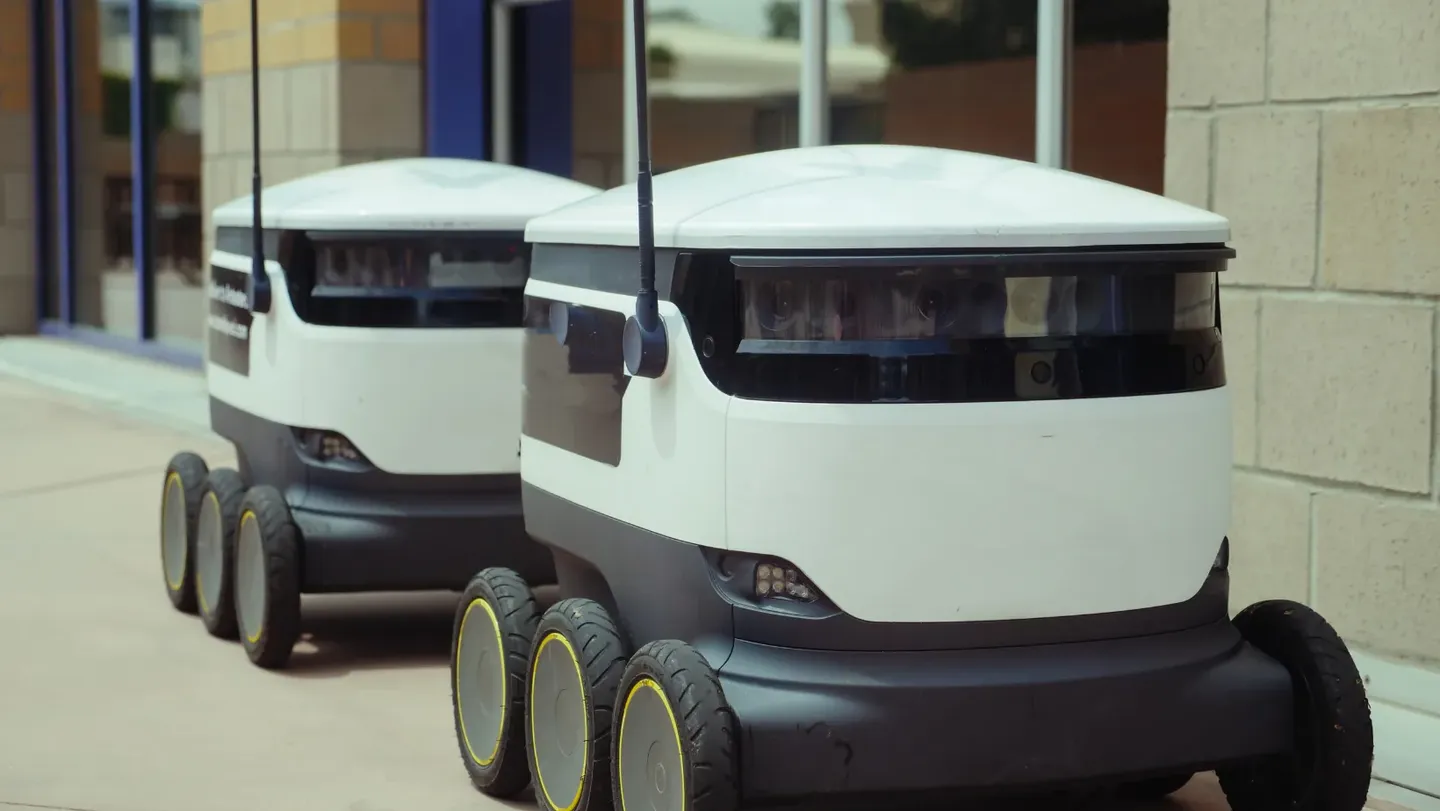
SoftBank Plans $30 Billion Acquisition to Integrate AI Robots into Security Services
SoftBank is considering a $30 billion acquisition of Allied Universal, the world's largest private security firm, aiming to introduce AI and robotic technologies into security operations. The plan envisions robots replacing some human security roles, though the technology is not yet mature or widely deployed.[AI generated]
AI principles:
Industries:
Affected stakeholders:
Harm types:
Business function:
Autonomy level:
AI system task:
Why's our monitor labelling this an incident or hazard?
The event involves AI systems in the form of AI-powered security robots planned for future deployment, but no actual harm or incident has occurred yet. The article highlights the potential for AI robots to replace human security personnel, which could plausibly lead to harms such as job displacement or security failures in the future. Since the technology is not yet mature and no harm has materialized, this fits the definition of an AI Hazard rather than an AI Incident. It is not Complementary Information because it is not an update or response to a past incident, nor is it Beneficial Use since the AI system is not solely a countermeasure to an external harm without introducing new risks. Therefore, the classification is AI Hazard.[AI generated]
Anthropic Illegally Used 21 Korean Authors' Books to Train AI, Leading to Major Copyright Settlement
US AI company Anthropic used 21 English-language books by Korean authors without permission to train its Claude chatbot, resulting in a US court ruling of copyright infringement. Anthropic agreed to pay $1.5 billion in damages, with affected Korean authors eligible for compensation. The incident highlights AI-driven intellectual property violations.[AI generated]
AI principles:
Industries:
Affected stakeholders:
Harm types:
AI system task:
Why's our monitor labelling this an incident or hazard?
Anthropic's AI system was trained on copyrighted books obtained without authorization, which constitutes a violation of intellectual property rights. This infringement has been legally recognized and resulted in a significant settlement, confirming that harm has occurred. The AI system's development and use directly led to this harm, fulfilling the criteria for an AI Incident. The article's focus is on the realized harm and legal consequences, not just potential or future risks, nor is it solely about responses or updates, so it is not Complementary Information. Therefore, the event is classified as an AI Incident due to the direct violation of copyright through AI training.[AI generated]
Neha Sharma Threatens Legal Action Over Unauthorized AI-Generated Content
Indian actress Neha Sharma has issued legal warnings against the unauthorized creation and circulation of AI-generated images and videos using her likeness. She demanded immediate removal of such content, citing reputational harm and lack of consent, and threatened legal action against those responsible for misusing her identity.[AI generated]
AI principles:
Industries:
Affected stakeholders:
Harm types:
AI system task:
Why's our monitor labelling this an incident or hazard?
The article explicitly mentions AI-generated images and videos using Neha Sharma's face without consent, which is a direct misuse of an AI system's outputs. The harm involves reputational damage and unauthorized use of personal likeness, which are violations of rights. Since the harm is realized and the AI system's role is pivotal in creating the harmful content, this meets the criteria for an AI Incident rather than a hazard or complementary information.[AI generated]
OpenCode Security Breach Exposes AI Provider API Keys, Causes Financial Harm
A legacy system breach at OpenCode exposed API keys for OpenAI, Anthropic, and Google, affecting 1.4% of Console users. Attackers used stolen keys to run expensive AI queries, resulting in unauthorized charges and financial losses for developers. OpenCode urged affected users to revoke and replace credentials immediately.[AI generated]
AI principles:
Industries:
Affected stakeholders:
Harm types:
Business function:
Autonomy level:
AI system task:
Why's our monitor labelling this an incident or hazard?
The event involves the use and misuse of AI systems' API keys, leading to unauthorized usage and financial harm to users, which qualifies as harm to property (financial loss). The breach also disrupted user access to AI services, indicating operational disruption. Since the AI systems (Anthropic, OpenAI, Google AI services) are directly involved and the harm has materialized, this qualifies as an AI Incident. The ongoing nature and the direct harm to users' accounts and finances confirm this classification.[AI generated]

WEF Warns MENA of AI Data Centre Energy Risks
The World Economic Forum warns that rapid growth of AI data centres in the Middle East and North Africa could strain electricity and water resources. WEF urges governments to classify these centres as critical loads and overhaul energy planning to prevent potential disruptions and support sustainable AI infrastructure expansion.[AI generated]
AI principles:
Industries:
Affected stakeholders:
Harm types:
Why's our monitor labelling this an incident or hazard?
The article discusses plausible future risks related to the development and use of AI systems, specifically AI data centres, which could lead to disruption of critical infrastructure (electricity grids) due to high and fluctuating energy demands. However, no actual harm or incident has occurred yet; the focus is on potential challenges and recommendations to mitigate them. Therefore, this qualifies as an AI Hazard because it plausibly could lead to an AI Incident involving disruption of critical infrastructure if not addressed.[AI generated]