


The article explicitly discusses AI-powered coding agents used by attackers to find vulnerabilities in DeFi protocols, which have resulted in major exploits and billions in losses. The involvement of AI in enabling these attacks is clear, and the harm (financial loss, disruption of DeFi operations, loss of user funds) has already occurred. The warnings and advice to exit DeFi positions further underscore the severity of the realized harm. Hence, this is an AI Incident due to the direct link between AI use in attacks and the resulting harm to property and communities within the crypto ecosystem.[AI generated]

AIM: AI Incidents and Hazards Monitor
Automated monitor of incidents and hazards from public sources (Beta).
AI-related legislation is gaining traction, and effective policymaking needs evidence, foresight and international cooperation. The OECD AI Incidents and Hazards Monitor (AIM) documents AI incidents and hazards to help policymakers, AI practitioners, and all stakeholders worldwide gain valuable insights into the risks and harms of AI systems. Over time, AIM will help to show risk patterns and establish a collective understanding of AI incidents and hazards and their multifaceted nature, serving as an important tool for trustworthy AI. AI incidents seem to be getting more media attention lately, but they've actually gone down as a share of all AI news (see chart below!).
The information displayed in the AIM should not be reported as representing the official views of the OECD or of its member countries.
Advanced Search Options
As percentage of total AI events
Show summary statistics of AI incidents & hazards

AI-Driven Attacks Cause Massive Losses in DeFi Sector
AI-powered tools have enabled attackers to rapidly identify and exploit vulnerabilities in decentralized finance (DeFi) protocols, leading to over $1.1 billion in losses in the past year. Security experts warn that AI gives hackers a decisive advantage, making even established DeFi platforms unsafe.[AI generated]
AI principles:
Industries:
Affected stakeholders:
Harm types:
Severity:
AI system task:
Why's our monitor labelling this an incident or hazard?

AI-Generated Deepfake Audio Sparks Political Controversy in Nigeria
An AI-generated audio falsely attributed to President Bola Tinubu was circulated by social media commentator VeryDarkMan, prompting threats of legal action from the Presidency. The incident has fueled public debate about misinformation, deepfake technology, and political manipulation, highlighting the risks of AI-driven content in Nigeria.[AI generated]
AI principles:
Industries:
Affected stakeholders:
Harm types:
Severity:
Autonomy level:
AI system task:
Why's our monitor labelling this an incident or hazard?
The event clearly involves an AI system (AI voice cloning) used to create a fake audio attributed to a public figure, which has been disseminated on social media. This dissemination constitutes a violation of rights (reputational harm) and poses harm to communities by potentially inciting unrest or misinformation around elections and political issues. The harm is realized as the audio has been circulated and caused public concern and official condemnation. Therefore, this qualifies as an AI Incident due to the direct harm caused by the AI-generated content.[AI generated]

AI-Generated Deepfake Images of Minors Lead to Investigation in Cáceres
A man in Cáceres, Spain, is under investigation for creating and distributing sexualized deepfake images of minors using AI applications. The images, generated from photos taken from social media, resulted in multiple complaints and legal action due to violations of minors' rights and psychological harm.[AI generated]
AI principles:
Industries:
Affected stakeholders:
Harm types:
Severity:
Autonomy level:
AI system task:
Why's our monitor labelling this an incident or hazard?
The article explicitly states that an AI application was used to generate manipulated sexualized images of minors, which is a direct use of AI leading to harm. The harms include violations of rights (sexual freedom and indemnity), psychological and emotional harm to the victims, and legal consequences. This fits the definition of an AI Incident because the AI system's use directly led to significant harm and legal violations. The event is not merely a potential risk or a complementary update but a concrete incident involving AI misuse causing harm.[AI generated]
AI Adoption Leads to Job Losses and Wage Reductions for UK Workers
In the UK, widespread adoption of AI systems in sectors like translation, writing, and data analysis is displacing workers, reducing job opportunities, and lowering wages. Many professionals, such as translator Jessica Spengler, report being replaced or undercut by AI, resulting in significant economic harm and career disruption.[AI generated]
AI principles:
Industries:
Affected stakeholders:
Harm types:
Severity:
AI system task:
Why's our monitor labelling this an incident or hazard?
The article explicitly discusses AI systems being used to generate translations and other content, leading to direct harm to workers through job displacement, reduced wages, and forced career changes. These harms fall under violations of labor rights and economic harm to groups of people. The AI systems' use has directly led to these harms, meeting the criteria for an AI Incident rather than a hazard or complementary information. The article does not merely speculate about future harm but documents ongoing impacts.[AI generated]
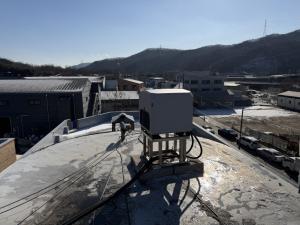
AI-Enabled Drones Prevent Wildfires in Hanam City, South Korea
Hanam City in South Korea deployed AI-powered autonomous drone stations for continuous wildfire monitoring during the 2026 spring fire season. This system, replacing traditional patrols, enabled rapid detection and response, resulting in zero wildfires, reduced personnel needs, and improved safety for local communities and the environment.[AI generated]
Industries:
Severity:
Business function:
Autonomy level:
AI system task:
Why's our monitor labelling this an incident or hazard?
The event involves an AI system (AI-enabled drones with autonomous flight and monitoring capabilities) whose use has directly led to the prevention of forest fires, thereby avoiding harm to people, property, and the environment. The AI system's deployment and operation have materially influenced the outcome, fulfilling the criteria for an AI Incident. Although the harm prevented is positive, the definition includes incidents where AI use directly leads to harm or its prevention in critical infrastructure contexts. Therefore, this is classified as an AI Incident.[AI generated]

Uklon Pilots Remote-Driven Vehicle Technology as Step Toward Robotaxi in Ukraine
Ukrainian ride-hailing company Uklon has begun pilot testing AI-powered remote driving technology at Boryspil Airport. The project, in partnership with Estonian firm Elmo, aims to evaluate remote-controlled vehicles as a precursor to autonomous taxis, with regulatory groundwork underway. No incidents or harm have been reported during testing.[AI generated]
Industries:
Severity:
Business function:
Autonomy level:
AI system task:
Why's our monitor labelling this an incident or hazard?
The event involves AI systems (autonomous vehicle technology and remote control software with sensors and lidar) being tested, which fits the definition of an AI system. However, the article does not report any injury, rights violation, disruption, or other harm caused by these systems. It focuses on testing and regulatory preparation, indicating potential future risks but no realized harm. Hence, it qualifies as an AI Hazard, reflecting plausible future harm from autonomous vehicle deployment if issues arise.[AI generated]

Paris Hilton Targeted by Over 100,000 Non-Consensual AI Deepfake Images
Paris Hilton revealed that more than 100,000 explicit deepfake images of her have been created using AI without her consent, causing significant emotional distress and privacy violations. She is advocating for the Defiance Act in the US, which seeks legal remedies for victims of AI-generated non-consensual imagery.[AI generated]
AI principles:
Industries:
Affected stakeholders:
Harm types:
Severity:
Autonomy level:
AI system task:
Why's our monitor labelling this an incident or hazard?
The presence of AI systems is explicit in the creation of deepfake images. The harm is direct and ongoing, involving violations of privacy and emotional distress to Paris Hilton and potentially others. The event details actual harm caused by AI misuse, fulfilling the criteria for an AI Incident. The legislative response is complementary but the main focus is the harm caused by AI deepfakes, not just the advocacy or policy development.[AI generated]

AI-Assisted Plagiarism in Tower of Saviors Promo Video Sparks Backlash
The game Tower of Saviors used AI-assisted tools to create a promotional video that closely copied animation from the game Wuthering Waves, leading to accusations of plagiarism and intellectual property violation. The developer admitted to using AI, apologized, withdrew the video, and pledged stricter review processes.[AI generated]
AI principles:
Industries:
Affected stakeholders:
Harm types:
Severity:
Business function:
Autonomy level:
AI system task:
Why's our monitor labelling this an incident or hazard?
The article explicitly states that AI technology was used to assist in the creation and review of the promotional animation, which contained copied content from another game without authorization. This misuse of AI led to a breach of intellectual property rights (a legal obligation) and caused significant reputational harm to the game and its community, fulfilling the criteria for an AI Incident. The harm is realized, not just potential, as the plagiarism and resulting backlash have already occurred. The AI system's role is pivotal as it was part of the production process that enabled the copying and failure to detect the issue before release.[AI generated]
US Supreme Court Allows Vermont Lawsuit Over AI-Driven Social Media Addiction to Proceed
The US Supreme Court declined to hear Meta's appeal, allowing Vermont's lawsuit to proceed. The case alleges Meta's AI-powered Instagram and Facebook platforms were deliberately designed to be addictive, causing mental health harm to young users. This legal action highlights AI-driven features' direct role in youth harm.[AI generated]
AI principles:
Industries:
Affected stakeholders:
Harm types:
Severity:
Business function:
Autonomy level:
AI system task:
Why's our monitor labelling this an incident or hazard?
The Instagram app uses AI algorithms to optimize user engagement, which in this case is alleged to have been designed to exploit teenagers' developing brains, causing addiction and mental health harm. The lawsuit is based on the use of AI-driven features that have directly led to harm to a vulnerable group (young users). The legal action and the Supreme Court's decision to allow the case to proceed confirm that the AI system's use has caused or is causing harm, fitting the definition of an AI Incident. The event is not merely a potential hazard or complementary information but a concrete legal case addressing realized harm linked to AI system design and use.[AI generated]

AI-Generated Deepfake Nude Image of Minor Distributed by Peers in Kilkis
In Kilkis, Greece, two 15-year-old boys used an AI application to create a deepfake nude image of a female classmate and distributed it to other minors. The incident led to psychological harm and legal action, highlighting the misuse of AI for non-consensual image manipulation and privacy violations.[AI generated]
AI principles:
Industries:
Affected stakeholders:
Harm types:
Severity:
Autonomy level:
AI system task:
Why's our monitor labelling this an incident or hazard?
The incident explicitly involves the use of AI to generate a harmful deepfake image, which was then shared, causing violation of personal rights and harm to the victim. The involvement of AI in creating the manipulated content and the resulting harm to the individual and community fits the definition of an AI Incident, as it directly led to violations of rights and harm.[AI generated]

Hyundai Rotem Advances Military Unmanned Systems with AI Command Technology
Hyundai Rotem has secured major government contracts in South Korea to develop AI-based command and control systems for military unmanned vehicles and robots. The projects include natural language command interfaces and digital twin simulators, aiming to enable integrated, autonomous operation of diverse unmanned platforms, raising future risks of AI-enabled military harm if misused.[AI generated]
AI principles:
Industries:
Severity:
Business function:
Autonomy level:
AI system task:
Why's our monitor labelling this an incident or hazard?
The event involves the development and use of AI systems (natural language command-based control of unmanned robots) but only describes the award and planned R&D activities without any realized harm or malfunction. Since the AI systems are not yet deployed or causing harm, and the article focuses on the development phase, this fits the definition of an AI Hazard, as the technology could plausibly lead to harm in the future (e.g., military applications of autonomous robots). It is not an AI Incident because no harm has occurred, nor is it Complementary Information or Unrelated.[AI generated]

Artist Paco Roca's Poster Plagiarized by AI for Madrid Book Fair
Spanish illustrator Paco Roca publicly denounced the use of generative AI to create a promotional poster for San Martín de la Vega's Book Fair that closely copied his original artwork for Valencia's Fira del Llibre. The incident sparked debate on AI and copyright, prompting legal action and the poster's removal.[AI generated]
AI principles:
Industries:
Affected stakeholders:
Harm types:
Severity:
Business function:
Autonomy level:
AI system task:
Why's our monitor labelling this an incident or hazard?
The event explicitly mentions the use of AI to plagiarize an original poster, which constitutes a violation of intellectual property rights. The harm is realized as the original artist's rights are infringed upon, and the incident involves the use of an AI system in the creation of the plagiarized content. Therefore, this qualifies as an AI Incident under the framework, specifically under harm category (c) regarding violations of intellectual property rights.[AI generated]

Perplexity AI Faces Lawsuit in Japan Over Copyright Infringement
Yomiuri Shimbun and other Japanese newspapers have sued US-based AI company Perplexity, alleging its generative AI system used their articles without permission, violating copyright laws. The lawsuit, filed in Tokyo District Court, seeks an injunction and damages of about 2.1 billion yen. Perplexity disputes the claims.[AI generated]
AI principles:
Industries:
Affected stakeholders:
Harm types:
Severity:
Business function:
Autonomy level:
AI system task:
Why's our monitor labelling this an incident or hazard?
The event involves an AI system (a generative AI search service) whose use has allegedly led to a violation of intellectual property rights, a recognized harm under the AI Incident definition. Since the unauthorized reproduction and transmission of copyrighted content has already occurred and is the subject of a lawsuit, this constitutes an AI Incident rather than a hazard or complementary information.[AI generated]

Presentation of AI-Enabled Autonomous Armored Vehicle Taurus XL in Spain
Miriad Global, with Funditec, presented the Taurus XL, an AI-enabled autonomous armored 6x6 ground vehicle, to Spain's Ministry of Defense and CDTI. Designed for military and civil missions, it integrates AI for perception, autonomous operation, and remote weapon systems, posing credible future risks if deployed.[AI generated]
AI principles:
Industries:
Affected stakeholders:
Harm types:
Severity:
Autonomy level:
AI system task:
Why's our monitor labelling this an incident or hazard?
The article explicitly mentions the use of AI and autonomous systems in the Taurus XL robot, including autonomous deployment and coordination with drones, as well as integration of a remote weapon station. Although no harm has yet occurred, the development of an autonomous armed ground robot with AI capabilities for military use plausibly could lead to harms such as injury, violation of rights, or disruption in conflict scenarios. The event focuses on the development and presentation of this system, not on any realized harm or incident. Hence, it fits the definition of an AI Hazard rather than an AI Incident or Complementary Information.[AI generated]

AI Note-Taking in Therapy Breaches Patient Trust and Privacy
A therapist in Fayetteville, Arkansas used an AI tool to record and transcribe sessions without clear patient consent, causing the patient to feel violated and lose trust. The incident highlights privacy and ethical concerns over AI use in sensitive mental health settings, with broader public distrust of such technologies.[AI generated]
AI principles:
Industries:
Affected stakeholders:
Harm types:
Severity:
Business function:
AI system task:
Why's our monitor labelling this an incident or hazard?
The event involves an AI system explicitly used to record and transcribe therapy sessions. The harm is realized: a patient experienced a breach of trust and felt violated when recorded without consent, which is a violation of privacy and ethical standards in healthcare. The AI system's use directly contributed to this harm. The article also discusses broader concerns about privacy and data security risks inherent in such AI tools. Given the direct link between AI use and harm to patient trust and privacy rights, this qualifies as an AI Incident rather than a hazard or complementary information.[AI generated]

Turkey Deploys AI-Enabled Kamikaze Drone Swarms in Military Operations
Turkey has developed and deployed AI-powered autonomous kamikaze drone swarms, notably showcased in SAHA 2026 and EFES 2026. These systems, used in conflicts such as Ukraine, employ AI for navigation and coordinated attacks, causing harm to people and infrastructure and marking a significant shift in modern warfare.[AI generated]
AI principles:
Industries:
Affected stakeholders:
Harm types:
Severity:
Business function:
Autonomy level:
AI system task:
Why's our monitor labelling this an incident or hazard?
The article clearly describes AI systems in the form of autonomous kamikaze drones and coordinated drone swarms used in active military conflicts, causing physical harm and operational disruption. The AI systems' autonomous decision-making and swarm coordination capabilities are central to their operational effectiveness and the resulting harms. This meets the definition of an AI Incident because the AI system's use has directly led to harm to persons, communities, and critical infrastructure. The article does not merely discuss potential risks or future hazards but reports on current and ongoing use with real consequences.[AI generated]

AI-Generated Deepfake Targets Indian Minister with False Remarks
An AI-generated deepfake video falsely attributed inflammatory remarks to Indian External Affairs Minister S Jaishankar regarding the 'Cockroach Janta Party.' The video, widely circulated on social media, was debunked by the PIB Fact Check unit, highlighting the misuse of AI to spread misinformation and cause reputational harm.[AI generated]
AI principles:
Industries:
Affected stakeholders:
Harm types:
Severity:
AI system task:
Why's our monitor labelling this an incident or hazard?
An AI system was used to create a manipulated video (deepfake) that falsely portrays a public official making inflammatory statements. This misinformation can cause harm to communities by spreading false narratives and damaging reputations. The harm is realized as the video is publicly circulated and flagged by an official fact-checking body. Therefore, this qualifies as an AI Incident due to the direct harm caused by the AI-generated content.[AI generated]
/s3/static.nrc.nl/wp-content/uploads/2026/05/26125229/260526ECO_2033968813_stabiliteit.jpg)
Dutch Financial Authorities Warn of AI-Driven Cyber Risks to Financial Stability
Dutch financial regulators, including De Nederlandsche Bank and the AFM, warn that generative AI models are increasing the speed and complexity of cyberattacks, posing significant risks to the financial sector's stability. While no incidents have occurred, authorities urge rapid vulnerability management and coordinated oversight to mitigate potential AI-enabled disruptions.[AI generated]
AI principles:
Industries:
Affected stakeholders:
Harm types:
Severity:
Autonomy level:
AI system task:
Why's our monitor labelling this an incident or hazard?
The article explicitly discusses AI systems (e.g., generative AI models like Anthropic's Mythos) and their potential use in cyberattacks and autonomous financial market operations. The warnings from financial authorities about these risks indicate a credible possibility that AI could lead to significant harm, such as disruption of critical financial infrastructure and market instability. Since the harms are potential and have not yet materialized, this qualifies as an AI Hazard rather than an AI Incident. The article does not describe any realized harm or incident caused by AI, nor does it focus on responses or updates to past incidents, so it is not Complementary Information.[AI generated]

Walmart's AI-Driven Surveillance Pricing Sparks Public Backlash and State Bans
Walmart's rollout of AI-powered electronic shelf labels and surveillance pricing, which dynamically adjust prices using customer data, has triggered widespread public concern over price discrimination and rising grocery costs. In response, three U.S. states have enacted bans on these AI systems, citing consumer harm and fairness issues.[AI generated]
AI principles:
Industries:
Affected stakeholders:
Harm types:
Severity:
Business function:
Autonomy level:
AI system task:
Why's our monitor labelling this an incident or hazard?
The article describes AI systems (digital shelf labels with machine learning and automated pricing) and the public's concern that their use could lead to harm (price increases, job losses, consumer distrust). However, no realized harm or incident is reported; the harms are potential and anticipated. The legislative actions and public opinion represent governance and societal responses to these potential risks. Therefore, this event fits the definition of an AI Hazard (plausible future harm) and complementary information about governance responses. Since the main focus is on the potential for harm and policy responses rather than an actual incident, the classification is AI Hazard.[AI generated]

Study Finds Racial Bias in AI Hiring Algorithms Affecting Black and Asian Applicants
A large-scale study led by Stanford University found that AI hiring algorithms, particularly those from Pymetrics, systematically disadvantaged Black and Asian job seekers. Over 25% of Black applicants and nearly 15% of Asian applicants faced adverse outcomes, highlighting significant racial disparities and discrimination in automated recruitment across major U.S. employers.[AI generated]
AI principles:
Industries:
Affected stakeholders:
Harm types:
Severity:
Business function:
AI system task:
Why's our monitor labelling this an incident or hazard?
The event explicitly involves AI systems used in hiring decisions, specifically algorithms by Pymetrics that assess applicants via cognitive games. The study finds that these AI systems have directly caused adverse impacts on Black and Asian applicants, with over 25% of Black applicants' submissions directed to positions where the AI's outcomes are legally discriminatory. This constitutes a violation of labor and anti-discrimination rights, a recognized harm under the AI Incident definition. The systemic nature of the bias and the scale of affected applicants confirm direct harm caused by the AI system's use. Therefore, this event meets the criteria for an AI Incident rather than a hazard or complementary information.[AI generated]