


The article highlights a credible future risk where AI could be used maliciously to create biological weapons, which would cause harm to health (a). The event involves AI system development and use potentially enabling such threats, but no incident of harm has yet occurred. The call for safeguards is a governance response to this plausible risk. Therefore, this is best classified as an AI Hazard, as it concerns plausible future harm from AI-enabled misuse in biotechnology.[AI generated]

AIM: AI Incidents and Hazards Monitor
Automated monitor of incidents and hazards from public sources (Beta).
AI-related legislation is gaining traction, and effective policymaking needs evidence, foresight and international cooperation. The OECD AI Incidents and Hazards Monitor (AIM) documents AI incidents and hazards to help policymakers, AI practitioners, and all stakeholders worldwide gain valuable insights into the risks and harms of AI systems. Over time, AIM will help to show risk patterns and establish a collective understanding of AI incidents and hazards and their multifaceted nature, serving as an important tool for trustworthy AI. AI incidents seem to be getting more media attention lately, but they've actually gone down as a share of all AI news (see chart below!).
The information displayed in the AIM should not be reported as representing the official views of the OECD or of its member countries.
Advanced Search Options
As percentage of total AI events
Show summary statistics of AI incidents & hazards

AI Industry Leaders Urge US Congress to Regulate Synthetic DNA Amid Biosecurity Risks
Top executives from OpenAI, Anthropic, Google DeepMind, Microsoft AI, and Meta, alongside biosecurity experts, sent a joint letter to US Congress urging mandatory regulation of synthetic DNA and RNA orders. They warn that advanced AI could enable malicious actors to create biological weapons, highlighting urgent biosecurity concerns.[AI generated]
AI principles:
Industries:
Affected stakeholders:
Harm types:
Severity:
Business function:
AI system task:
Why's our monitor labelling this an incident or hazard?

Suspect Arrested for AI-Generated Fake Voice Note of Nigerian President
Nigerian police arrested Ifechukwu Dennis for creating and distributing an AI-generated voice note falsely attributed to President Bola Tinubu. The synthetic audio, widely circulated online, spread misinformation and caused public controversy, prompting law enforcement action. The incident highlights the misuse of AI for political deception in Nigeria.[AI generated]
AI principles:
Industries:
Affected stakeholders:
Harm types:
Severity:
Autonomy level:
AI system task:
Why's our monitor labelling this an incident or hazard?
An AI system was explicitly used to generate a fake voice recording falsely attributed to a public figure, which was then disseminated widely, causing misinformation and social harm. This constitutes a violation of rights and harm to communities through the spread of false information. The event describes realized harm from the AI-generated content, not just a potential risk, and the police arrest indicates the seriousness of the incident. Therefore, this qualifies as an AI Incident.[AI generated]

South Korea Launches Task Force to Combat AI-Driven Insurance Fraud
In South Korea, generative AI and deepfake technologies have been used to forge documents and commit large-scale insurance fraud, causing financial losses estimated at up to 9 trillion KRW. Authorities have formed a multi-agency task force to develop AI-based detection systems and strengthen cross-institutional data sharing to counter these evolving threats.[AI generated]
AI principles:
Industries:
Affected stakeholders:
Harm types:
Severity:
Business function:
Autonomy level:
AI system task:
Why's our monitor labelling this an incident or hazard?
The use of generative AI to create falsified hospital documents that enabled repeated fraudulent insurance claims constitutes direct harm caused by an AI system's misuse, fulfilling the criteria for an AI Incident due to financial harm and legal violations. The subsequent government response to establish a task force to prevent AI-enabled insurance fraud is complementary information enhancing understanding of societal and governance responses. Since the main event involves realized harm caused by AI misuse, the classification is AI Incident.[AI generated]
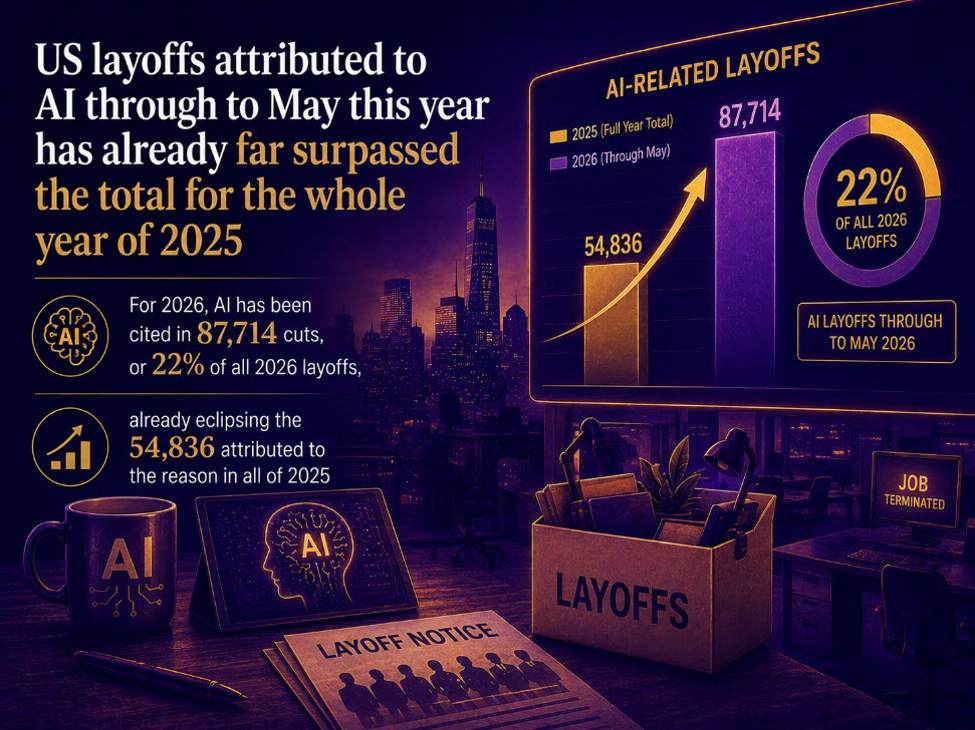
AI-Driven Job Cuts Surge in U.S. Tech Sector
U.S. employers announced over 97,000 job cuts in May, the highest for that month since 2020, with the tech sector most affected. For the third consecutive month, companies cited AI-driven automation and restructuring as the leading reason for layoffs, highlighting significant workforce disruption due to AI adoption.[AI generated]
AI principles:
Industries:
Affected stakeholders:
Harm types:
Severity:
Business function:
AI system task:
Why's our monitor labelling this an incident or hazard?
The event involves the use of AI systems leading to realized harm—job cuts in the tech sector—due to AI-driven automation or restructuring. Job loss is a significant harm affecting individuals and communities, fitting within the scope of harm to people (a). Since the harm is occurring and AI is explicitly cited as the cause, this qualifies as an AI Incident rather than a hazard or complementary information.[AI generated]

UN Warns of AI's Looming Environmental Impact
A UN report warns that the rapid expansion of AI, especially data centers, could by 2030 consume 3% of global electricity and as much water as 1.3 billion people, with carbon emissions rivaling the UK. The UN urges transparency and sustainable practices to mitigate these environmental risks.[AI generated]
AI principles:
Industries:
Affected stakeholders:
Harm types:
Severity:
AI system task:
Why's our monitor labelling this an incident or hazard?
The article discusses the plausible future environmental harms caused by the development and use of AI systems, specifically through the increased resource consumption of data centers supporting AI workloads. Although no direct harm has yet occurred, the projected doubling of power and water consumption and associated environmental impacts constitute a credible risk of harm. Therefore, this event qualifies as an AI Hazard because it describes a plausible future harm linked to AI system deployment and infrastructure expansion, but no actual incident of harm has yet materialized.[AI generated]

UK Lawmaker Sues xAI Over Grok-Generated Deepfake Images
UK Labour MP Jess Asato is suing Elon Musk's xAI, alleging its Grok AI system created non-consensual sexualised deepfake images of her. The case highlights harm caused by AI-generated content, raising questions about developer accountability and privacy rights. Regulatory probes into Grok are ongoing in several countries.[AI generated]
AI principles:
Industries:
Affected stakeholders:
Harm types:
Severity:
Autonomy level:
AI system task:
Why's our monitor labelling this an incident or hazard?
The Grok chatbot, an AI system, was used to create non-consensual deepfake images of MP Jess Asato, which is a direct misuse of AI-generated content causing harm to her privacy and personal rights. The lawsuit alleges violations under data protection laws and privacy invasion, which are clear harms under the AI Incident definition. The involvement of the AI system in generating harmful content and the resulting legal action confirm this as an AI Incident rather than a hazard or complementary information.[AI generated]
-of-the-INRIA-(National-Institute-for-Research-i.jpeg?width=1200&height=800&crop=1200:800)
Researchers Demonstrate Adaptive AI-Powered Computer Worm Threat
Researchers from the University of Toronto, Vector Institute, and University of Cambridge have developed a proof-of-concept AI-driven computer worm using large language models. The worm autonomously adapts its attack strategies, posing a significant cybersecurity risk if deployed, though tests were limited to controlled environments with no real-world harm reported.[AI generated]
AI principles:
Industries:
Affected stakeholders:
Harm types:
Severity:
Autonomy level:
AI system task:
Why's our monitor labelling this an incident or hazard?
The event involves the use of AI systems (large language models) in the development and operation of autonomous computer worms that can self-replicate and adapt to exploit network vulnerabilities. The researchers' demonstration confirms the AI system's role in enabling a new type of cyberattack that could disrupt critical infrastructure and cause harm to property and communities. Although the study was conducted in a controlled lab setting, the plausible and credible risk of real-world deployment and resulting harm qualifies this as an AI Hazard. However, since the AI-driven worms have not yet caused actual harm outside the lab, it is not an AI Incident. The article primarily warns about the potential for harm and calls for preparedness, fitting the definition of an AI Hazard.[AI generated]

UN Report Warns of AI's Growing Environmental Footprint
A UN report highlights the rapid growth of AI technologies like ChatGPT and warns of their escalating environmental impact, including increased energy, water, and resource consumption. Experts urge attention to the ecological footprint and call for governance measures to address potential future harm from AI's widespread adoption.[AI generated]
AI principles:
Industries:
Affected stakeholders:
Harm types:
Severity:
Autonomy level:
AI system task:
Why's our monitor labelling this an incident or hazard?
The article clearly involves AI systems, such as ChatGPT and AI-powered cloud infrastructure, and discusses their resource consumption and environmental impact. However, it does not describe any actual harm or incident that has occurred due to AI use or malfunction. Instead, it focuses on the potential for significant ecological harm in the future if current trends continue unchecked. This fits the definition of an AI Hazard, as the development and widespread use of AI systems could plausibly lead to environmental harm. The article also includes expert opinions and recommendations for governance, but these are part of the hazard context rather than complementary information about a specific incident or hazard event.[AI generated]

AI-Generated Deepfake Scam Impersonates Greek Celebrity Anna Vissi
Scammers used AI to create fake videos and voices impersonating Greek singer Anna Vissi, promising large cash prizes to fans on TikTok. Victims were contacted via WhatsApp by a fake manager and tricked into sharing personal and banking information, resulting in financial harm. The incident occurred in Greece.[AI generated]
AI principles:
Industries:
Affected stakeholders:
Harm types:
Severity:
Autonomy level:
AI system task:
Why's our monitor labelling this an incident or hazard?
The use of AI to create fake videos and voice impersonations directly leads to harm by enabling a scam that deceives people and attempts to steal their personal information. This constitutes a violation of rights and harm to individuals, fitting the definition of an AI Incident because the AI system's use is central to the harm occurring. The harm is realized, not just potential, as victims are targeted and deceived.[AI generated]
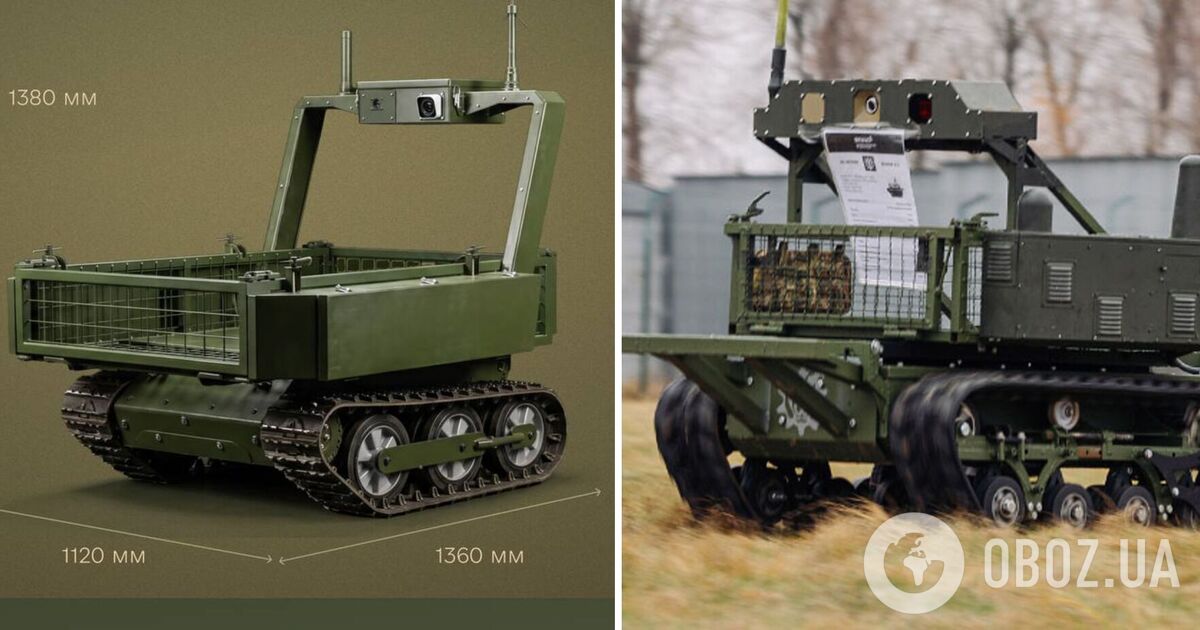
Ukrainian Military Deploys Vepr AI-Powered Robotic Medevac
Ukraine's Ministry of Defense has approved the domestically produced Vepr robotic medevac for combat use. The AI-enabled platform can autonomously evacuate two wounded soldiers, transport 350 kg of cargo, and perform various combat support tasks, enhancing frontline medical and logistical operations. No harm or malfunction has been reported.[AI generated]
Industries:
Severity:
Autonomy level:
AI system task:
Why's our monitor labelling this an incident or hazard?
The Vepr robot is an AI-enabled system performing autonomous or semi-autonomous tasks in a combat environment, including medical evacuation and combat support. Its deployment and use have a direct impact on human health and safety by evacuating wounded soldiers and supporting military operations. Since the robot's use directly leads to harm prevention and life-saving, and it operates in a high-risk environment, this qualifies as an AI Incident due to the direct involvement of an AI system in affecting human health and safety in combat.[AI generated]

Lockheed Martin's AI-Enabled System Downs Attack Drone in Live-Fire Test
Lockheed Martin demonstrated its AI-enabled Sanctum counter-UAS system by successfully detecting, tracking, and neutralizing a Group 3 attack drone using Fortem R-40 radars, Sanctum battle management software, and a GRIZZLY containerized launcher with a JAGM missile at Yuma Proving Ground, Arizona. The AI system directly enabled the destruction of the drone.[AI generated]
AI principles:
Industries:
Severity:
Autonomy level:
AI system task:
Why's our monitor labelling this an incident or hazard?
The Sanctum C-UAS system includes AI components such as battle management software that processes sensor data to detect, track, and engage drones autonomously or semi-autonomously. The event reports a successful interception of a hostile drone, indicating realized use of AI in a defense operation. Although no harm is reported, the system's use in military applications involving lethal force and autonomous targeting qualifies as an AI Incident due to the direct involvement of AI in potentially harmful military actions. The event is not merely a product announcement but a demonstration of AI-enabled lethal capability with direct implications for harm potential in conflict scenarios.[AI generated]

Police Deploy Live Facial Recognition at Appleby Horse Fair
Cumbria Police will deploy live AI facial recognition technology for the first time at the Appleby Horse Fair in the UK, aiming to identify wanted individuals among the large Gypsy, Roma, and Traveller community. The move raises concerns about potential privacy and human rights violations, though no direct harm has been reported yet.[AI generated]
AI principles:
Industries:
Affected stakeholders:
Harm types:
Severity:
Business function:
Autonomy level:
AI system task:
Why's our monitor labelling this an incident or hazard?
The article explicitly mentions the use of an AI system (live facial recognition) by police to identify individuals at a public event. The system's use is intended to detect alleged criminals, which involves AI system use. However, the article does not describe any actual harm or incident resulting from this deployment, such as wrongful identification, privacy breaches, or other violations. Civil rights groups' concerns about privacy breaches indicate plausible future harm. Since no harm has yet materialized but the AI system's use could plausibly lead to violations of rights or other harms, this event fits the definition of an AI Hazard rather than an AI Incident or Complementary Information.[AI generated]
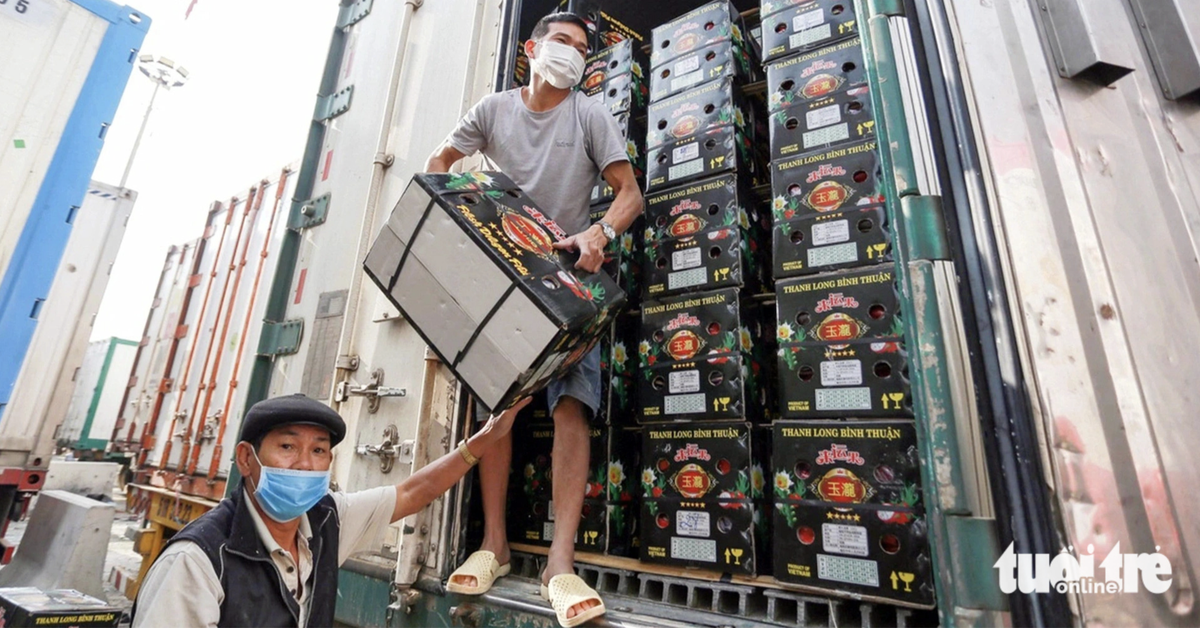
AI-Enabled Fraud Targets Vietnamese Individuals and Businesses
Fraudsters in Vietnam are increasingly using AI-generated images, voices, emails, and fake digital identities to impersonate individuals and businesses, leading to financial losses. These sophisticated scams exploit popular platforms like Zalo and target both individuals and export companies, making detection and prevention more challenging.[AI generated]
AI principles:
Industries:
Affected stakeholders:
Harm types:
Severity:
Autonomy level:
AI system task:
Why's our monitor labelling this an incident or hazard?
The article explicitly mentions AI-generated emails, fake digital identities, and synthetic media used by fraudsters to deceive businesses, causing direct financial harm. The AI systems' use in creating convincing fake documents and communications is central to the fraud incidents described. The harm is realized (financial losses, delayed payments, and damage to business operations), meeting the criteria for an AI Incident. The article also discusses mitigation and prevention measures but the primary focus is on the actual harm caused by AI-enabled fraud, not just potential or complementary information.[AI generated]

Uber Partners with AI Firms for Robotaxi Expansion Amid Cost Controls
Uber is partnering with AI companies like Autobrains and Nuro to deploy large-scale autonomous taxi fleets in Germany and the US, using advanced AI driving systems. While no incidents have occurred, the planned deployment of these AI systems poses potential future risks. Uber is also tightening internal AI usage budgets due to high costs.[AI generated]
AI principles:
Industries:
Affected stakeholders:
Harm types:
Severity:
Business function:
Autonomy level:
AI system task:
Why's our monitor labelling this an incident or hazard?
The article explicitly discusses AI systems (Autobrains' autonomous driving software, Nvidia's AI computing platform) and their intended use in Robotaxi services. However, it focuses on the announcement and plans for deployment rather than any harm or malfunction. There is no indication of injury, rights violations, or operational disruption caused by these AI systems at this stage. The event plausibly could lead to AI-related incidents in the future (e.g., accidents, operational failures), but currently it is a planned deployment and strategic partnership. Hence, it fits the definition of an AI Hazard, as the AI system's use could plausibly lead to harm, but no harm has yet occurred.[AI generated]

Japanese Teacher Sentenced for Possessing AI-Generated Child Sexual Abuse Images
A former elementary school teacher in Nagoya, Japan, was sentenced to 3 years and 6 months in prison for possessing AI-generated sexual deepfake images of real female students. This marks the first time in Japan that AI-created child sexual abuse material has been recognized as illegal under child pornography laws.[AI generated]
AI principles:
Industries:
Affected stakeholders:
Harm types:
Severity:
AI system task:
Why's our monitor labelling this an incident or hazard?
The event explicitly mentions the use of generative AI to create sexual deepfake images of real children, which were possessed and shared by the accused. This use of AI directly led to violations of child protection laws and caused harm to the victims and society. Therefore, this qualifies as an AI Incident because the AI system's use directly led to significant harm and legal violations.[AI generated]

Microsoft's AI Assistant 'Scout' Designed to Foster User Addiction, Raising Harm Concerns
Leaked internal documents reveal Microsoft intentionally designed its new AI assistant, Scout, to make users 'addicted' by integrating it deeply into Microsoft 365 and daily workflows. This strategy raises credible risks of psychological dependency and reduced user autonomy, highlighting potential future harms linked to AI system design.[AI generated]
AI principles:
Industries:
Affected stakeholders:
Harm types:
Severity:
Business function:
Autonomy level:
AI system task:
Why's our monitor labelling this an incident or hazard?
The event involves an AI system (Scout) explicitly designed to increase user dependency, which could plausibly lead to harm in the form of mental health issues and addiction. Although no actual injury or harm has been reported, the internal memo's goal to 'make people addicted' and expert concerns about long-term mental health effects indicate a credible risk of future harm. Therefore, this situation qualifies as an AI Hazard rather than an AI Incident, as the harm is potential and not yet realized.[AI generated]

AI-Driven Cyberattacks Escalate, Lowering Barriers for Hackers
Anthropic's analysis of 832 banned accounts (March 2025–March 2026) reveals a surge in AI-assisted cyberattacks, with AI enabling less skilled actors to perform advanced techniques like malware development, lateral movement, and account discovery. This shift has increased cyber risk, disrupted critical infrastructure, and contributed to major hacks, especially in the crypto sector.[AI generated]
AI principles:
Industries:
Affected stakeholders:
Harm types:
Severity:
Autonomy level:
AI system task:
Why's our monitor labelling this an incident or hazard?
The involvement of AI in cyber attacks is explicitly mentioned, with AI systems assisting threat actors in navigating compromised networks and increasing attack complexity. This use of AI directly leads to harm by enabling more effective and dangerous cyber intrusions, which can disrupt systems and compromise security, fitting the definition of an AI Incident due to harm to property, communities, or critical infrastructure.[AI generated]

Yongin City Installs AI Fire Suppression Systems in Public EV Charging Areas
Yongin City, South Korea, is installing AI-powered automatic fire suppression systems in new public facilities' electric vehicle charging zones. Using thermal imaging and AI, the system detects fires and abnormal heat, then automatically activates extinguishers to prevent fire spread and minimize damage. This aims to enhance safety and prevent future fire-related harm.[AI generated]
Industries:
Severity:
Autonomy level:
AI system task:
Why's our monitor labelling this an incident or hazard?
An AI system is explicitly involved, as the system uses thermal imaging cameras and AI to monitor for fires and automatically activate fire suppression. The use of this AI system is intended to prevent harm to people, property, and the environment by early fire detection and suppression. Since the system is being introduced to mitigate potential fire hazards and no harm has yet occurred, this qualifies as an AI Hazard, reflecting a plausible future risk being addressed by AI technology.[AI generated]

Attorneys Sanctioned for Submitting AI-Generated Legal Briefs with Fabricated Content
Two Orange County immigration attorneys, Mike Singh Sethi and William Rounds, were suspended and fined by the U.S. 9th Circuit Court of Appeals after submitting legal briefs containing fabricated cases and misattributed quotations generated by AI. Their lack of candor about the AI's role led to stricter sanctions.[AI generated]
AI principles:
Industries:
Affected stakeholders:
Harm types:
Severity:
Business function:
Autonomy level:
AI system task:
Why's our monitor labelling this an incident or hazard?
The attorneys used generative AI to produce legal briefs that contained multiple fabricated cases and misattributed quotations, which are clear inaccuracies caused by AI hallucinations. These false statements were knowingly or recklessly submitted to the court, violating ethical and procedural rules. The AI system's malfunction directly led to a breach of legal obligations and professional conduct, constituting harm under the category of violations of human rights or breach of legal obligations. Hence, this event meets the criteria for an AI Incident.[AI generated]

Google Gemini AI Vulnerability Exploited via Malicious Notifications on Android
Security researchers from SafeBreach discovered a vulnerability in Google Gemini's Android voice assistant, where crafted notifications from apps like WhatsApp, Slack, and SMS could inject malicious prompts. This allowed attackers to manipulate Gemini, potentially leading to unauthorized actions, privacy breaches, and data exfiltration. Google has since patched the flaw.[AI generated]
AI principles:
Industries:
Affected stakeholders:
Harm types:
Severity:
AI system task:
Why's our monitor labelling this an incident or hazard?
The event involves an AI system (Google Gemini's voice assistant) whose malfunction or exploitation (prompt injection vulnerability) could directly lead to significant harms including unauthorized physical control of devices, privacy violations, and impersonation attacks. These harms fall under injury or harm to persons (privacy and security breaches) and harm to property or communities (unauthorized control of smart home devices). Since the vulnerability was exploited in demonstrations and poses a direct risk of harm, this qualifies as an AI Incident. The patching and responsible disclosure are complementary information but do not negate the incident classification.[AI generated]