


An AI system was explicitly used to generate a synthetic image of a crime suspect, which is a manipulated output designed to mislead. This AI-generated content has been widely disseminated on social media, causing harm by inciting ethnic hatred and false accusations against a specific group. This constitutes harm to communities, a recognized category of AI harm. The AI system's use is central to the harm, making this an AI Incident rather than a hazard or complementary information. The event does not describe a plausible future harm but an ongoing harm caused by the AI-generated content.[AI generated]

AIM: AI Incidents and Hazards Monitor
Automated monitor of incidents and hazards from public sources (Beta).
AI-related legislation is gaining traction, and effective policymaking needs evidence, foresight and international cooperation. The OECD AI Incidents and Hazards Monitor (AIM) documents AI incidents and hazards to help policymakers, AI practitioners, and all stakeholders worldwide gain valuable insights into the risks and harms of AI systems. Over time, AIM will help to show risk patterns and establish a collective understanding of AI incidents and hazards and their multifaceted nature, serving as an important tool for trustworthy AI. AI incidents seem to be getting more media attention lately, but they've actually gone down as a share of all AI news (see chart below!).
The information displayed in the AIM should not be reported as representing the official views of the OECD or of its member countries.
Advanced Search Options
As percentage of total AI events
Show summary statistics of AI incidents & hazards

AI-Generated Fake Suspect Image Disrupts Murder Investigation in Tongyeong
In Tongyeong, South Korea, an AI-generated synthetic image falsely depicting a murder suspect circulated widely online, causing misinformation, xenophobic speculation, and confusion. The fake image disrupted police investigation efforts and led authorities to clarify its inauthenticity, urging the public to refrain from spreading false information.[AI generated]
AI principles:
Industries:
Affected stakeholders:
Harm types:
Severity:
Autonomy level:
AI system task:
Why's our monitor labelling this an incident or hazard?
Bank of England Warns of AI Trading Agents' Financial Risks, Considers Kill Switches and Regulation
The Bank of England, led by Deputy Governor Sarah Breeden, has warned that autonomous AI trading agents could amplify market volatility and trigger financial meltdowns if they act identically. The Bank is researching AI 'kill switches' and calling for updated global regulations to address these emerging risks.[AI generated]
AI principles:
Industries:
Affected stakeholders:
Harm types:
Severity:
Autonomy level:
AI system task:
Why's our monitor labelling this an incident or hazard?
The article explicitly involves AI systems (autonomous AI trading bots with agentic capabilities) whose use could plausibly lead to significant harm (market meltdown, amplified volatility). The Bank of England is proactively researching mitigations like kill switches to prevent such harm. Since no actual harm or incident has occurred yet, but the risk is credible and under active consideration, the event fits the definition of an AI Hazard rather than an AI Incident. It is not Complementary Information because the main focus is on the potential risk and mitigation strategies, not on a response to a past incident. It is not Beneficial Use because the AI systems themselves pose the risk, and the kill switch is a proposed countermeasure, not the central subject of a beneficial AI deployment. Hence, AI Hazard is the appropriate classification.[AI generated]
US Judge Allows States' Lawsuit Against Meta Over AI-Driven Child Addiction Claims to Proceed
A US federal judge denied Meta's attempt to dismiss a lawsuit by 29 state attorneys general, alleging Facebook and Instagram's AI-driven features were designed to addict children, causing mental health harms and violating privacy laws. The court found Meta failed to meet parental consent requirements, allowing the case to proceed.[AI generated]
AI principles:
Industries:
Affected stakeholders:
Harm types:
Severity:
Business function:
Autonomy level:
AI system task:
Why's our monitor labelling this an incident or hazard?
The social media platforms Facebook and Instagram use AI-driven algorithms to optimize user engagement, which is alleged to have been designed to addict children, causing mental health harms and violating privacy laws. The judge's decision to allow the lawsuit to proceed confirms that there is a credible link between the AI system's design/use and the harms suffered. This fits the definition of an AI Incident as the AI system's use has directly or indirectly led to harm to persons (children) and violations of legal rights. The event is not merely a potential hazard or complementary information but a concrete legal challenge based on alleged harms caused by AI-driven platform design.[AI generated]

Tesla AI-Driven Vehicle Crashes Spark Safety Concerns in the US
Two fatal Tesla accidents in Texas and California, involving potential use of Autopilot and Full Self-Driving AI systems, resulted in deaths and injuries. Investigations are ongoing, but the incidents have raised significant concerns about the safety and reliability of Tesla's AI-driven driver assistance features.[AI generated]
AI principles:
Industries:
Affected stakeholders:
Harm types:
Severity:
Business function:
Autonomy level:
AI system task:
Why's our monitor labelling this an incident or hazard?
Tesla's Autopilot and Full Self-Driving features are AI systems that control vehicle navigation and driving tasks. The reported accident caused death and injuries, which are direct harms to persons. Even though it is unclear if the AI system was active, the incident is linked to the use of AI driving assistance, and the ongoing investigations and lawsuits imply the AI system's role in the harm. Therefore, this qualifies as an AI Incident due to direct harm caused by the use or malfunction of an AI system in a critical application (vehicle control).[AI generated]

UNICEF Warns of Rapid AI Adoption Among Children and Urges Greater Protection
UNICEF reports that at least 20 million children across ten countries are using AI tools, with adoption rates three times higher than adults. The agency warns governments lack adequate frameworks to protect children from risks such as privacy violations, misinformation, and abuse, urging stronger safeguards.[AI generated]
AI principles:
Industries:
Affected stakeholders:
Harm types:
Severity:
Why's our monitor labelling this an incident or hazard?
The article does not describe a specific AI Incident where harm has already occurred due to AI systems, but rather warns about plausible future harms (privacy risks, misinformation, abuse, cognitive effects) stemming from the use of AI by minors. This fits the definition of an AI Hazard, as it involves circumstances where AI use could plausibly lead to harm. The article also calls for governance responses, but the main narrative centers on the potential risks, not on responses or updates to past incidents, so it is not Complementary Information. Therefore, the event is best classified as an AI Hazard.[AI generated]
BioShocking Exploit Exposes Major Security Flaws in AI Browsers
Security researchers at LayerX and the University of Washington revealed that several AI-powered browsers, including ChatGPT Atlas, Perplexity Comet, and Anthropic's Claude, can be manipulated using the 'BioShocking' technique to leak user credentials and sensitive data, bypassing built-in safety controls and fundamental web security protocols.[AI generated]
AI principles:
Industries:
Affected stakeholders:
Harm types:
Severity:
Autonomy level:
AI system task:
Why's our monitor labelling this an incident or hazard?
The article explicitly involves AI systems (LLMs in AI browsers) whose malfunction and manipulation lead to potential harm, specifically breaches of personal data and credentials, which is a violation of rights and harm to individuals. The exploit bypasses guardrails, enabling harmful actions that the AI should prevent. The harm is direct and realized in the proof-of-concept, even if not fully stealthy or complete, meeting the criteria for an AI Incident. It is not merely a potential risk (hazard) or a response/update (complementary information), nor is it unrelated or solely beneficial use.[AI generated]

Delhi High Court Orders Removal of AI-Generated Deepfake Content Targeting MP Raghav Chadha
The Delhi High Court ordered the removal of certain AI-generated and deepfake social media posts targeting MP Raghav Chadha, citing reputational harm. The court found some content defamatory due to AI misuse, while other posts were deemed legitimate criticism. A final decision is pending.[AI generated]
AI principles:
Industries:
Affected stakeholders:
Harm types:
Severity:
AI system task:
Why's our monitor labelling this an incident or hazard?
The event explicitly involves AI-generated deepfakes and manipulated videos used maliciously to defame a political figure, causing reputational harm. The court's order to remove defamatory AI-generated content confirms that harm has materialized due to the AI system's use. The involvement of AI in generating harmful content that violates personality rights and leads to defamation fits the definition of an AI Incident, as the AI system's use has directly led to harm to an individual's rights and reputation.[AI generated]
TikTok Settles Lawsuit Over AI-Driven Harm to Teen's Mental Health
TikTok settled a lawsuit with a 15-year-old Florida boy who alleged the platform's AI-driven recommendation systems caused addiction, depression, anxiety, and sleep loss. The case, part of broader litigation against major social media companies, highlights AI's role in youth mental health harm. Other defendants face upcoming trials.[AI generated]
AI principles:
Industries:
Affected stakeholders:
Harm types:
Severity:
Business function:
Autonomy level:
AI system task:
Why's our monitor labelling this an incident or hazard?
Social media platforms like TikTok employ AI systems for content recommendation and user engagement optimization. The lawsuit claims these platforms are designed to be addictive, leading to mental health harms in young users. Since the AI system's use is central to the alleged harm, and the harm has materialized (mental health damage to the plaintiff), this fits the definition of an AI Incident. The settlement is a response to this harm, but the event still concerns an AI Incident because the harm occurred due to the AI system's use.[AI generated]

Anthropic's Claude Code Accused of Covertly Identifying China-Linked Users
Anthropic's Claude Code AI tool is alleged to contain hidden, obfuscated logic that covertly detects and fingerprints users in China or those using Chinese proxies. The system encodes user environment data in prompts without disclosure, raising serious privacy and surveillance concerns for developers using the tool.[AI generated]
AI principles:
Industries:
Affected stakeholders:
Harm types:
Severity:
Business function:
Autonomy level:
AI system task:
Why's our monitor labelling this an incident or hazard?
An AI system (Claude) is explicitly mentioned and is central to the incident. The boss's use of AI projections directly influences workplace decisions and interactions, leading to harm in the form of mental health deterioration and a toxic work environment. This constitutes harm to people (employees) and communities (workplace culture). The harm is realized, not just potential, as described by the employee's account and corroborated by similar reports from others. Therefore, this qualifies as an AI Incident due to the direct and indirect harm caused by the AI system's use in the workplace.[AI generated]

Russian Military Deploys AI-Enabled Shahed Drones for Autonomous Attacks in Ukraine
Russia has introduced a new modification of Shahed drones, called "Geran Seeker," equipped with AI-based machine vision for automatic target recognition and autonomous attack completion. These drones can independently strike targets even if operator control is lost, increasing their effectiveness and the risk of harm in Ukraine.[AI generated]
AI principles:
Industries:
Affected stakeholders:
Harm types:
Severity:
Autonomy level:
AI system task:
Why's our monitor labelling this an incident or hazard?
The event involves an AI system explicitly described as using machine vision algorithms for automatic target recognition and autonomous attack completion, which directly leads to harm by enabling lethal drone strikes. The AI system's malfunction or misuse is not indicated, but its deployment in armed conflict with autonomous targeting capabilities clearly causes harm to persons and communities. Therefore, this qualifies as an AI Incident under the framework, as the AI system's use directly leads to harm.[AI generated]

Global Surge in AI-Powered Autonomous Military Vehicles Raises Future Risk Concerns
AI-driven autonomous unmanned vehicles are increasingly being developed and deployed for military use worldwide, driven by modernization and geopolitical tensions. While these systems promise operational efficiency and reduced personnel risk, their potential for future harm—including injury, disruption, or rights violations—raises significant concerns about the risks of autonomous AI in defense.[AI generated]
AI principles:
Industries:
Affected stakeholders:
Harm types:
Severity:
Autonomy level:
AI system task:
Why's our monitor labelling this an incident or hazard?
The article primarily describes the current state and future prospects of AI-powered autonomous military vehicles and systems, emphasizing their capabilities and market growth. It does not describe any realized harm or incident resulting from these AI systems. However, the autonomous military systems described have a clear potential to cause significant harm if used in combat or surveillance operations. Therefore, the event fits the definition of an AI Hazard, as it plausibly could lead to AI Incidents involving injury, disruption, or rights violations. The article is not merely general AI news or product launch; it focuses on the strategic and operational implications of autonomous AI military systems, which justifies classification as an AI Hazard rather than Complementary Information or Unrelated.[AI generated]

Switzerland Delays e-ID Rollout Over AI Security Concerns
The Swiss Federal Office of Justice has postponed the launch of the national electronic identity (e-ID) system due to new security challenges posed by recent AI developments, including the need for improved deepfake detection and malware protection. The delay aims to address potential AI-related risks before deployment.[AI generated]
AI principles:
Industries:
Severity:
Why's our monitor labelling this an incident or hazard?
The event involves the use of AI technologies (e.g., deepfake detection) in the e-ID system, which is an AI system under development. The delay is due to concerns about security and data protection, indicating a plausible risk of harm if these issues were not addressed. Since no harm has occurred yet and the delay is a preventive action, this fits the definition of an AI Hazard. The article does not describe any realized harm or incident caused by the AI system, nor is it primarily about a response to a past incident, so it is not an AI Incident or Complementary Information. It is not unrelated or a beneficial use, as the AI system is central to the event and the focus is on potential security risks.[AI generated]

Finland Plans Full AI Integration in Public Sector, Raising Job Displacement Concerns
The Finnish government announced plans to fully integrate AI into its public sector by 2031, aiming to boost productivity by 20%. This transition is expected to impact around 700,000 employees, raising concerns about job losses and social disruption due to AI-driven automation and workforce reduction.[AI generated]
AI principles:
Industries:
Affected stakeholders:
Harm types:
Severity:
AI system task:
Why's our monitor labelling this an incident or hazard?
The event involves the planned use of AI systems in the public sector, which will directly impact a large number of employees through job displacement. However, the article does not describe any realized harm or incidents caused by AI yet; rather, it outlines a future scenario where AI adoption could plausibly lead to significant social and economic harms. Therefore, this qualifies as an AI Hazard because it highlights credible risks stemming from the development and use of AI systems in government operations, with potential for harm to employment and communities in the future.[AI generated]

AI-Generated Fake Biometric Photos Used in Exam Cheating Scheme in Turkey
Turkish police conducted operations across five provinces, including Mardin, targeting a group that used AI-generated fake biometric photos, spy cameras, and earpieces to cheat in driving license exams. Forty-four suspects face legal action, and authorities seized weapons and digital materials related to the scheme.[AI generated]
AI principles:
Industries:
Affected stakeholders:
Harm types:
Severity:
Autonomy level:
AI system task:
Why's our monitor labelling this an incident or hazard?
The article explicitly mentions the use of AI technology to create fake biometric photos, which is an AI system's misuse in the context of cheating on official exams. This misuse has directly led to harm by enabling fraudulent behavior that undermines the integrity of the licensing process, which is a violation of legal rights and obligations. The involvement of AI in producing fake biometric data is central to the incident, meeting the criteria for an AI Incident rather than a hazard or complementary information.[AI generated]
AI-Driven Blackmail Ring Uses Fake Content to Extort Chinese Entertainment Industry
A criminal group in China used AI tools to fabricate and spread negative content about celebrities and TV shows, coercing production companies and artists into paying for 'protection' services to remove damaging posts. Police arrested 12 suspects across multiple provinces, exposing the AI-enabled extortion scheme's widespread harm to the entertainment industry.[AI generated]
AI principles:
Industries:
Affected stakeholders:
Harm types:
Severity:
Business function:
Autonomy level:
AI system task:
Why's our monitor labelling this an incident or hazard?
The article explicitly states that the criminal group used AI technology to generate or assist in fabricating negative content to extort money from entertainment industry stakeholders. This use of AI directly caused harm by enabling coercion, reputational damage, and economic harm. The involvement of AI in the malicious use and the resulting harm to individuals and the industry meets the criteria for an AI Incident. The event is not merely a potential risk or a general update but a concrete case of harm caused by AI misuse.[AI generated]

AI System Supports Lifeguards in German Swimming Pools to Prevent Drowning
Several swimming pools in Hesse, Germany, have deployed an AI system that uses over 20 cameras to monitor pool areas and detect potential drowning risks. The AI analyzes live footage in real time, alerting lifeguards via smartwatches to possible dangers, aiming to prevent accidents. No actual emergencies have been reported yet.[AI generated]
AI principles:
Industries:
Severity:
Business function:
Autonomy level:
AI system task:
Why's our monitor labelling this an incident or hazard?
The article explicitly mentions AI systems analyzing live camera feeds to detect potential dangers in swimming pools and alert lifeguards. This is a clear AI system in use. The AI's role is to support human lifeguards by early detection of drowning risks, which could plausibly prevent injury or death (harm to persons). No actual harm or accident is reported, only positive early warnings and support. Thus, the event is not an AI Incident (no realized harm), but an AI Hazard because the AI system's use could plausibly lead to preventing harm or, if it failed, could lead to harm. The article also notes the AI is a support tool, with humans remaining in control, reinforcing the hazard nature rather than an incident.[AI generated]

Malaysia Plans AI and Drone Deployment for Maritime Security Enhancement
Malaysia's Home Ministry is planning to deploy AI-powered predictive analytics and drones to strengthen maritime and border security, particularly in Langkawi and northern waters. The initiative aims to improve surveillance, early threat detection, and operational coordination among security agencies, though no harm or incidents have yet occurred.[AI generated]
AI principles:
Industries:
Affected stakeholders:
Harm types:
Severity:
Business function:
AI system task:
Why's our monitor labelling this an incident or hazard?
The event involves AI systems (predictive analytics and drones likely equipped with AI for real-time surveillance) but only in the context of planned or ongoing evaluation and future deployment. There is no indication that any harm has occurred or that the AI systems have malfunctioned or been misused. The article discusses potential future applications that could plausibly lead to improved surveillance and enforcement, but does not describe any realized harm or incident. Therefore, this qualifies as an AI Hazard, reflecting a credible potential for AI to impact border security and enforcement, but without any current incident or harm reported.[AI generated]

AI-Driven Social Media Algorithms Linked to B.C. Teen's Death
A 13-year-old girl in British Columbia died after social media algorithms repeatedly exposed her to harmful self-harm and suicide content. Her mother, Chelsey Whittingham, is calling for regulation and oversight of these AI-driven recommendation systems, highlighting their role in endangering vulnerable minors despite parental controls.[AI generated]
AI principles:
Industries:
Affected stakeholders:
Harm types:
Severity:
Business function:
Autonomy level:
AI system task:
Why's our monitor labelling this an incident or hazard?
Social media recommendation algorithms are AI systems that influence what content users see. The article describes a direct link between these algorithms pushing harmful self-harm and suicide-related content to a vulnerable 13-year-old, which led to her death. This is a clear case of harm to a person caused by the use of an AI system, meeting the criteria for an AI Incident. The mother's call for regulation highlights the systemic nature of the harm caused by these AI-driven content recommendation systems.[AI generated]

AI-Powered Child Safety Features on Social Media Platforms Fail to Protect Minors
A study by researchers at NYU and Northeastern University found that over half of AI-driven child safety features on Instagram, Snapchat, TikTok, and YouTube do not work as advertised. These failures expose minors to harmful content and unsafe interactions, leading to lawsuits and documented harm to children's wellbeing.[AI generated]
AI principles:
Industries:
Affected stakeholders:
Harm types:
Severity:
Business function:
Autonomy level:
AI system task:
Why's our monitor labelling this an incident or hazard?
The social media platforms employ AI systems for content recommendation, moderation, and user interaction controls, which are explicitly mentioned or reasonably inferred given the nature of the platforms and described features. The study found that these AI-driven safety features are broken, missing, or easily bypassed, leading to direct harms such as exposure of children to adult strangers, harmful content, and ineffective time limits. These harms constitute violations of children's rights and harm to their health and well-being. Since the AI systems' malfunction or ineffective deployment directly led to these harms, this event meets the criteria for an AI Incident. The article does not merely discuss potential risks or responses but documents realized harms caused by AI system failures.[AI generated]
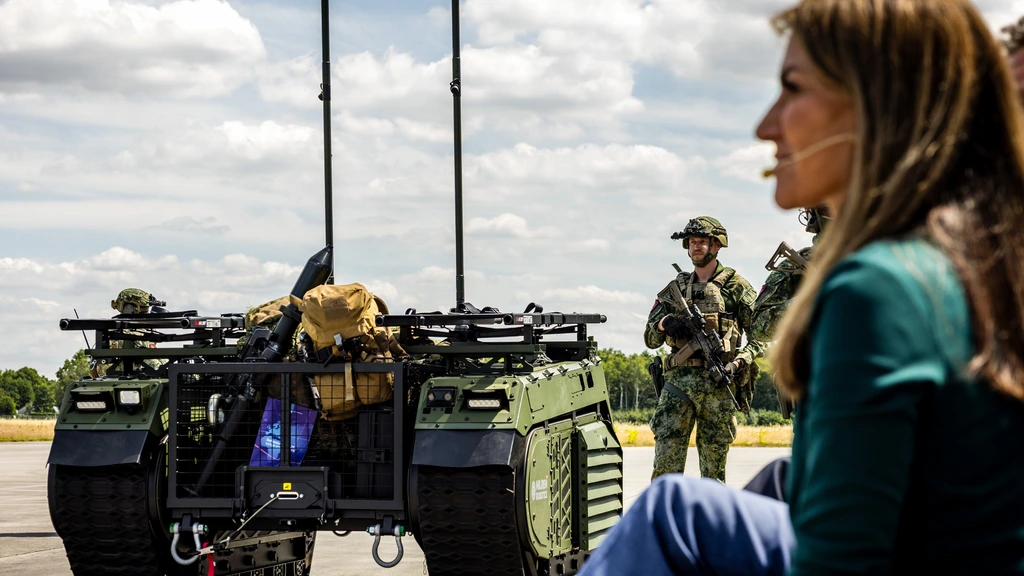
Dutch Military Deploys AI-Enabled Unmanned Weapons Systems
The Dutch Ministry of Defence is investing heavily in AI-powered unmanned weapons systems, including drones and autonomous vehicles, aiming for half of military operations to be conducted remotely by 2031. These AI systems are already used in conflict zones, contributing to lethal effects and operational disruption.[AI generated]
AI principles:
Industries:
Affected stakeholders:
Harm types:
Severity:
AI system task:
Why's our monitor labelling this an incident or hazard?
The article clearly involves AI systems or AI-enabled technologies, inferred from the emphasis on remotely operated weapons like drones and the need for rapid information processing and decision-making, which typically involve AI. However, no actual harm or incident is reported; the article focuses on future plans and investments. Given the potential for these AI-enabled systems to lead to harm in military contexts, this constitutes a plausible future risk, fitting the definition of an AI Hazard rather than an AI Incident or Complementary Information. It is not unrelated because AI involvement is reasonably inferred, and it is not Complementary Information because it does not provide updates or responses to past incidents but rather outlines new strategic directions.[AI generated]